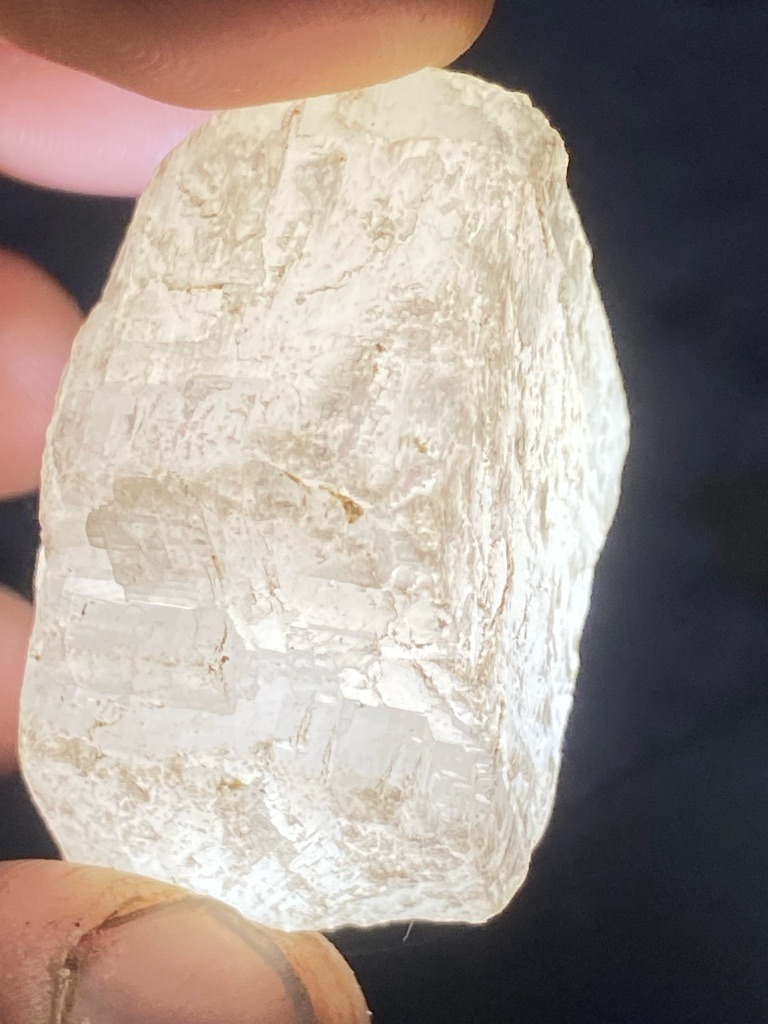
Natural (Rough Mineral Specimen, potentially Quartz or Feldspar rather than gem-quality diamond)
Natural (Rough Mineral Specimen, potentially Quartz or Feldspar rather than gem-quality diamond) · Rough crystal / Irregular uncut form
Not applicable (Rough stone) Cut
Carat
Estimated 20-30+ carats based on size relative to fingers
Color
Near-colorless to white / translucent
Clarity
Included / Heavily included due to natural uncut state
Shape
Rough crystal / Irregular uncut form
Overall Assessment
An interesting large natural rough mineral specimen. While visually striking due to its size, further gemological testing (such as hardness and refractive index checks) is recommended to definitively identify the mineral species.
Cut Quality
Not applicable (Rough stone)
Brilliance
Low due to lack of faceting and rough exterior
Fire
Minimal to none in current rough state
Scintillation
Limited, primarily surface reflection rather than internal facet flash
Proportions
Not applicable for rough stones
Symmetry
Natural crystal growth symmetry
Polish
Unpolished, natural rough surface
Fluorescence
Unable to determine without UV testing
Inclusions
Multiple internal fractures, cloudiness, and mineral inclusions visible
Blemishes
Natural surface textures, pitting, and growth lines
Origin
Natural rough mineral, likely alluvial or pegmatite origin
Treatment Detection
No obvious signs of human enhancement or treatment; appears completely untreated
Estimated Value
Nominal value as a mineral specimen; low gem-grade potential without significant cutting and loss of weight
Certification Estimate
Requires professional laboratory testing (GIA or local gem lab) to confirm exact mineral composition
Investment Potential
Low investment value as a gemstone; primarily of interest as a mineral specimen
Similar Diamonds
Standard large rough quartz, beryl, or low-grade diamond/industrial boart
Setting Suggestions
Wire-wrapped pendant setting to preserve the organic, raw aesthetic
Care & Maintenance
Clean gently with warm soapy water and a soft brush; avoid harsh impacts due to natural fracture lines
Interesting Facts
Rough crystals often display growth steps and natural etching patterns characteristic of their subterranean formation