Probable Glass or Common Mineral (Non-Diamond)
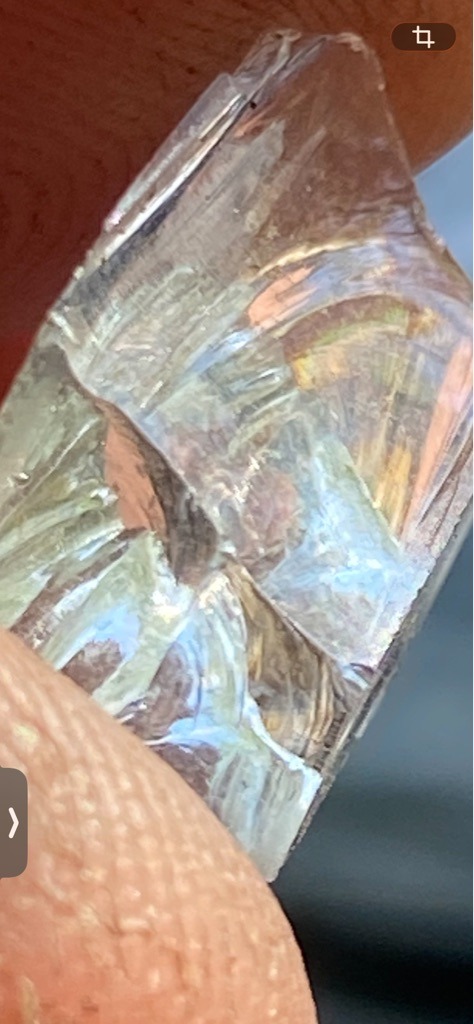
Probable Glass or Common Mineral (Non-Diamond) · Irregular / Raw Shard
N/A (Rough/Uncut shard) Cut
Carat
Estimated 2 to 4 carats based on size relative to fingertip
Color
Light Brownish-Yellow / Champagne tint
Clarity
I3 (Heavily fractured/Included)
Shape
Irregular / Raw Shard
Overall Assessment
The specimen appears to be a shard of glass or a common translucent mineral. It lacks the refractive index, crystal habit, and luster characteristic of a natural or lab-grown diamond.
Cut Quality
N/A (Rough/Uncut shard)
Brilliance
Low (Poor light return)
Fire
Very Low (No significant dispersion observed)
Scintillation
None
Proportions
N/A (No geometric precision)
Symmetry
N/A
Polish
N/A (Rough surface)
Fluorescence
Indeterminable via image
Inclusions
Conchoidal fractures, internal crazing, and heavy veining
Blemishes
Deep chips, sharp jagged edges, and surface abrasions
Origin
Likely industrial byproduct or common quartz/glass shard
Treatment Detection
None apparent, though conchoidal fractures suggest brittle failure
Estimated Value
Minimal to $5 USD (Value as a mineral specimen)
Certification Estimate
Unlikely to be certified by GIA/AGS as an investment gemstone
Investment Potential
None (No resale value as a gemstone)
Similar Diamonds
Compare with low-grade industrial bort or rough quartz crystal
Setting Suggestions
Not suitable for jewelry setting in its current state
Care & Maintenance
Handle with care to avoid cuts from sharp jagged edges
Interesting Facts
The conchoidal (shell-like) fracture pattern is more indicative of glass or quartz than the octahedral cleavage found in diamonds