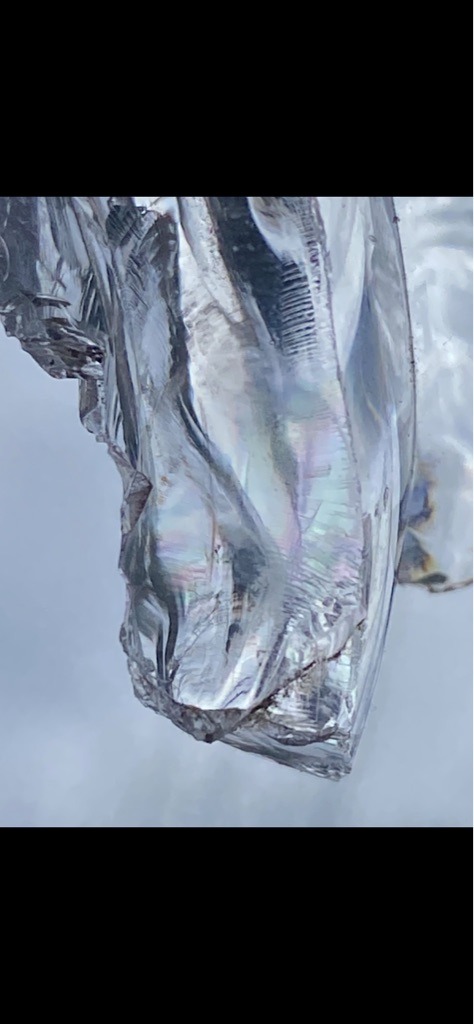
Natural Rough Diamond
Natural Rough Diamond · Rough/Uncut (Uneven Crystalline Form)
Not Applicable (Rough) Cut
Carat
Estimated 10-20 carats (based on macro detail and fragment appearance)
Color
Likely D-F (Colorless) based on the clear, icy appearance of the crystal
Clarity
VS1 to SI1 range (internal graining and visible surface trigons/fractures)
Shape
Rough/Uncut (Uneven Crystalline Form)
Overall Assessment
A high-quality rough diamond fragment with excellent clarity and color potential for a master cutter.
Cut Quality
Not Applicable (Rough)
Brilliance
Low (surface reflections only, lacks internal reflection from facets)
Fire
None (requires faceting to disperse light into spectral colors)
Scintillation
Low (only visible as surface flash)
Proportions
Asymmetric natural octahedral/macle fragment
Symmetry
Poor (Rough natural state)
Polish
Not Applicable (unpolished surface exhibits natural growth textures)
Fluorescence
Cannot determine without UV light; slight blue tint may suggest faint fluorescence
Inclusions
Internal graining, slight fractures, and potential crystal inclusions visible at the base
Blemishes
Natural trigons, growth lines, and percussion marks typical of rough specimens
Origin
Likely Alluvial source, possibly Southern or Western Africa
Treatment Detection
None apparent; looks like a natural, untreated crystal
Estimated Value
$15,000 - $45,000 (Highly dependent on yield after cutting)
Certification Estimate
GIA Rough Diamond Grading Report (Estimated Colorless, High Clarity)
Investment Potential
High, if the stone can yield a large, high-clarity polished gem
Similar Diamonds
Unsorted rough production from De Beers or ALROSA mines
Setting Suggestions
Not suitable for setting until cut; alternatively, use in a rough-diamond custom claw setting
Care & Maintenance
Keep away from high-impact sports despite hardness; rough edges can snag and chip
Interesting Facts
The flat, parallel lines on the surface are 'growth lines' reflecting the diamond's cubic crystal system.