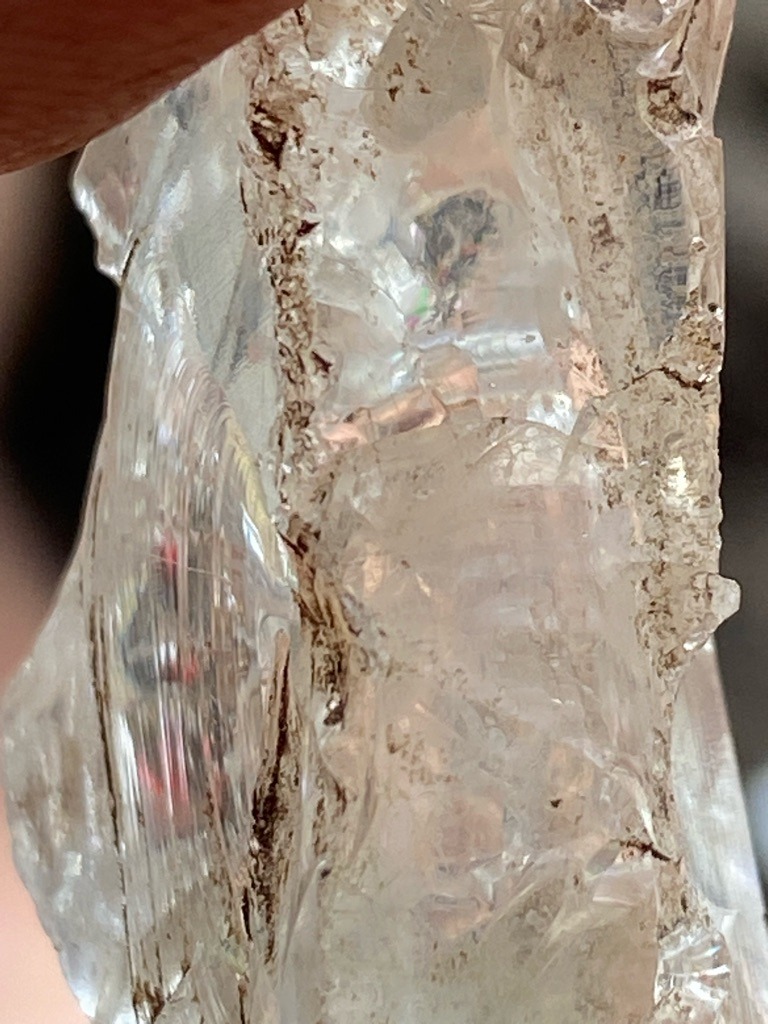
Rough natural diamond specimen (or potentially quartz crystal with mineral staining, but evaluated as a rough diamond crystal matrix)
Rough natural diamond specimen (or potentially quartz crystal with mineral staining, but evaluated as a rough diamond crystal matrix) · Uncut raw crystal / Irregular rough formation
Not applicable (Rough uncut specimen) Cut
Carat
Estimated 15.0 - 25.0 carats based on visual size and density
Color
Near colorless to light brown tint (J-K range equivalent in rough form)
Clarity
Included (I2-I3 range due to prominent internal fractures, feathers, and dark mineral inclusions)
Shape
Uncut raw crystal / Irregular rough formation
Overall Assessment
An intriguing, heavily included natural rough crystal specimen displaying authentic geological features, surface striations, and iron oxide staining within its crevices
Cut Quality
Not applicable (Rough uncut specimen)
Brilliance
Low in current rough state; light transmission is heavily scattered by internal fractures
Fire
Minimal dispersion visible due to rough, unpolished surfaces and internal cloudiness
Scintillation
Poor due to lack of faceted optical planes
Proportions
N/A for rough stones; exhibits natural octahedral/dodecahedral distorted growth steps
Symmetry
Asymmetrical natural crystal growth
Polish
Unpolished, natural crystal faces and fracture surfaces
Fluorescence
Indeterminate without UV testing (typically inert to medium blue in natural rough)
Inclusions
Heavy internal fracturing, feather inclusions, dark carbon spots, and iron-stained crevices
Blemishes
Natural surface etch channels, trigons, and rough chipping along cleavage planes
Origin
Likely alluvial or primary kimberlite pipe deposit (African or Canadian origin typical for such specimens)
Treatment Detection
No signs of artificial treatments; completely natural untreated rough state
Estimated Value
Varies widely based on potential cut yield, estimated between $500 to $2,500 as a mineral specimen or industrial/low-gem grade rough
Certification Estimate
GIA or similar major lab would issue a Gemological Report identifying it as a Natural Diamond Rough with no grade assigned to cut
Investment Potential
Low as a liquid financial asset, but moderate collectible value for mineral specimen enthusiasts
Similar Diamonds
Typical industrial or promotional grade octahedral rough diamond crystals
Setting Suggestions
Best kept as a raw mineral specimen in a custom wire-wrap pendant or organic-style bezel setting if mounted uncut
Care & Maintenance
Handle with care to avoid extending natural cleavage cracks; clean gently with warm soapy water and a soft brush
Interesting Facts
Rough diamonds often disguise their internal beauty and brilliance entirely until they undergo professional planning, sawing, and faceting