Natural (Rough Diamond)
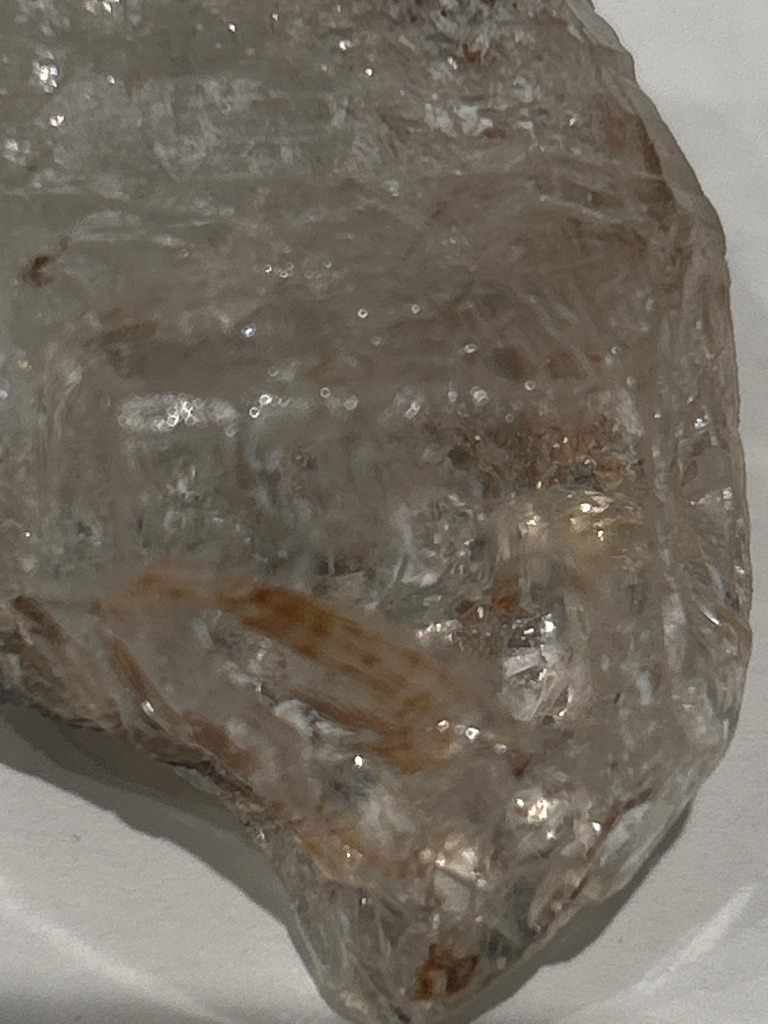
Natural (Rough Diamond) · Uncut / Rough Crystalline Form
Not Applicable (Rough, uncut stone) Cut
Carat
Estimated > 5.0 carats based on visual scale
Color
Near Colorless to Faint Yellow tint (approx. H-J range)
Clarity
Included (I1-I2 equivalent due to internal fractures and mineral inclusions)
Shape
Uncut / Rough Crystalline Form
Overall Assessment
An intriguing, sizable natural rough diamond crystal displaying characteristic surface features, internal fractures, and inclusions, offering potential for custom cutting or preservation as a mineral specimen.
Cut Quality
Not Applicable (Rough, uncut stone)
Brilliance
Low due to rough, unpolished surface facets
Fire
Minimal dispersion visible through raw crystal walls
Scintillation
Limited flash due to lack of standard pavilion and crown facets
Proportions
Natural crystal proportions, non-standardized
Symmetry
Natural asymmetrical octahedral/dodecahedral growth form
Polish
Natural rough crystal faces (trigons and striations visible)
Fluorescence
Indeterminate from visual assessment alone
Inclusions
Internal cleavage planes, fractures, and brownish mineral spots
Blemishes
Natural surface textures, pitting, and resorption features
Origin
Likely alluvial or primary kimberlite pipe deposit (African or Canadian origin typical)
Treatment Detection
No evidence of artificial enhancement; completely untreated natural rough
Estimated Value
Variable depending on final cut yields, roughly $1,000 - $3,000 as a rough specimen
Certification Estimate
GIA rough diamond report or local gemological laboratory grading
Investment Potential
Moderate as a collector specimen, high potential value retention depending on cut yield
Similar Diamonds
Other unpolished natural octahedral or irregularly shaped diamond crystals
Setting Suggestions
Raw diamond in a bespoke organic bezel or wire-wrap setting in yellow or white gold
Care & Maintenance
Store separately to prevent scratching other stones; clean with warm soapy water and soft brush
Interesting Facts
Rough diamonds show natural growth markings called trigons on their octahedral faces