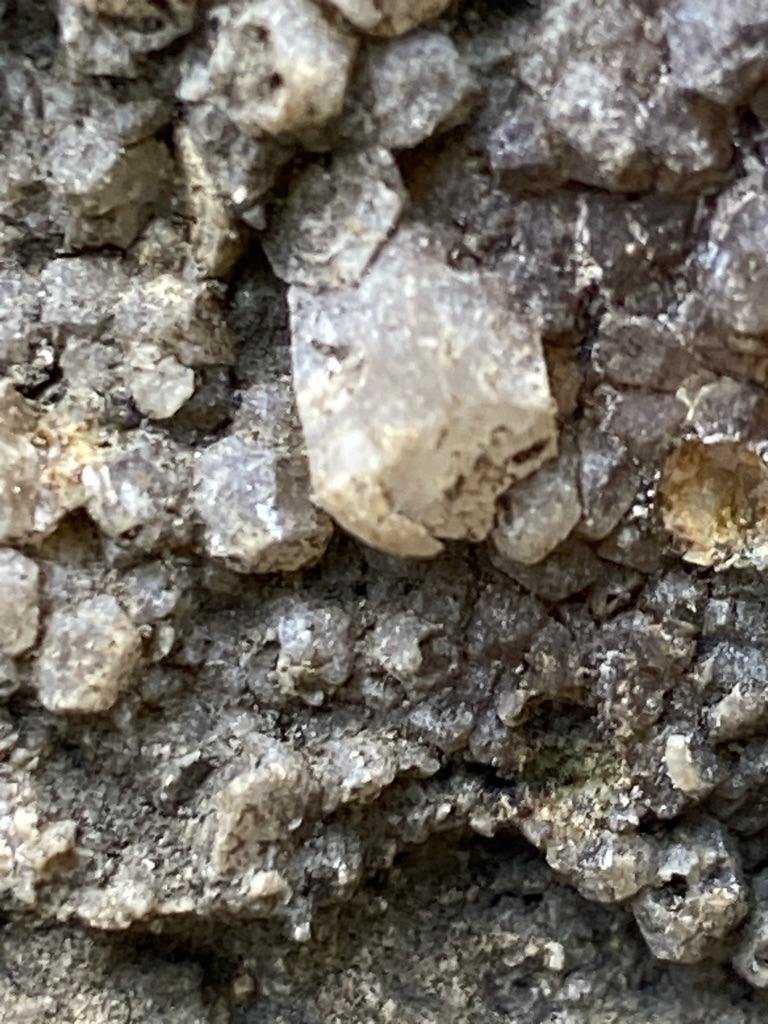
Natural diamond crystal in matrix (uncut rough form)
Natural diamond crystal in matrix (uncut rough form) · Uncut octahedral or irregular crystal habit
Not applicable (rough, uncut mineral specimen) Cut
Carat
Estimated 0.50 to 0.80 carats for the prominent central crystal
Color
Near-colorless to faint brown tint in rough form
Clarity
I1 to I3 (typical for rough stone embedded in host rock with inclusions)
Shape
Uncut octahedral or irregular crystal habit
Overall Assessment
An interesting natural diamond crystal specimen embedded in its host rock matrix, offering high educational and mineralogical value
Cut Quality
Not applicable (rough, uncut mineral specimen)
Brilliance
Low in rough form; requires cutting and faceting to exhibit optical brilliance
Fire
Minimal dispersion in rough state due to unpolished surfaces
Scintillation
Limited flash play on natural crystal faces
Proportions
Natural rough proportions, heavily dependent on mother rock matrix
Symmetry
Natural crystal symmetry showing octahedral facets
Polish
Natural crystal faces (unpolished rough)
Fluorescence
Cannot be determined accurately without UV testing
Inclusions
Natural mineral inclusions, feathers, and carbon spots typical of rough diamonds
Blemishes
Natural surface trigons, etching features, and adhering matrix minerals
Origin
Likely alluvial deposit or primary kimberlite pipe matrix (e.g., South Africa, Canada, or Australia)
Treatment Detection
No signs of treatment; completely natural untreated rough
Estimated Value
Varies widely as a mineral specimen ($100 - $500) depending on collector value
Certification Estimate
GIA (Gemological Institute of America) as a rough diamond certificate or mineral specimen report
Investment Potential
Valued primarily as a collector's mineral specimen rather than a polished investment asset
Similar Diamonds
Other natural rough diamond crystals embedded in kimberlite or lamproite matrix
Setting Suggestions
Best preserved as a raw mineral specimen in a custom wire-wrap or protective bezel setting
Care & Maintenance
Keep securely mounted in matrix; avoid harsh chemicals and ultrasonic cleaners that might dislodge the crystal
Interesting Facts
Most diamonds are found as rough octahedrons embedded in igneous rock formations like kimberlite before being cut and polished