Natural Diamond
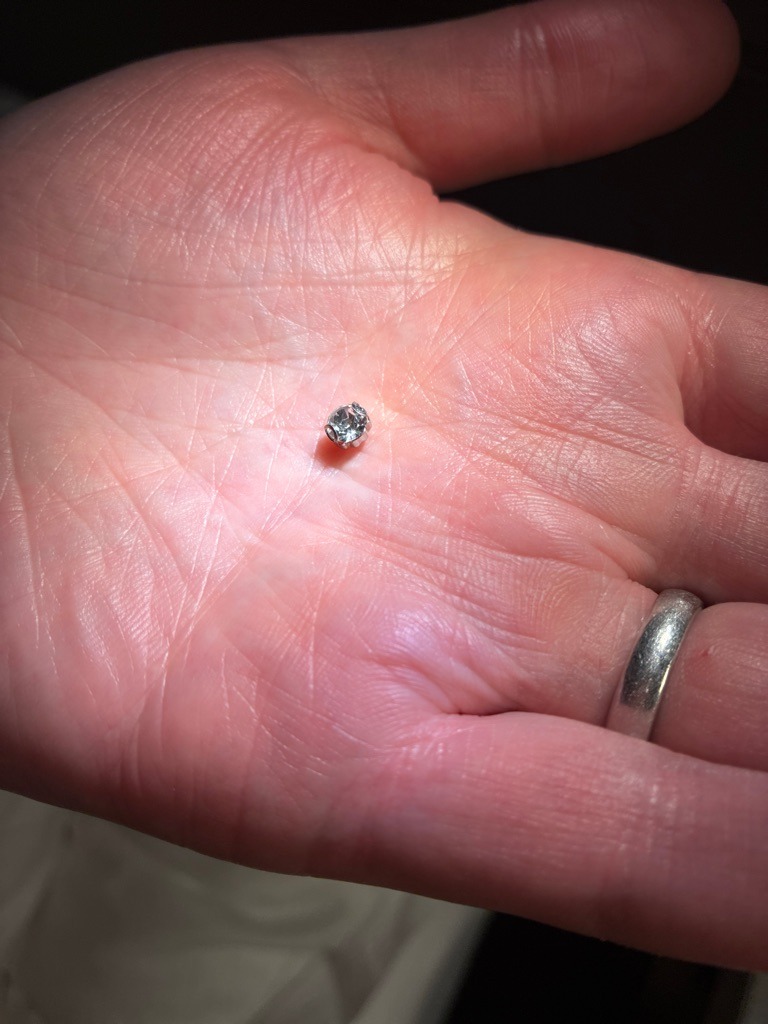
Natural Diamond · Round Brilliant
Good to Very Good Cut
Carat
Estimated approximately 0.10 to 0.15 carats based on visual scale in hand
Color
Estimated near-colorless range (G-I)
Clarity
Estimated Slightly Included (SI1-SI2) based on visual dispersion and potential inclusions
Shape
Round Brilliant
Overall Assessment
A small, natural round brilliant diamond suitable as an accent stone or repair component, exhibiting standard commercial optical properties for its size class
Cut Quality
Good to Very Good
Brilliance
Good white light return given its small size and standard facet arrangement
Fire
Moderate spectral dispersion visible under direct lighting
Scintillation
Fair to good play of light and dark areas as the stone moves
Proportions
Standard standard round brilliant proportions with moderate table and pavilion depth
Symmetry
Good
Polish
Good
Fluorescence
Cannot be definitively determined without UV testing; appears inert in ambient light
Inclusions
Minor small internal pinpoints or crystals likely present under magnification
Blemishes
Minor surface abrasions possible due to handling
Origin
Natural rough mined origin, exact geographic source untraceable without advanced spectroscopic testing
Treatment Detection
No obvious visible signs of clarity enhancement or artificial coloration treatments
Estimated Value
Low-to-moderate market value typical of accent or melee diamonds
Certification Estimate
Typically ungraded at this small size, but if submitted, GIA or IGI would issue a report confirming natural origin
Investment Potential
Minimal investment or resale value due to small carat weight; standard jewelry component
Similar Diamonds
Standard commercial melee round brilliant accent stones used in multi-stone rings or bands
Setting Suggestions
Ideal for bezel, prong, or pave accent settings in white gold, yellow gold, or platinum
Care & Maintenance
Standard ultrasonic cleaning or warm soapy water with a soft brush; store separately to prevent scratching other jewelry
Interesting Facts
Small accent diamonds like this are often sorted using automated optical screening machines before being set into mass-market jewelry pieces