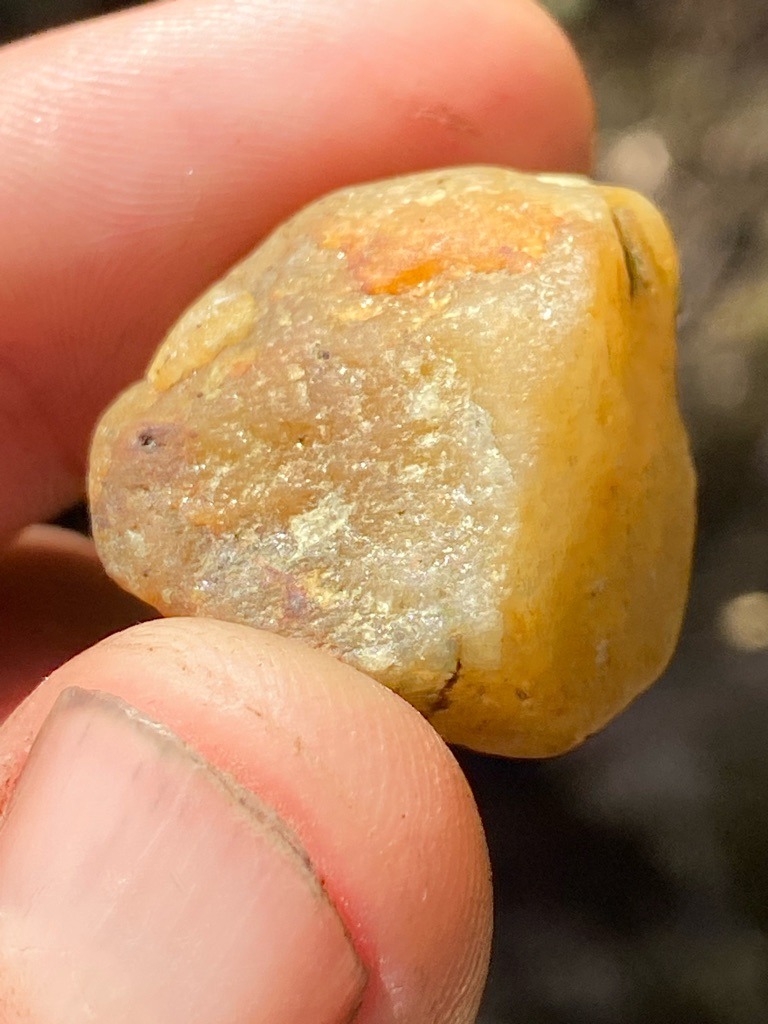
The specimen shown is an uncut, raw alluvial stone, likely Quartz, Jasper, or potentially a rough industrial-grade diamond crystal coated with mineral oxides, but visually resembles raw quartz or quartzite rather than gem-quality diamond.
The specimen shown is an uncut, raw alluvial stone, likely Quartz, Jasper, or potentially a rough industrial-grade diamond crystal coated with mineral oxides, but visually resembles raw quartz or quartzite rather than gem-quality diamond. · Rough/Uncut natural pebble form with rounded, weathered contours.
Not Applicable (uncut rough stone with no facet symmetry). Cut
Carat
Estimated at approximately 3.0 to 5.0 carats based on relative finger scale.
Color
Fancy Brownish-Yellow to Orange-Brown due to iron oxide staining.
Clarity
Included / Industrial Grade (opaque to translucent with internal fracturing).
Shape
Rough/Uncut natural pebble form with rounded, weathered contours.
Overall Assessment
The specimen is a raw, weathered mineral pebble (likely quartz or quartzite with iron staining) rather than a cut diamond. Further professional gemological testing such as a refractometer or thermal conductivity test is recommended for definitive identification.
Cut Quality
Not Applicable (uncut rough stone with no facet symmetry).
Brilliance
Low to none due to lack of faceting and opaque nature.
Fire
None visible.
Scintillation
None.
Proportions
Not Applicable for rough stones.
Symmetry
Asymmetrical, irregular natural pebble shape.
Polish
Raw, unpolished natural weathered surface with a matte to sub-vitreous luster.
Fluorescence
Indeterminate without UV testing equipment.
Inclusions
Heavy internal fracturing, mineral inclusions, and potential graining typical of raw minerals.
Blemishes
Surface pitting, abrasion marks, and iron-stain discoloration.
Origin
Alluvial deposit, riverbed, or secondary geological weathering deposit.
Treatment Detection
No obvious artificial treatments detected; surface coloration is consistent with natural weathering and iron oxide staining.
Estimated Value
Nominal to low value as a mineral specimen (under $10 USD) unless verified as rare gem rough.
Certification Estimate
Standard gemological laboratories (GIA, IGI) would issue a stone identification report rather than a diamond grading report, likely identifying it as quartz or mineral rough.
Investment Potential
Minimal, primarily of interest to mineral collectors or lapidary hobbyists.
Similar Diamonds
Not comparable to standard gem diamonds; comparable to raw industrial mineral specimens or alluvial quartz pebbles.
Setting Suggestions
Wire-wrapped organic jewelry settings to showcase its raw, natural aesthetic.
Care & Maintenance
Standard cleaning with warm soapy water and a soft brush; avoid harsh acids if composed of acid-sensitive minerals.
Interesting Facts
Raw alluvial stones often travel miles down riverbeds, tumbling and wearing away softer minerals before being discovered.