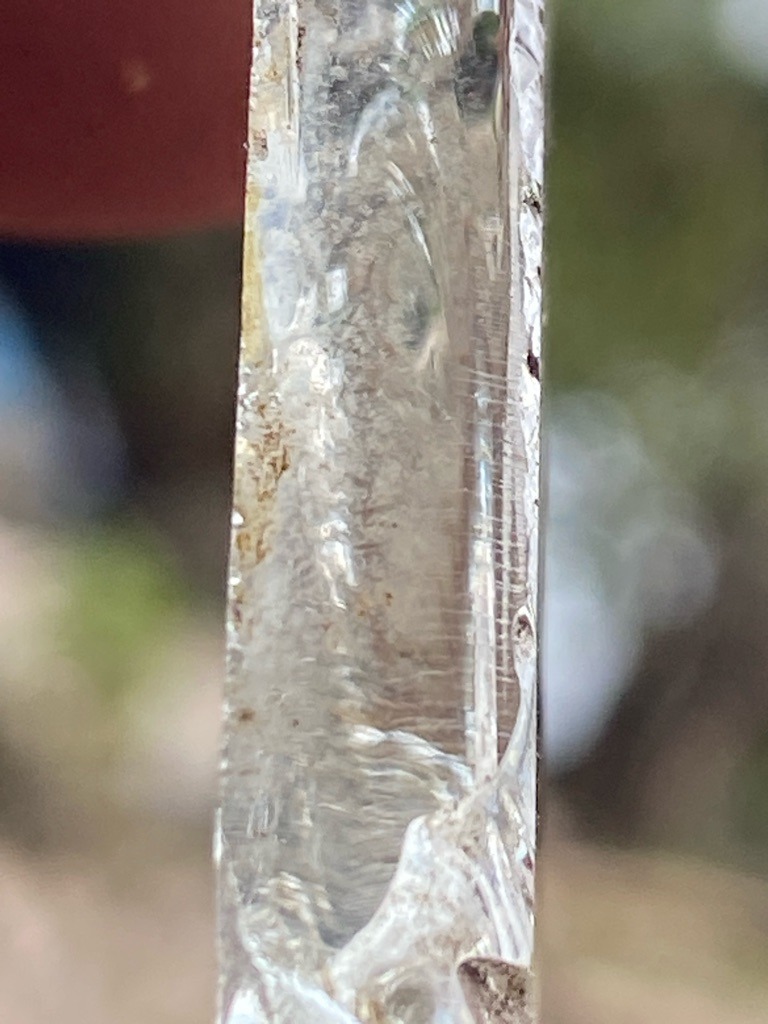
Natural rough crystal / mineral specimen, likely quartz or a heavily included crystal rather than a gem-grade diamond based on the striations and habit visible
Natural rough crystal / mineral specimen, likely quartz or a heavily included crystal rather than a gem-grade diamond based on the striations and habit visible · Rough elongated crystal (unfaceted raw specimen)
Not applicable (uncut raw crystal specimen) Cut
Carat
Difficult to accurately estimate without dimensions, but likely a substantial piece of mineral rough (exceeding 5-10 carats depending on density)
Color
Colorless to slightly brownish/yellowish tint due to inclusions and matrix staining
Clarity
I3 / Heavily Included (opaque areas, fractures, and surface striations)
Shape
Rough elongated crystal (unfaceted raw specimen)
Overall Assessment
This specimen appears to be a natural, uncut mineral crystal (possibly quartz or a similar transparent silicate) rather than a gem-grade diamond, displaying classic natural growth striations, surface textures, and internal inclusions typical of raw mineral rough.
Cut Quality
Not applicable (uncut raw crystal specimen)
Brilliance
Low due to lack of facets and high internal inclusion density
Fire
Minimal to none in its current rough state
Scintillation
None; displays vitreous to sub-adamantine luster on unpolished crystal faces
Proportions
Elongated prismatic crystal habit
Symmetry
Natural crystal growth symmetry showing distinct parallel striations (growth lines)
Polish
None (natural rough surface texture with growth lines and etching)
Fluorescence
Indeterminate from visual inspection
Inclusions
Dense internal fractures, cloudiness, potential mineral inclusions, and feather-like inclusions
Blemishes
Natural surface striations, growth marks, and potential surface-reaching fissures
Origin
Natural terrestrial mineral formation, likely found in pegmatites or hydrothermal veins depending on exact mineral composition
Treatment Detection
No evidence of artificial treatments; appears completely natural and untreated
Estimated Value
Nominal value as a mineral specimen or educational rough piece, significantly lower than gem-quality diamond
Certification Estimate
Typically not certified by major gemological labs like GIA as a polished diamond; would require specialized mineralogical testing (e.g., Raman spectroscopy) to confirm exact mineral species
Investment Potential
Low investment value; valued primarily as a decorative mineral specimen or educational piece
Similar Diamonds
Not comparable to standard faceted commercial diamonds; more comparable to raw quartz crystals or uncut industrial-grade mineral rough
Setting Suggestions
Best preserved as a raw mineral specimen in a custom wire-wrapped pendant or displayed in a mineral collection rather than set as traditional jewelry
Care & Maintenance
Store carefully to prevent chipping along natural cleavage planes or fractures; clean gently with mild soapy water and a soft brush
Interesting Facts
The prominent parallel striations running down the length of the crystal face are characteristic growth features often seen in quartz and certain other prismatic minerals