Likely Non-Diamond (Mineral Specimen)
Likely Non-Diamond (Mineral Specimen) · Rough / Uncut (Natural Crystal)
Not Applicable (Rough) Cut
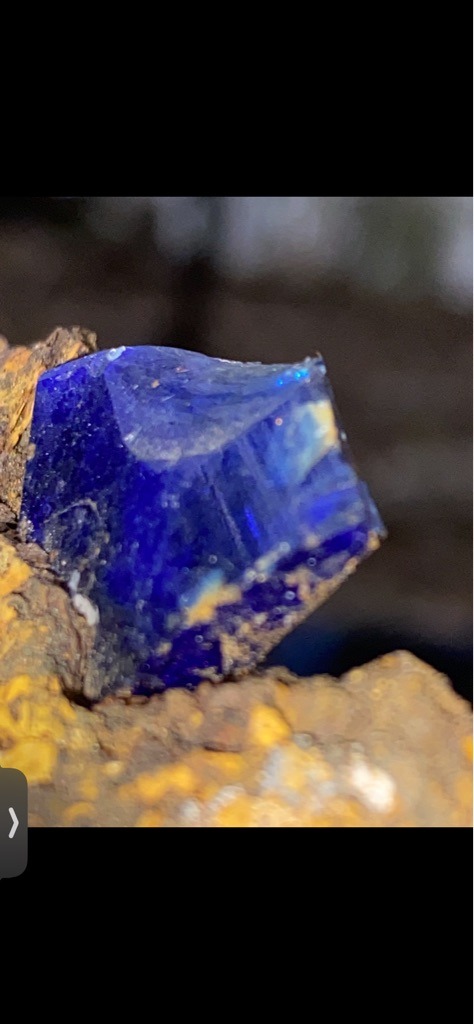
Carat
Estimated 2.0 to 5.0 carats (exposed portion)
Color
Fancy Vivid Deep Blue (Indigo/Cobalt hue)
Clarity
Translucent to Opaque (included)
Shape
Rough / Uncut (Natural Crystal)
Overall Assessment
This is a rough, deep blue mineral crystal embedded in a rocky matrix. While it mimics the color of a fancy blue diamond, the morphology and luster suggest it is more likely a different mineral species such as Azurite or a synthetic crystal grown for hobbyist use.
Cut Quality
Not Applicable (Rough)
Brilliance
Low (typical of rough specimen)
Fire
None visible in rough state
Scintillation
None visible in rough state
Proportions
Natural crystal habit with conchoidal fracture
Symmetry
Natural Crystal Symmetry (Trigonal/Hexagonal appearance)
Polish
Natural Matte/Vitreous Luster
Fluorescence
Indeterminate without UV light
Inclusions
Heavy internal veining and mineral matrix inclusions
Blemishes
Surface pitting and matrix attachment
Origin
Likely secondary source or specific mineral deposit; aesthetics suggest Azurite or Lapis over Diamond
Treatment Detection
None apparent; looks like a natural earth-mined specimen in matrix
Estimated Value
$100 - $500 as a mineral specimen; potentially much higher if proven to be rare natural blue diamond (highly unlikely)
Certification Estimate
GIA Rough Diamond (or Colored Stone) Identification Report
Investment Potential
Low unless verified as a high-quality blue diamond variety
Similar Diamonds
Natural Fancy Deep Blue Rough Diamonds
Setting Suggestions
Prong-style specimen mount or wrapped wire for display
Care & Maintenance
Keep away from harsh chemicals and ultrasonic cleaners; clean with soft brush and water
Interesting Facts
Blue diamonds are among the rarest in the world, colored by Boron; however, this specimen's color saturation is more characteristic of Azurite or Tanzanite.