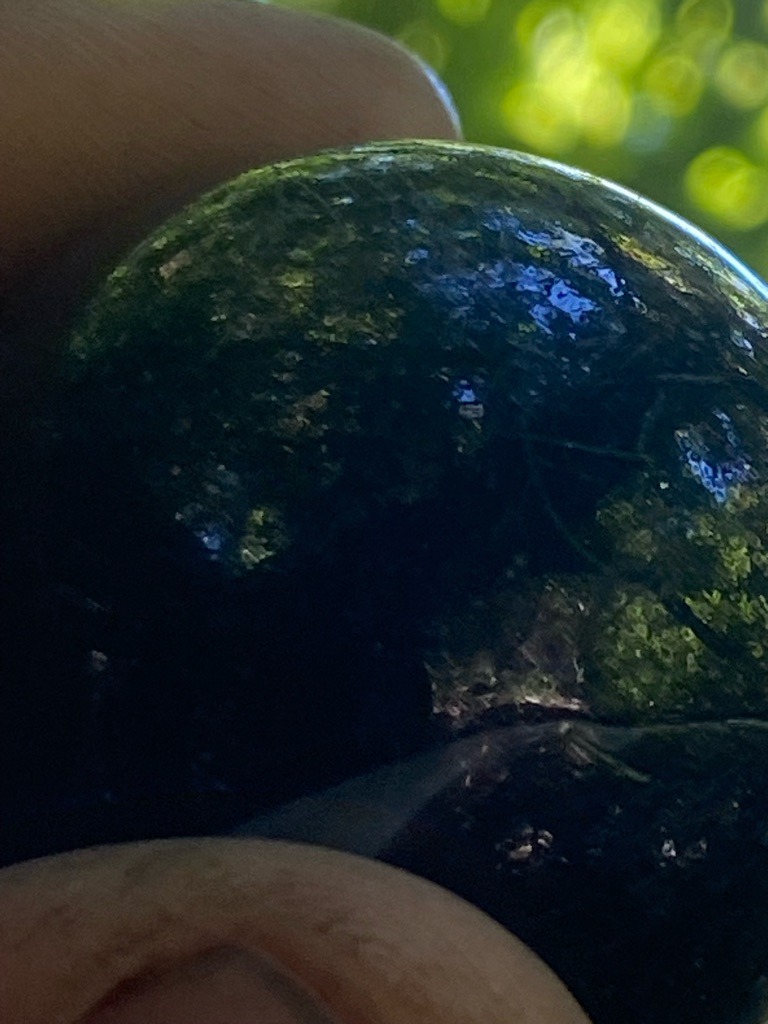
Not a diamond; this specimen visually resembles a natural green tektite such as Moldavite or potentially a dark green glass / mineral stone rather than crystalline carbon diamond.
Not a diamond; this specimen visually resembles a natural green tektite such as Moldavite or potentially a dark green glass / mineral stone rather than crystalline carbon diamond. · Rough or cabochon-like rounded form, non-standard diamond shape.
N/A - Uncut, raw, or simply tumbled/polished specimen, not faceted like a standard diamond. Cut
Carat
Difficult to estimate accurately from a close-up visual without dimensions, likely heavy in grams rather than standard gem carats.
Color
Deep Forest Green / Dark Green (Fancy Dark Green)
Clarity
Included (Contains visible natural bubbles, swirling textures, and internal debris typical of impact glasses or natural mineral specimens)
Shape
Rough or cabochon-like rounded form, non-standard diamond shape.
Overall Assessment
This specimen is not a diamond, but rather a fascinating dark green natural glass or tektite specimen (such as Moldavite) featuring characteristic swirling internal textures and natural bubble inclusions.
Cut Quality
N/A - Uncut, raw, or simply tumbled/polished specimen, not faceted like a standard diamond.
Brilliance
Low to moderate vitreous luster, subdued due to dark coloration and lack of facets
Fire
None (dispersive fire is absent in non-diamond green glasses/minerals)
Scintillation
Minimal to none; flashes are limited to surface reflections from light sources
Proportions
Non-standard, organic rounded mass
Symmetry
Asymmetrical, organic natural form
Polish
Natural glossy surface texture with minor surface pitting
Fluorescence
Unknown / Not testable visually (typically inert or faint brown/red in natural glasses)
Inclusions
Abundant internal gas bubbles, swirling lines, and flow textures characteristic of natural moldavite or impact glass
Blemishes
Natural surface pitting, flow lines, and minor abrasion marks
Origin
Likely Central European impact site origin if verified as Moldavite, or general mineral specimen origin.
Treatment Detection
No obvious treatments detected; surface appears naturally textured.
Estimated Value
Varies widely based on exact weight, provenance, and authenticity as moldavite or mineral specimen, ranging from tens to hundreds of dollars.
Certification Estimate
Gemological laboratories such as GIA or local gem testing labs would identify this as a natural glass/tektite rather than a diamond if submitted.
Investment Potential
Collector specimen value rather than traditional diamond investment; moldavite and unique tektites have seen fluctuating collector demand.
Similar Diamonds
None, as this is definitively not a diamond.
Setting Suggestions
Wire-wrapped in sterling silver or custom organic bezel settings to preserve the raw, natural aesthetic.
Care & Maintenance
Avoid harsh ultrasonic cleaners, extreme heat, and harsh chemicals. Clean gently with warm soapy water and a soft cloth.
Interesting Facts
Stones resembling this green glassy texture are often formed by meteorite impacts, melting terrestrial rock and flinging it across regions.