Natural Diamond or Lab-Grown Diamond (requires testing to differentiate)
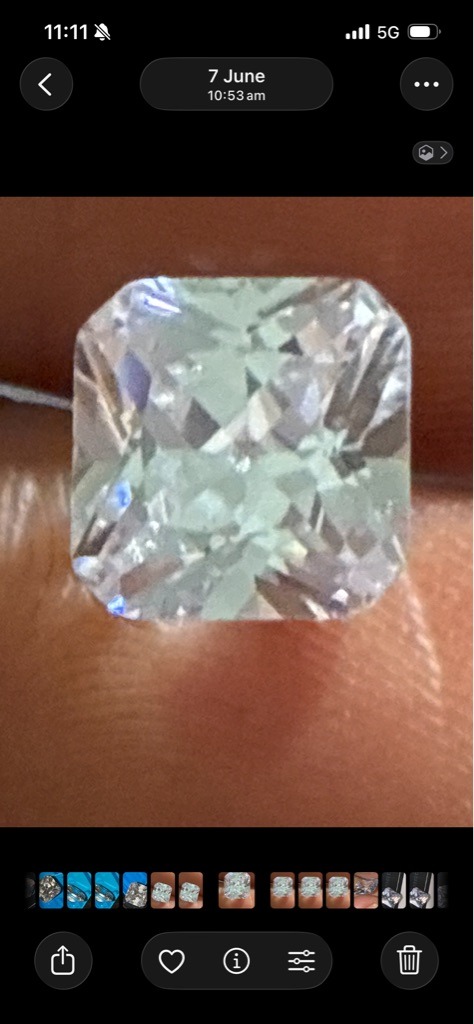
Natural Diamond or Lab-Grown Diamond (requires testing to differentiate) · Radiant Cut (Rectangular Modified Brilliant)
Good to Very Good Cut
Carat
Estimated 1.50 to 2.00 carats
Color
G-H (Near Colorless)
Clarity
VS2-SI1 (based on visible inclusions in the center)
Shape
Radiant Cut (Rectangular Modified Brilliant)
Overall Assessment
A well-proportioned radiant cut diamond with a desirable near-colorless appearance and characteristic brilliance.
Cut Quality
Good to Very Good
Brilliance
Moderate to High white light return
Fire
Moderate spectral colors visible under indoor lighting
Scintillation
Good sparkle with 'crushed ice' effect typical of radiant cuts
Proportions
Deep cut with a thick girdle and average table percentage
Symmetry
Good (slightly uneven corner facets)
Polish
Very Good
Fluorescence
Possible Faint to Medium Blue (light blue tint visible in corners)
Inclusions
Crystals and pinpoints visible near the table and crown facets
Blemishes
Minor surface abrasions on the crown
Origin
Likely Earth-mined (Russian or African) or CVD grown if lab-created
Treatment Detection
None apparent; requires spectroscopic analysis
Estimated Value
$8,000 - $12,000 if Natural; $1,000 - $2,000 if Lab-Grown
Certification Estimate
GIA or IGI; likely G-H color, VS2 clarity
Investment Potential
Low to Moderate; fancy shapes hold less liquid value than round brilliants
Similar Diamonds
2ct G VS2 Radiant Cut loose diamonds
Setting Suggestions
Platinum or 18k White Gold 4-prong solitaire or halo setting with claw prongs
Care & Maintenance
Clean with warm soapy water and a soft brush; avoid harsh chemicals
Interesting Facts
The Radiant cut was the first rectangular cut to have a complete brilliant-cut facet pattern