Likely Lab-Grown or Synthetic Simulant (Cubic Zirconia/Moissanite)
Likely Lab-Grown or Synthetic Simulant (Cubic Zirconia/Moissanite) · Round Brilliant
Good to Very Good Cut
Carat
Estimated 1.00 to 1.50 carats
Color
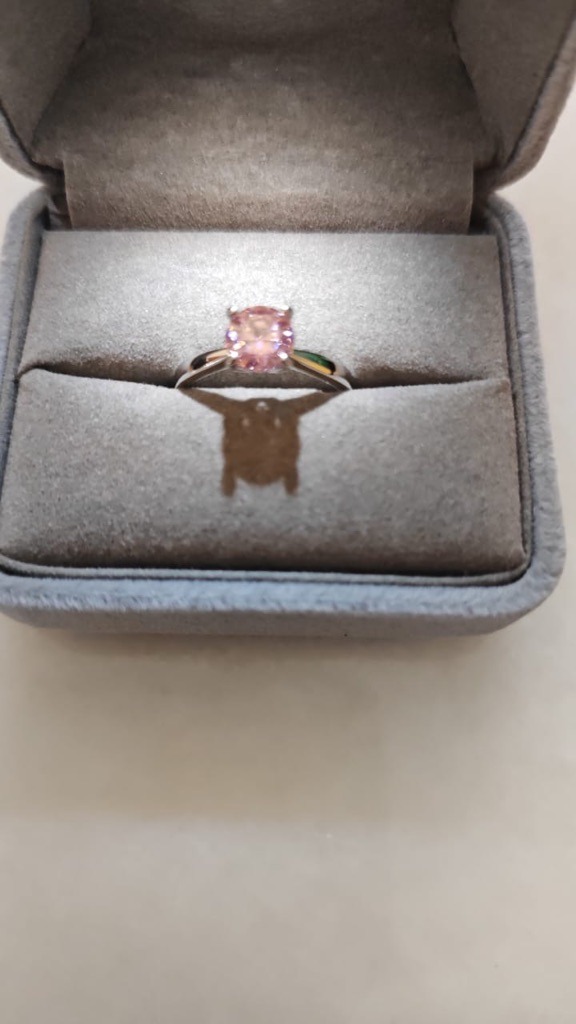
Fancy Light Pink / Fancy Pink
Clarity
VS1 to SI1 (Visually eye-clean)
Shape
Round Brilliant
Overall Assessment
A visually appealing round brilliant pink gemstone in a classic solitaire setting. The saturation and fire suggest a high-quality simulant or a lab-grown diamond rather than a natural pink stone.
Cut Quality
Good to Very Good
Brilliance
Moderate; shows some white light return but lacks the sharp contrast of high-end natural stones
Fire
High; visible spectral dispersion typical of synthetic stimulants or high-quality lab diamonds
Scintillation
Moderate scintillation pattern with some dark/dead zones in the center (extinction)
Proportions
Standard table to crown ratio, pavilion appears slightly deep based on the shadow profile
Symmetry
Good
Polish
Very Good
Fluorescence
Undetermined (Requires UV light)
Inclusions
No significant internal characteristics visible at this resolution
Blemishes
Minor surface abrasions possible on facet edges
Origin
Likely laboratory created (CVD or HPHT process)
Treatment Detection
Likely color-treated or irradiated to achieve the pink hue if it is a diamond
Estimated Value
$100 - $300 if simulant; $800 - $1,500 if lab-grown diamond
Certification Estimate
IGI or GIA Lab-Grown Report if authentic lab diamond; likely uncertified if simulant
Investment Potential
Low; fancy colored lab-grown stones and simulants do not typically appreciate in value
Similar Diamonds
Pink Moissanite or Pink Lab-Grown Diamonds
Setting Suggestions
Platinum or 14k White Gold solitaire setting to emphasize the pink color
Care & Maintenance
Ultrasonic cleaning is usually safe; avoid harsh chemicals to protect the metal rhodium plating
Interesting Facts
Natural pink diamonds are among the rarest gems on earth, fetching millions; lab-grown versions make this luxury accessible