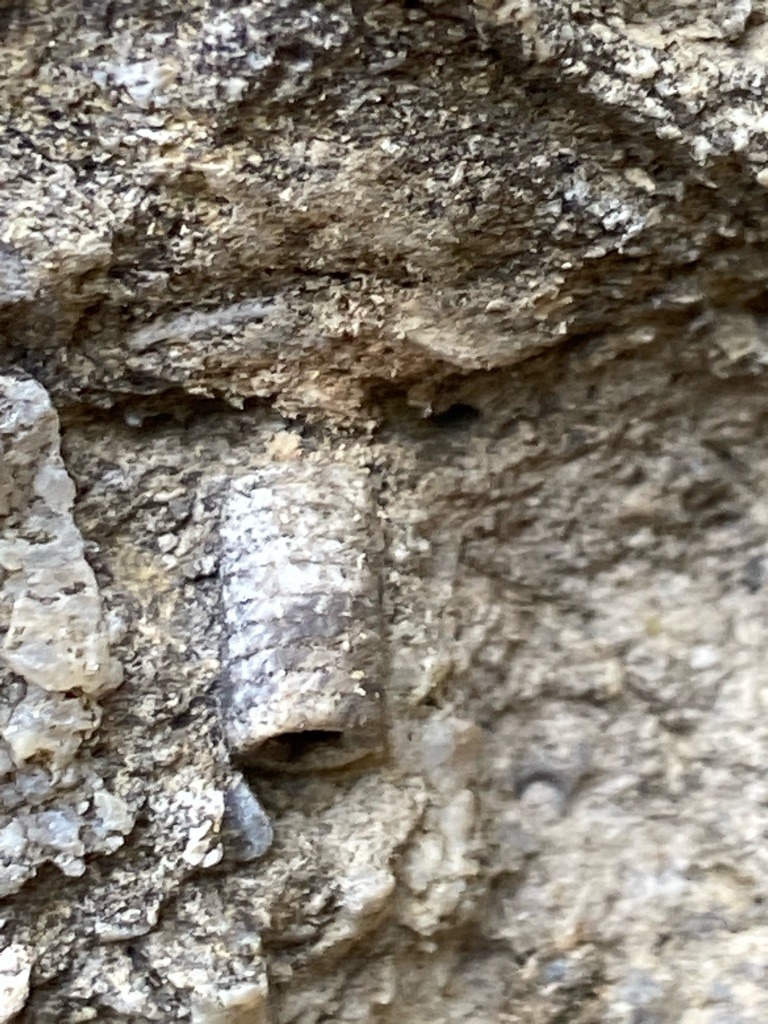
Not a diamond (appears to be a fossil crinoid stem embedded in matrix rock)
Not a diamond (appears to be a fossil crinoid stem embedded in matrix rock) · N/A - Tubular fossil structure
N/A - Natural raw formation Cut
Carat
N/A - Not applicable to fossils
Color
N/A - Earthy grey/beige matrix tones
Clarity
N/A - Geological specimen
Shape
N/A - Tubular fossil structure
Overall Assessment
The provided image does not show a diamond or any gemstone; it clearly depicts a fossilized crinoid stem section embedded within a weathered rock matrix.
Cut Quality
N/A - Natural raw formation
Brilliance
None
Fire
None
Scintillation
None
Proportions
Cylindrical segment structure
Symmetry
Naturally segmented radial symmetry typical of crinoid ossicles
Polish
Unpolished natural rock matrix and fossil
Fluorescence
Unknown
Inclusions
Natural fossil microstructure and surrounding sedimentary rock inclusions
Blemishes
Weathering, natural surface erosion, and matrix encrustation
Origin
Sedimentary rock formation, likely marine limestone deposit
Treatment Detection
None observed; raw natural specimen
Estimated Value
Minimal commercial value as a common fossil specimen
Certification Estimate
N/A - Paleontological or geological certification rather than gemological
Investment Potential
Low; valuable primarily for educational or hobbyist purposes
Similar Diamonds
None - this is a fossil, not a gemstone
Setting Suggestions
Display in a natural mineral/fossil collection or educational display case
Care & Maintenance
Keep in a dry environment and avoid harsh chemicals or scrubbing to preserve fossil integrity
Interesting Facts
Crinoids are commonly known as sea lilies and are marine animals related to starfish and sea urchins, dating back over 450 million years