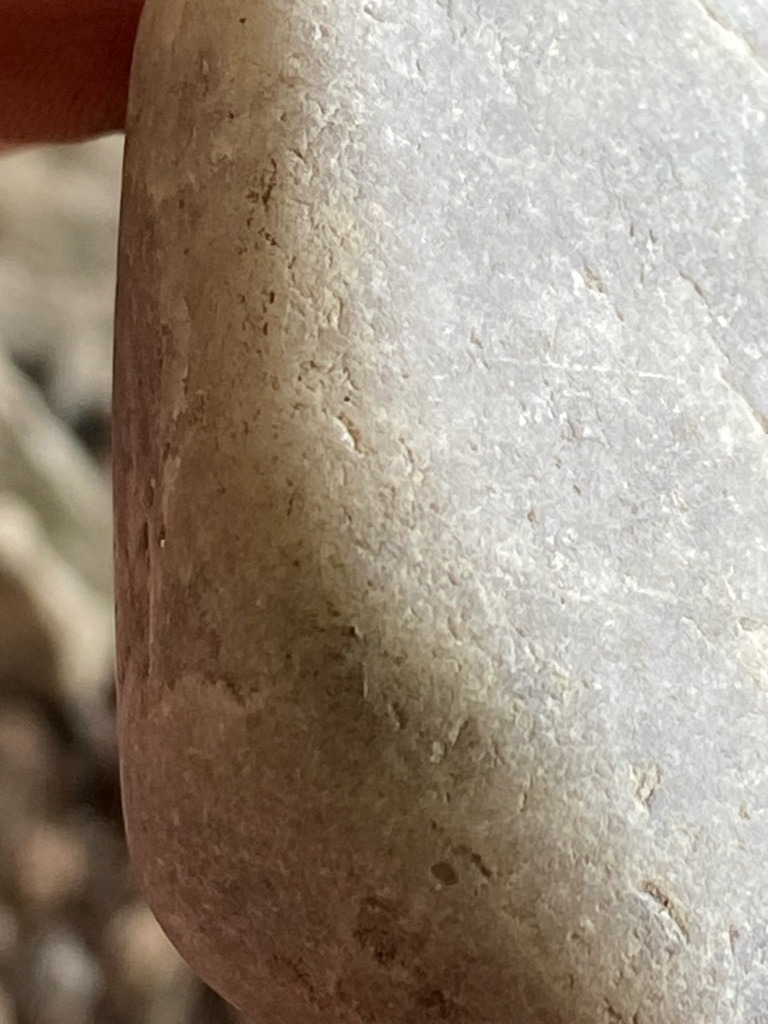
Not a diamond; this is a common rock or pebble (likely quartzite or quartz-bearing stone) showing a natural, weathered, and unpolished surface.
Not a diamond; this is a common rock or pebble (likely quartzite or quartz-bearing stone) showing a natural, weathered, and unpolished surface. · Irregular / Natural pebble shape
Not applicable (Raw, uncut stone) Cut
Carat
Not applicable (Mineral specimen / rock)
Color
Not applicable (Greyish-white to tan)
Clarity
Not applicable
Shape
Irregular / Natural pebble shape
Overall Assessment
The specimen pictured is not a diamond or a gemstone, but rather a common weathered rock. It lacks all diagnostic gemological properties of diamond such as adamantine luster, high refractive index, and cleavage planes.
Cut Quality
Not applicable (Raw, uncut stone)
Brilliance
None
Fire
None
Scintillation
None
Proportions
Not applicable
Symmetry
Asymmetrical / Natural
Polish
Unpolished
Fluorescence
Unknown
Inclusions
Natural mineral grains and weathering fractures
Blemishes
Natural surface pitting, abrasion, and rough texture
Origin
Terrestrial rock from a natural alluvial or geological deposit
Treatment Detection
None (Untreated natural stone)
Estimated Value
Nominal / Zero commercial gemstone value
Certification Estimate
Not applicable (Cannot be certified as a gemstone)
Investment Potential
None
Similar Diamonds
None
Setting Suggestions
Not recommended for jewelry settings due to softness and lack of gemological value
Care & Maintenance
Standard cleaning with water if desired, but requires no special care
Interesting Facts
Common rocks and pebbles are frequently mistaken for rough diamonds by novices due to lighting or texture, but lack the adamantine luster, crystal faces, and hardness of diamond.