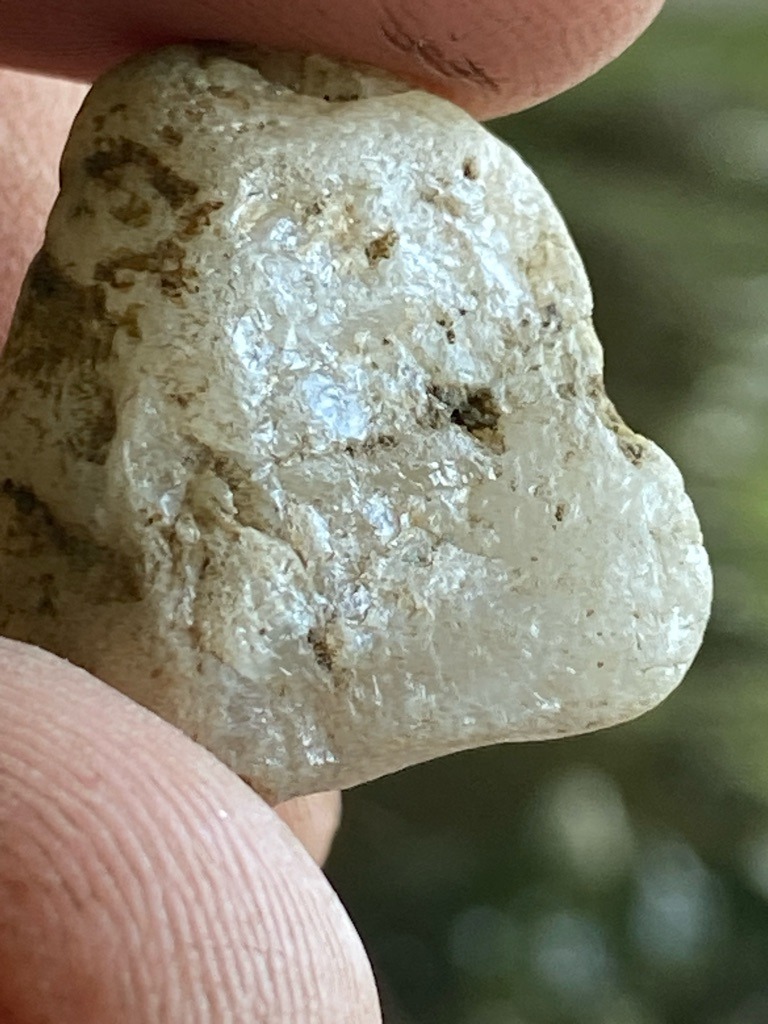
Natural rough diamond crystal
Natural rough diamond crystal · Rough crystal / Irregular octahedral fragment
Not applicable (Rough, uncut stone) Cut
Carat
Estimated 2.5 to 3.5 carats
Color
Estimated J-K-L range (off-white / yellow-tinted rough)
Clarity
I1 to I3 (Included rough with surface irregularities)
Shape
Rough crystal / Irregular octahedral fragment
Overall Assessment
An interesting, natural rough diamond specimen showing typical unpolished characteristics, surface textures, and inclusions, making it more suitable for mineral collections than high-end jewelry.
Cut Quality
Not applicable (Rough, uncut stone)
Brilliance
Low due to lack of faceting and rough surface texture
Fire
Minimal dispersion visible through raw exterior
Scintillation
Poor due to unpolished and irregular surface
Proportions
Natural rough proportions, unpolished
Symmetry
Natural asymmetric crystal growth
Polish
Raw, natural crystal faces (trigons potentially present)
Fluorescence
Indeterminate from visual inspection alone
Inclusions
Heavy internal clouding, carbon spots, and feather fractures visible
Blemishes
Natural surface pitting, rough skin, and adhering matrix minerals
Origin
Alluvial or primary kimberlite rough source
Treatment Detection
No treatments detected; appears completely untreated and natural
Estimated Value
Nominal value as a specimen; significant cutting loss expected if faceted
Certification Estimate
Requires professional laboratory analysis (GIA or similar) for formal grading
Investment Potential
Low investment value as a gem, primarily of interest to collectors or lapidaries
Similar Diamonds
Other unassorted run-of-mine industrial or low-gem quality rough diamonds
Setting Suggestions
Best kept as a raw mineral specimen or custom organic wire-wrap setting
Care & Maintenance
Store separately to avoid scratching other items; clean gently with warm soapy water
Interesting Facts
Rough diamonds often have frosted or pitted surfaces caused by resorption in the magma during transport to the Earth's surface