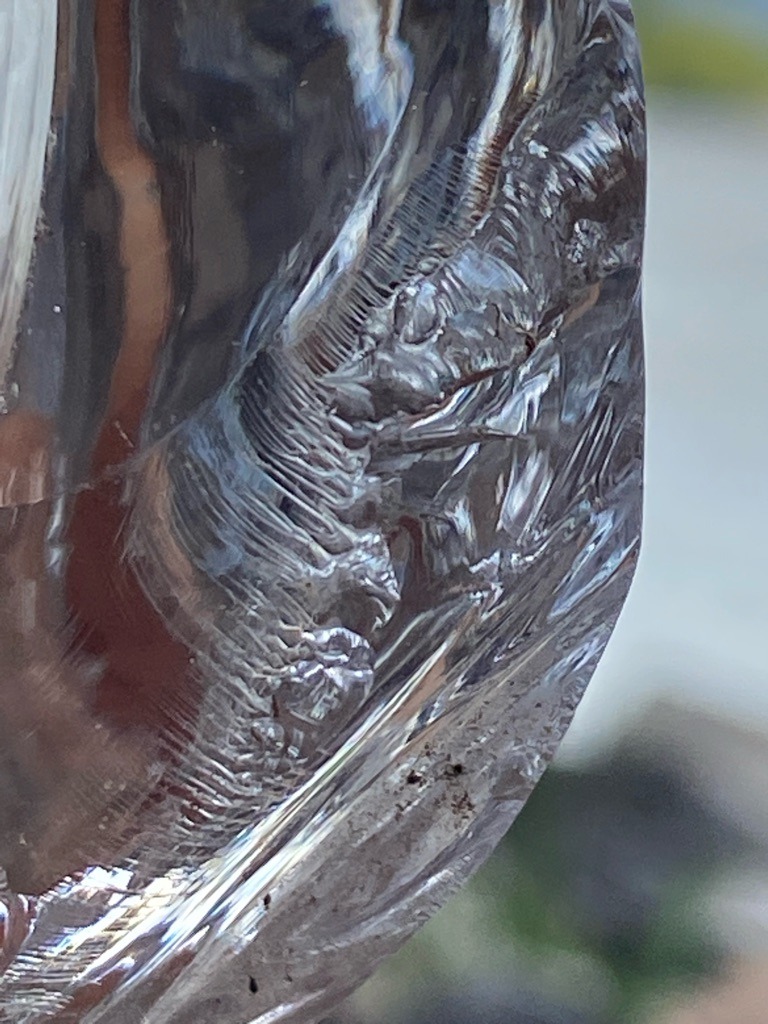
Natural rough diamond specimen
Natural rough diamond specimen · Uncut or partially worked rough crystal with natural faces and conchoidal fracture patterns
Not applicable due to being in rough, uncut state Cut
Carat
Estimated to be significantly large based on visual macro perspective, likely over 10 carats
Color
Near-colorless to faint brownish-grey hue typical of untreated natural rough
Clarity
Included (I1-I3 equivalent), featuring natural internal growth structures and strain patterns
Shape
Uncut or partially worked rough crystal with natural faces and conchoidal fracture patterns
Overall Assessment
A fascinating, highly textured natural diamond specimen showing incredible raw geological details, ideal for collectors or custom organic jewelry design
Cut Quality
Not applicable due to being in rough, uncut state
Brilliance
Limited to vitreous to adamantine reflection off natural cleavage planes and fracture faces
Fire
Minimal spectral dispersion due to rough, unfaceted state and opacity
Scintillation
Absent due to lack of facets
Proportions
N/A for raw mineral specimen
Symmetry
Asymmetrical natural crystal form with growth strictions and irregular habit
Polish
Natural unpolished surface showing characteristic crystal growth lines (trigons or etch channels)
Fluorescence
Cannot be definitively determined without UV testing, likely inert to moderate blue
Inclusions
Natural internal features including cloudiness, feather fractures, and mineral inclusions visible beneath the surface
Blemishes
Natural surface etching, irregular growth lines, and rough textured faces typical of natural diamond rough
Origin
Likely alluvial or primary kimberlitic pipe origin from major producing regions like South Africa, Russia, or Canada
Treatment Detection
No obvious signs of artificial treatments; appears entirely natural and untreated
Estimated Value
Varies widely depending on exact weight, transparency, and industrial versus gem-quality classification
Certification Estimate
Would require comprehensive lab analysis by GIA or similar institution for formal origin and quality report
Investment Potential
Valued primarily as a collectible mineral specimen or raw jewelry component rather than a traditional faceted investment diamond
Similar Diamonds
Comparable to unworked run-of-mine natural diamond specimens and mineral display pieces
Setting Suggestions
Best preserved as a raw mineral specimen in a custom organic wire-wrap or bezel setting highlighting its natural crystal form
Care & Maintenance
Store carefully away from other hard gemstones to prevent chipping or scratching due to natural cleavage planes
Interesting Facts
Displays classic natural diamond characteristics including growth strictions and conchoidal fracture patterns formed deep within the Earth's mantle