Non-diamond mineral (Likely Quartz or industrial glass)
Non-diamond mineral (Likely Quartz or industrial glass) · Rough / Uncut (Irregular shard)
None (Rough/Uncut) Cut
Carat
Estimated 2.0 to 4.0 carats based on finger scale
Color
Near-colorless with slight brownish or yellowish tint
Clarity
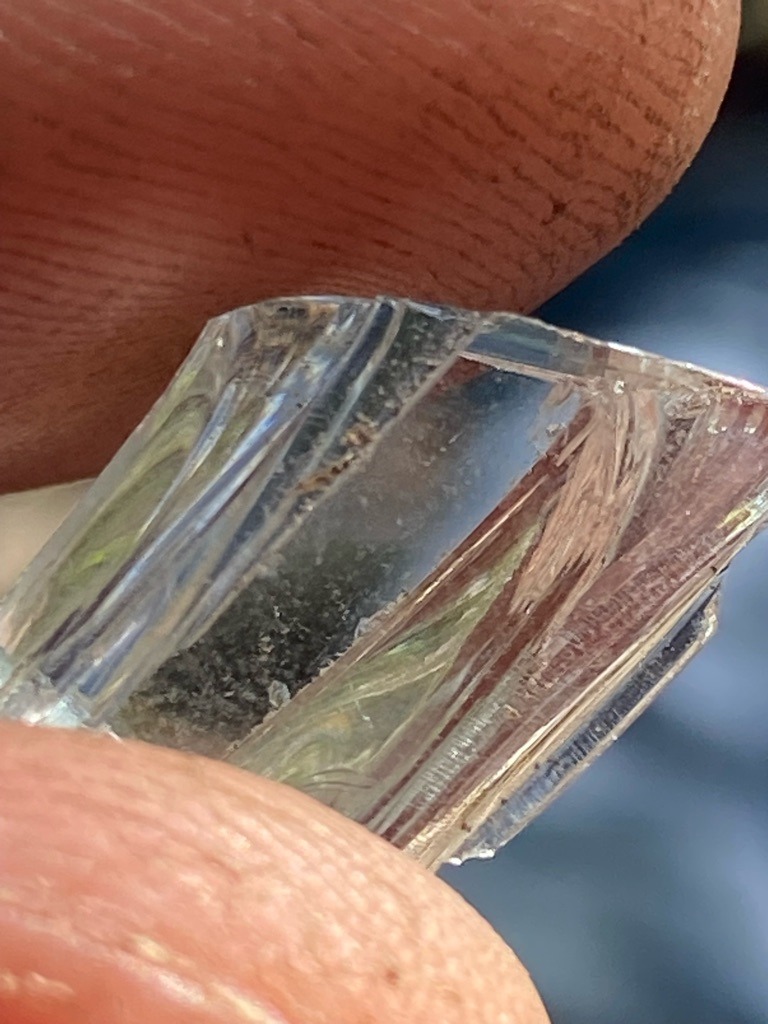
Included (I1-I3 equivalent), visual heavy internal fracturing
Shape
Rough / Uncut (Irregular shard)
Overall Assessment
The specimen appears to be a common mineral shard (likely Quartz or Glass) rather than a diamond. It lacks the characteristic adamantine luster and crystal structure of natural rough diamond.
Cut Quality
None (Rough/Uncut)
Brilliance
Low (typical of vitreous luster in non-diamond materials)
Fire
Very Low to None
Scintillation
None
Proportions
Irregular shard geometry, no standard proportions
Symmetry
None (Asymmetric)
Polish
Natural striations or rough fracture surfaces
Fluorescence
Indeterminate without UV light
Inclusions
Heavy internal feathers, graining, and possible mineral inclusions
Blemishes
Surface abrasions, chips, and irregular fracture planes
Origin
Terrestrial surface find (likely Quartz or common silicon-based mineral)
Treatment Detection
No obvious treatments; appears to be raw mineral raw material
Estimated Value
Negligible market value ($1 - $20) as a mineral specimen
Certification Estimate
Unlikely to be certified by GIA/AGS as a gemstone; requires laboratory identification of species
Investment Potential
None
Similar Diamonds
None; characteristics do not match diamond crystal habits (cubic system)
Setting Suggestions
Not suitable for traditional jewelry setting without professional cutting and polishing
Care & Maintenance
Handle with care to avoid further fracturing; clean with water and soft brush
Interesting Facts
The specimen shows conchoidal-like fracturing which is more common in quartz or glass than the octahedral cleavage of diamond