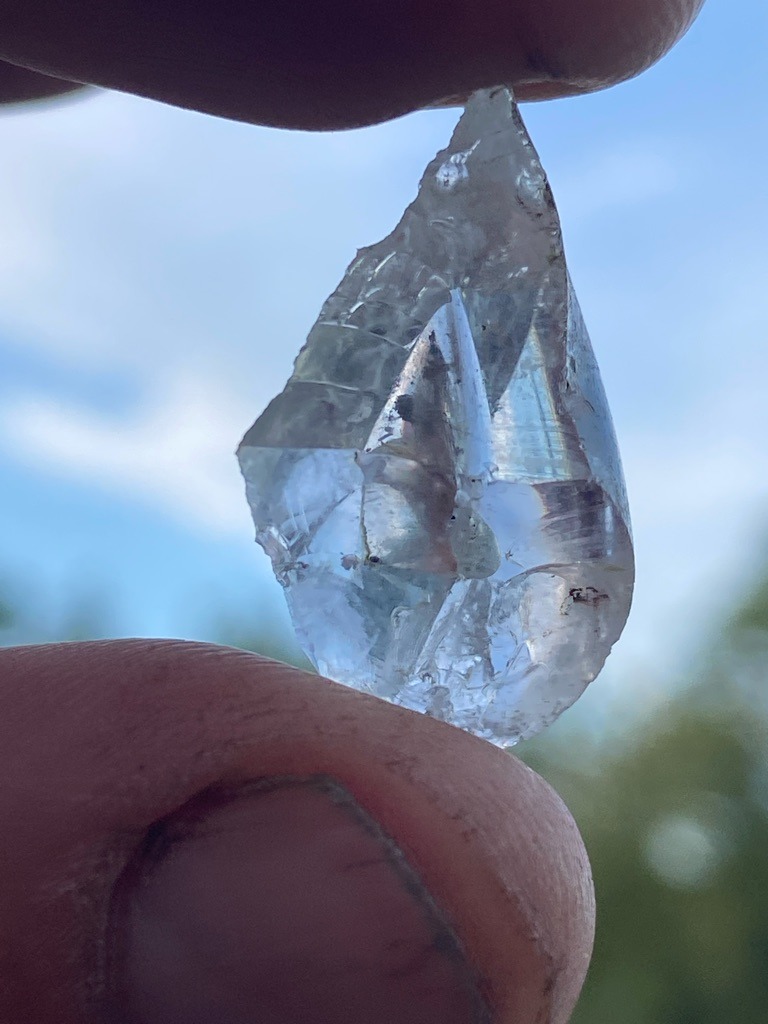
Natural rough diamond crystal
Natural rough diamond crystal · Uncut natural crystal, somewhat pear or irregular shaped rough
Not applicable as this is a rough, uncut crystal Cut
Carat
Estimated between 3 to 5 carats based on relative size and visual perspective
Color
Estimated near-colorless to faint yellow (G-K range)
Clarity
Estimated included (I1-I3) due to noticeable internal features, fractures, and dark crystal inclusions
Shape
Uncut natural crystal, somewhat pear or irregular shaped rough
Overall Assessment
An intriguing, natural uncut diamond crystal displaying characteristic rough features, growth lines, and internal inclusions, offering a unique raw aesthetic prized by collectors of mineral specimens
Cut Quality
Not applicable as this is a rough, uncut crystal
Brilliance
Limited due to rough surface and internal fractures, but shows vitreous to adamantine luster on clear faces
Fire
Minimal dispersion visible due to lack of standard facet angles
Scintillation
Low to moderate flashes of light from natural crystal faces and internal cleavage planes
Proportions
Natural rough stone geometry, not faceted
Symmetry
Natural crystal symmetry with octahedral and growth features visible
Polish
Natural crystal faces (trigons and striations), no artificial polish
Fluorescence
Cannot be determined accurately without UV light testing (typically inert to medium blue in natural stones)
Inclusions
Noticeable dark carbon inclusions, internal feather fractures, and growth lines
Blemishes
Natural surface irregularities, rough edges, and etching features characteristic of rough stones
Origin
Natural origin, likely from alluvial or primary kimberlite deposits (Africa, Russia, or Canada)
Treatment Detection
No obvious signs of artificial treatments; appears completely untreated and in its natural state
Estimated Value
Varies widely depending on exact weight, purity, and cutting potential, generally lower per carat for industrial or heavy inclusion grade
Certification Estimate
GIA or similar major lab would issue a rough diamond report rather than a standard grading report
Investment Potential
Collector value lies primarily in its unique raw aesthetic and conversational appeal rather than standard liquidity
Similar Diamonds
Other natural rough diamond specimens and uncut gem-grade diamond crystals
Setting Suggestions
Best showcased in a bespoke raw diamond setting, such as a bezel setting or organic wire-wrap using yellow gold or platinum
Care & Maintenance
Clean gently with warm soapy water and a soft brush; avoid harsh ultrasonic cleaners due to internal natural fractures
Interesting Facts
Rough diamonds retain the geological story of their journey from the Earth's mantle, often displaying natural triangular growth markings called trigons