Likely Non-Diamond (Simulant / Glass)
Likely Non-Diamond (Simulant / Glass) · Irregular / Rough Cut
Poor Cut
Carat
Estimated 1.5 - 2.5 carats
Color
Near-colorless with prominent secondary pinkish/orange hues
Clarity
I3 (Highly Included / Fractured)
Shape
Irregular / Rough Cut
Overall Assessment
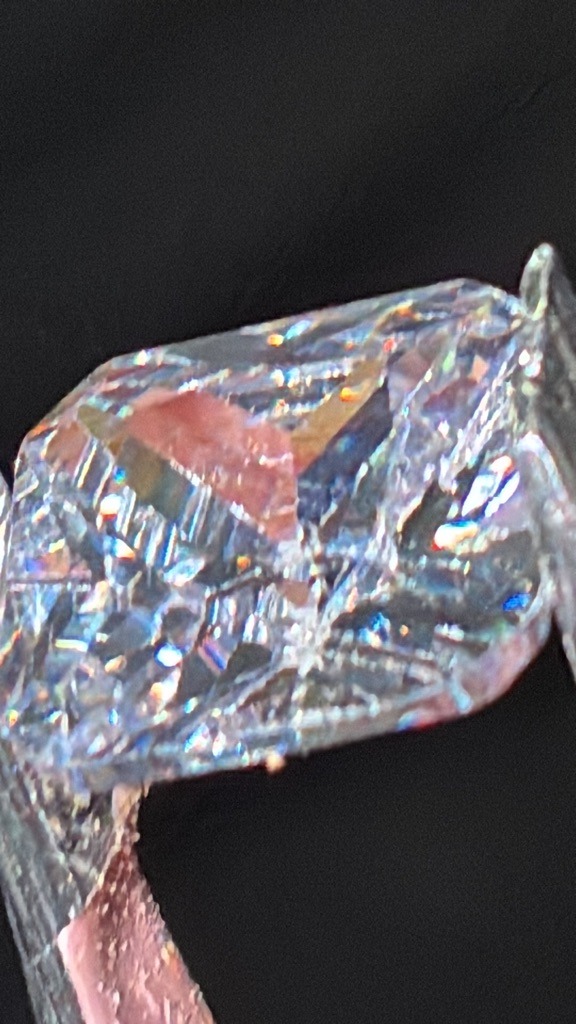
This specimen appears to be a heavily damaged or poorly manufactured simulant rather than a natural gemstone. The jagged edges and 'crushed ice' internal appearance are characteristic of industrial-grade simulants or glass-filled composites.
Cut Quality
Poor
Brilliance
Low; suppressed by internal fractures
Fire
High dispersion visible in fractures (characteristic of high-refractive simulants)
Scintillation
Low to Moderate; localized to specific fracture planes
Proportions
Highly irregular, lacks standard pavilion or crown angles
Symmetry
Poor
Polish
Poor
Fluorescence
Indeterminate from photo
Inclusions
Extensive internal fracturing, cleavages, and large reddish-pink crystal inclusions
Blemishes
Chipped edges, surface pits, and deep scratches
Origin
Likely synthetic material or common crystal habit (e.g., cubic zirconia or glass)
Treatment Detection
Possible coating or composite material suggested by the color distribution and fracture pattern
Estimated Value
$10 - $50 (Decorative/Educational value only)
Certification Estimate
Likely ineligible for major diamond grading labs; could be identified as a simulant by IGI
Investment Potential
None
Similar Diamonds
Compare to rough cubic zirconia or salt-and-pepper diamonds with heavy fracturing
Setting Suggestions
Not recommended for fine jewelry; possible wire-wrap or craft setting
Care & Maintenance
Avoid ultrasonic cleaners and steam, as thermal shock could further split the fractures
Interesting Facts
The intense rainbow fire in the fractured areas combined with the shallow facets often indicates a material with high dispersion but low hardness