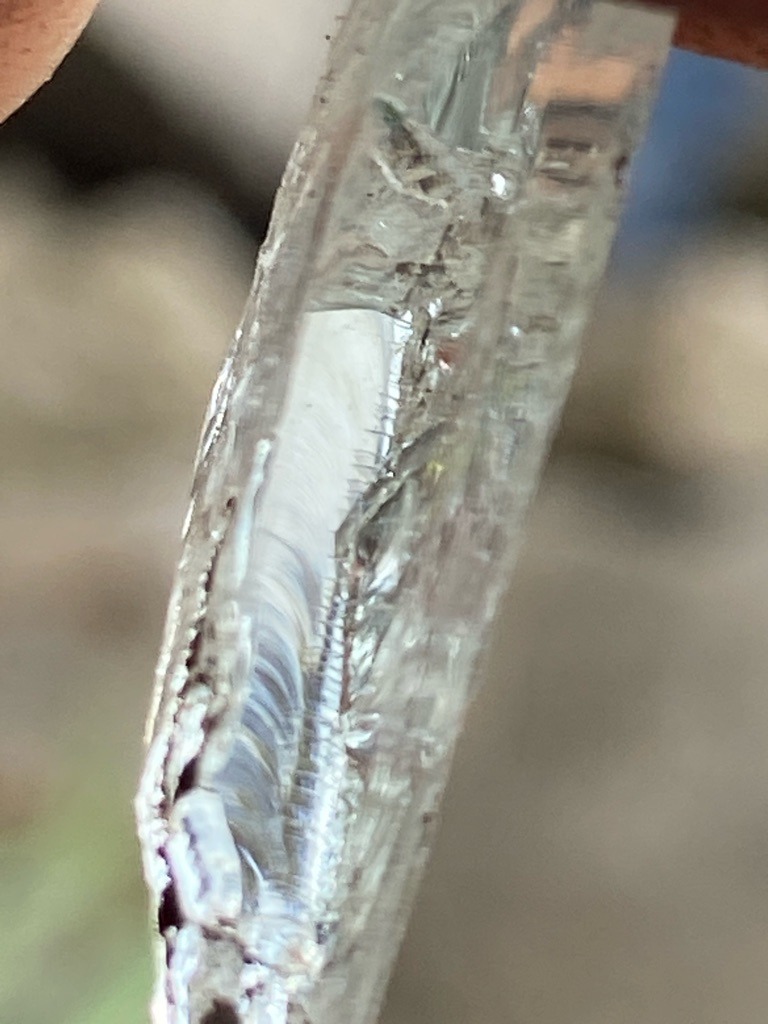
Rough, unsawn natural diamond crystal, likely industrial or near-gem quality
Rough, unsawn natural diamond crystal, likely industrial or near-gem quality · Rough octahedral/macle crystal form, elongated and distorted
Not applicable (Rough uncut crystal) Cut
Carat
Estimated at 1.5 to 2.5 carats based on visual scale and density
Color
Near-colorless to faint yellow tint (K-M range)
Clarity
I1 to I3 (Included), containing prominent natural surface features and internal fractures
Shape
Rough octahedral/macle crystal form, elongated and distorted
Overall Assessment
An intriguing, untreated natural diamond crystal showcasing raw geological characteristics, ideal for mineral collectors or bespoke organic jewelry rather than traditional investment portfolios.
Cut Quality
Not applicable (Rough uncut crystal)
Brilliance
Low, characteristic of uncut rough stone prior to cutting and faceting
Fire
Minimal dispersion visible in current rough state
Scintillation
Limited flash due to absence of faceted surfaces
Proportions
Natural crystal habit with elongated morphology and irregular dimensions
Symmetry
Natural crystal symmetry showing distorted octahedral faces and triangular growth markings (trigons)
Polish
Natural unpolished crystal faces with typical frosted or etched skin
Fluorescence
Indeterminate from visual assessment; likely Faint to Medium blue under UV
Inclusions
Heavy internal feathers, clouds, and dark carbon spots
Blemishes
Natural surface etch channels, trigons, and irregular growth steps
Origin
Natural African or Canadian alluvial/primary kimberlite deposit
Treatment Detection
No signs of artificial treatment; completely natural untreated rough
Estimated Value
Modest collector or specimen value, ranging from $100 to $300 depending on exact weight and industrial vs. specimen demand
Certification Estimate
GIA or similar primary laboratory would issue a rough stone origin report rather than a standard grading report
Investment Potential
Low investment potential for resale; primarily valued as a geological study piece or unique raw jewelry element
Similar Diamonds
Typical run-of-mine industrial or low-grade jewelry rough diamonds
Setting Suggestions
Best preserved as a raw mineral specimen or set in a secure organic/organic-style pendant using raw wire-wrap or bezel techniques
Care & Maintenance
Store separately from other gems to prevent scratching; clean gently with warm soapy water and a soft brush
Interesting Facts
Displays natural growth features like trigons (triangular indentations) formed by natural dissolution processes deep within the Earth's mantle