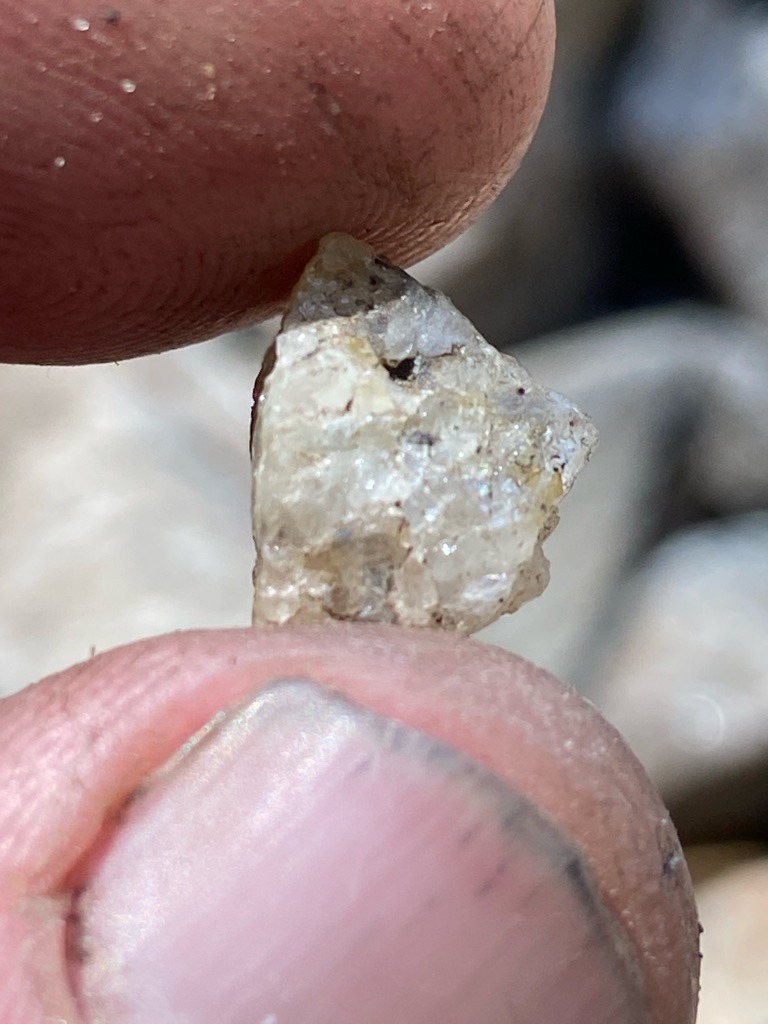
Natural rough diamond crystal
Natural rough diamond crystal · Uncut rough stone with irregular crystalline form
Not applicable (Rough, unpolished crystal) Cut
Carat
Estimated 0.35 - 0.50 carats (rough)
Color
Light brown to off-white (K-M range)
Clarity
I2 - I3 (Included rough crystal with visible dark inclusions and fractures)
Shape
Uncut rough stone with irregular crystalline form
Overall Assessment
A genuine natural rough diamond of near-gem/industrial grade. While unsuitable for standard high-end jewelry due to heavy inclusions and lack of faceting, it possesses authentic geological charm as a raw crystal specimen.
Cut Quality
Not applicable (Rough, unpolished crystal)
Brilliance
Low due to rough surface and internal inclusions
Fire
Minimal dispersion visible through the rough translucent exterior
Scintillation
Poor, lacking faceted light return
Proportions
Natural crystal proportions, depth percentage cannot be standardized
Symmetry
Natural irregular symmetry characteristic of rough diamond growth
Polish
Unpolished natural crystal faces and resorption features
Fluorescence
Cannot be reliably determined without UV testing (Likely None to Faint)
Inclusions
Heavy internal clouding, dark mineral inclusions (possibly carbon spots), and natural feather fractures
Blemishes
Natural surface trigons, pitting, and rough skin characteristic of alluvial transport
Origin
Likely alluvial deposit (riverbed source), typical of artisanal diamond mining regions in Africa or South America
Treatment Detection
No evidence of artificial treatments; completely natural state
Estimated Value
$20 - $50 USD (valued primarily as a raw mineral specimen rather than a cut gem)
Certification Estimate
GIA or local gemological laboratory would classify it as untreated natural rough industrial/near-gem quality
Investment Potential
Very low as a financial investment; primarily of interest to mineral collectors or educational displays
Similar Diamonds
Comparable to low-grade industrial or uncut collector rough diamonds found in alluvial washings
Setting Suggestions
Best preserved as a raw mineral specimen, or mounted in an organic raw wire-wrap pendant using yellow gold or sterling silver
Care & Maintenance
Clean gently with warm soapy water and a soft brush; avoid harsh chemicals and hard impacts which could exploit natural cleavage planes
Interesting Facts
This specimen represents a natural diamond in its raw, unaltered state directly as it forms deep within the Earth's mantle before human cutting and polishing