Non-diamond (Glass or Slag)
Non-diamond (Glass or Slag) · Rough / Uncut (Amorphous Fracture)
Uncut / Raw Material Cut
Carat
Unknown; visually large but low density suggests non-stone material
Color
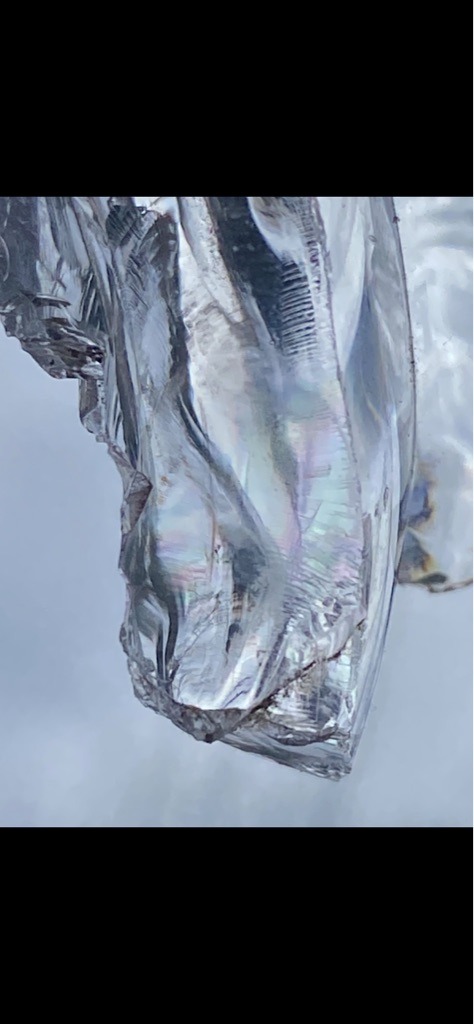
Colorless with iridescent surface diffraction
Clarity
Transparent with heavy internal flow lines and structural distortions
Shape
Rough / Uncut (Amorphous Fracture)
Overall Assessment
The specimen is not a diamond. It is a piece of transparent glass or slag based on the visual fracture patterns and the presence of internal flow lines.
Cut Quality
Uncut / Raw Material
Brilliance
Low; lacks the refractive index of a diamond
Fire
Weak; visible iridescence is likely due to surface film or oil, not dispersion
Scintillation
Low to None
Proportions
Non-standard; jagged and irregular fractures
Symmetry
N/A - Irregular shape
Polish
N/A - Rough surface with vitreous luster
Fluorescence
Inconsistent with diamond; likely inert or surface refraction
Inclusions
Gas bubbles, flow lines, and conchoidal fracture patterns indicative of glass
Blemishes
Heavy surface scratching and impact Marks
Origin
Industrial or post-consumer glass byproduct
Treatment Detection
No treatments detected for a gemstone; appears to be raw industrial material
Estimated Value
Negligible; decorative value only
Certification Estimate
Unlikely to be certified by GIA/AGS as a gemstone; lab report would identify as glass
Investment Potential
Zero investment value
Similar Diamonds
None; more comparable to cullet or beach glass
Setting Suggestions
Not suitable for traditional jewelry settings; artistic wire wrapping only
Care & Maintenance
Wipe with a soft cloth; avoid sharp impacts as it is prone to shattering
Interesting Facts
The ribbing and conchoidal fractures seen in the image are classic diagnostics for glass material rather than crystalline diamonds