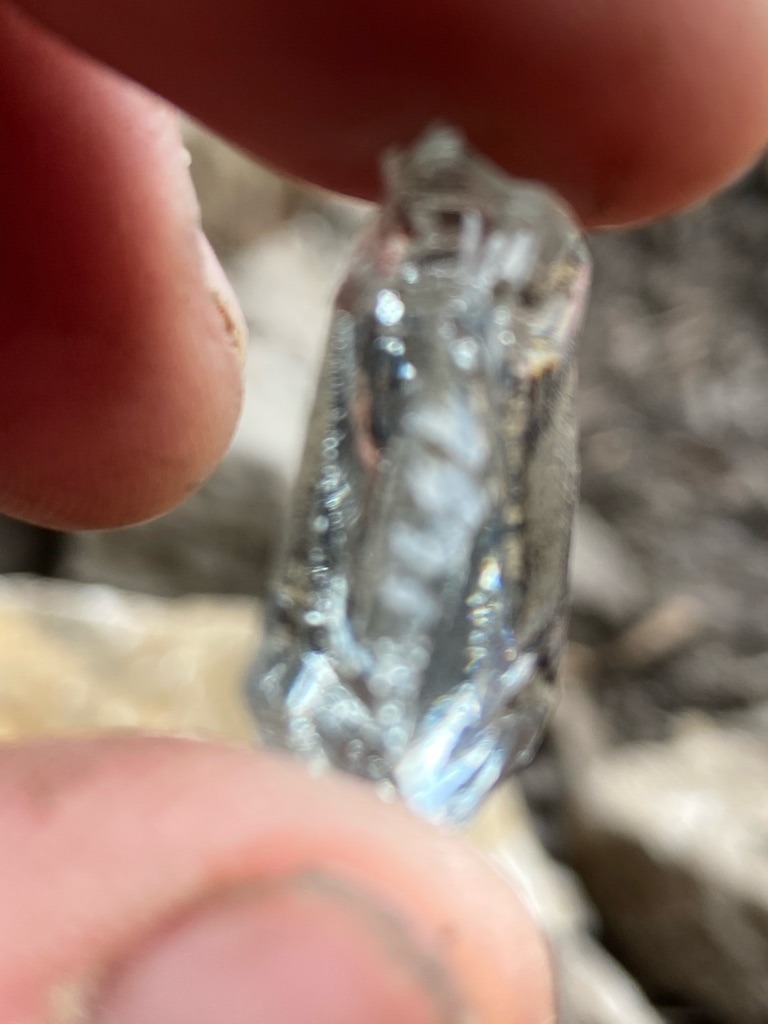
Natural rough diamond crystal
Natural rough diamond crystal · Rough crystal, uncut octahedral or irregular elongated habit
Not applicable (Rough, unpolished crystal) Cut
Carat
Estimated 1.5 to 2.5 carats
Color
Near-colorless to light brown tint (Estimated G-J range)
Clarity
Included (Rough crystal with internal feathers and inclusions, likely I1-I2)
Shape
Rough crystal, uncut octahedral or irregular elongated habit
Overall Assessment
An interesting specimen of a natural rough diamond crystal, showing typical unpolished characteristics with potential for cutting or collecting as-is.
Cut Quality
Not applicable (Rough, unpolished crystal)
Brilliance
Low due to rough, unpolished state
Fire
Minimal in current rough state; requires proper faceting to exhibit dispersion
Scintillation
Poor in rough form; flashes only from natural crystal faces
Proportions
Natural crystal growth proportions, irregular rough shape
Symmetry
Natural crystal symmetry, distorted octahedral form
Polish
Natural rough crystal faces (trigons potentially present under magnification)
Fluorescence
Cannot be determined without UV testing (Likely none to medium blue)
Inclusions
Internal cloudiness, carbon spots, and feathery fractures typical of rough stones
Blemishes
Natural surface etching, trigons, and rough skin
Origin
Natural alluvial or primary kimberlite deposit origin
Treatment Detection
No treatments detected; entirely untreated natural rough mineral
Estimated Value
$300 - $800 depending on actual weight, purity, and cutting potential
Certification Estimate
GIA or similar major lab would issue a rough diamond report or weight estimation prior to cutting
Investment Potential
Moderate, primarily valued as a specimen or for its potential yield after custom cutting
Similar Diamonds
Other natural unpolished rough diamond crystals sold for mineral collectors or bespoke rustic jewelry
Setting Suggestions
Can be set raw in organic, rustic-style jewelry using platinum or yellow gold prongs or bezels
Care & Maintenance
Clean with warm soapy water and a soft brush; avoid harsh ultrasonic cleaners due to internal feathers
Interesting Facts
Rough diamonds straight from the earth often show natural growth markings called trigons on their faces