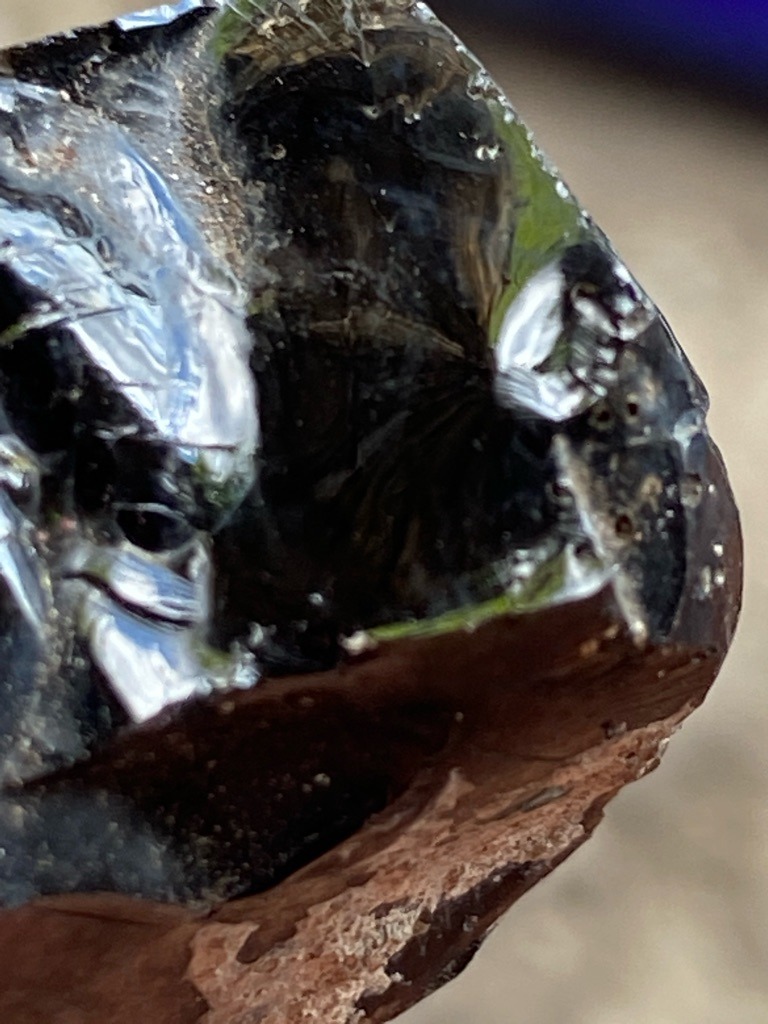
Not a diamond; this appears to be industrial slag glass, obsidian, or a similar vitreous material displaying characteristic conchoidal fracture and gas bubbles.
Not a diamond; this appears to be industrial slag glass, obsidian, or a similar vitreous material displaying characteristic conchoidal fracture and gas bubbles. · Rough / Uncut irregular chunk with conchoidal fracture surfaces
Not applicable (raw, unfaceted material) Cut
Carat
Not applicable (glass/slag material, highly variable size)
Color
Dark/Opaque with glassy luster
Clarity
Not applicable to glass (contains numerous internal gas bubbles)
Shape
Rough / Uncut irregular chunk with conchoidal fracture surfaces
Overall Assessment
The specimen shown in the image is not a diamond, but rather a piece of industrial glass, slag, or obsidian, identifiable by its conchoidal fracture and internal gas bubbles.
Cut Quality
Not applicable (raw, unfaceted material)
Brilliance
Vitreous (glass-like) reflectivity
Fire
None (glass lacks high dispersion of diamond)
Scintillation
Reflective flash from curved glassy planes only
Proportions
Not applicable
Symmetry
Not applicable
Polish
Natural fracture surfaces with vitreous luster
Fluorescence
Unknown without UV testing
Inclusions
Round gas bubbles visible internally, typical of glass or slag
Blemishes
Surface fractures and conchoidal chipping
Origin
Man-made industrial byproduct (slag) or natural volcanic glass (obsidian)
Treatment Detection
None applicable as it is not a diamond
Estimated Value
Nominal / Zero monetary value as a gemstone
Certification Estimate
Gemological laboratories would not issue a diamond certificate for this material; likely identified as synthetic glass or slag upon testing
Investment Potential
None
Similar Diamonds
None, as this is glass rather than diamond
Setting Suggestions
Not suitable for jewelry setting due to low hardness and fragile nature
Care & Maintenance
Handle with care to avoid sharp edges from conchoidal fractures
Interesting Facts
The curved fracture patterns visible are known as conchoidal fractures, which are characteristic of brittle amorphous materials like glass and quartz