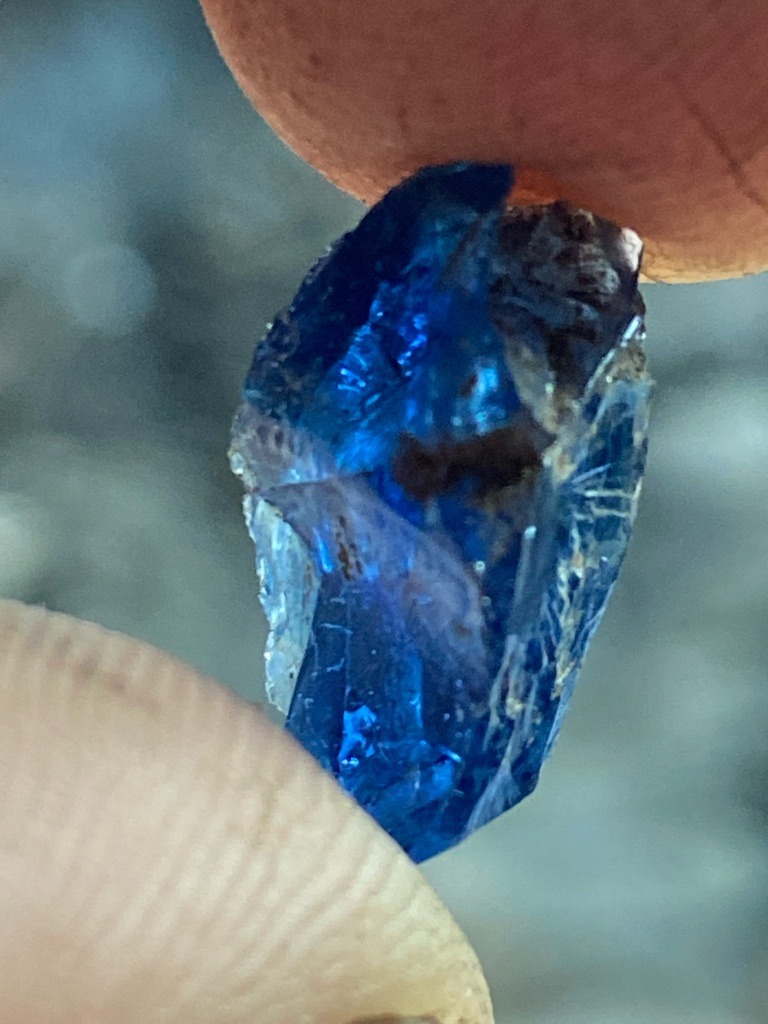
Not a diamond; this specimen appears to be a natural rough blue gemstone, likely blue sapphire or kyanite based on the deep blue color and crystalline structure.
Not a diamond; this specimen appears to be a natural rough blue gemstone, likely blue sapphire or kyanite based on the deep blue color and crystalline structure. · Rough, uncut, irregular crystal form (uncut mineral specimen)
Not applicable (Rough uncut stone) Cut
Carat
Estimated approximately 2.5 to 4.0 carats based on visual scale against fingers, though unpolished rough requires weighing for accuracy.
Color
Deep royal blue with some zoning and dark matrix inclusions
Clarity
I3 (Included / Heavily included with visible fractures, feathers, and dark inclusions)
Shape
Rough, uncut, irregular crystal form (uncut mineral specimen)
Overall Assessment
This is an interesting, natural rough blue crystalline specimen. It requires professional gemological testing to confirm whether it is sapphire, kyanite, or another blue mineral, and it has significant structural inclusions that limit its viability for traditional faceting.
Cut Quality
Not applicable (Rough uncut stone)
Brilliance
Low due to lack of standard facets and internal fracturing
Fire
Minimal to none, typical of rough corundum or silicate minerals
Scintillation
Poor due to unfaceted, opaque, and fractured nature
Proportions
Unproportioned rough stone
Symmetry
Natural irregular crystal symmetry
Polish
Raw, unpolished, natural crystal faces and fracture surfaces
Fluorescence
Cannot be determined without UV testing, likely none to faint
Inclusions
Significant internal feather fractures, dark mineral inclusions, and potential silk or crystal inclusions
Blemishes
Surface fractures, pits, and rough natural growth lines
Origin
Natural terrestrial gemstone rough
Treatment Detection
Visual inspection suggests raw and untreated, but advanced testing (FTIR, EDXRF) is needed to rule out heat treatment or fracture filling
Estimated Value
Low commercial value as a mineral specimen, heavily dependent on precise mineral identification and potential for lapidary work
Certification Estimate
Gemological testing laboratory (such as GIA or GRS) for species identification (e.g., Corundum)
Investment Potential
Low as an investment; primarily of interest to mineral collectors or lapidary artists
Similar Diamonds
None, as this is a colored gemstone rough rather than a diamond
Setting Suggestions
Wire-wrapped organic setting or custom bezel setting if cut and polished into a cabochon
Care & Maintenance
Handle with care due to structural fractures; avoid ultrasonic cleaners and harsh chemicals
Interesting Facts
Rough blue stones in this form are frequently mistaken for diamonds by novices, but their distinct hardness, crystal system, and color reveal their true identity as colored gemstones