Non-diamond (Glass/Slag/Quartz)
Non-diamond (Glass/Slag/Quartz) · Rough / Uncut / Amorphous
None (Raw specimen) Cut
Carat
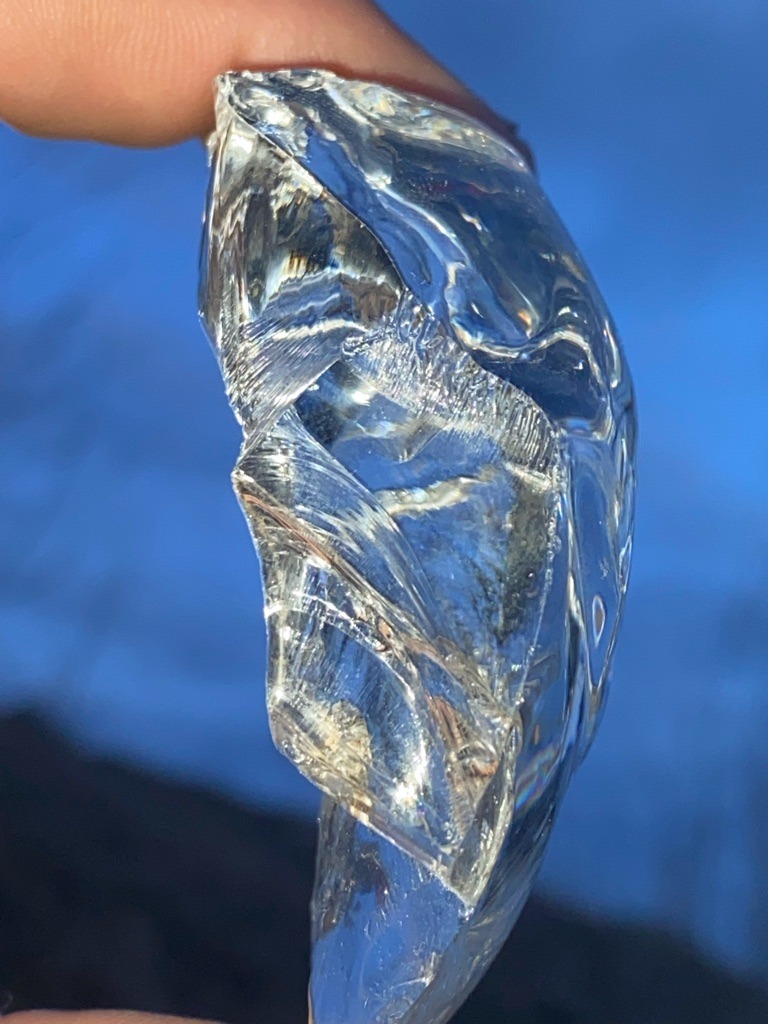
Estimated 15-25 carats based on size relative to fingers
Color
Colorless (Transparent)
Clarity
N/A (Rough contains significant flow lines and surface marks)
Shape
Rough / Uncut / Amorphous
Overall Assessment
This specimen is not a diamond. It lacks the crystal structure, refractive properties, and luster of a diamond. The visual characteristics strongly suggest high-quality glass cullet or a silica-based mineral.
Cut Quality
None (Raw specimen)
Brilliance
Low (Surface reflection only; no internal light return)
Fire
None (Lacks the refractive index of diamond)
Scintillation
Low (Minimal light play)
Proportions
Irregular amorphous shape with conchoidal fractures
Symmetry
None / Asymmetrical
Polish
None (Naturally or industrially glossy surface)
Fluorescence
Inert / None
Inclusions
Internal flow structures, swirls, and small air bubbles visible
Blemishes
Conchoidal (shell-like) fracture patterns and impact pitting
Origin
Likely industrial glass cullet or a water-worn quartz pebble
Treatment Detection
No gemological treatments; natural weathering or industrial cooling
Estimated Value
Negligible market value (Collector's piece or decorative)
Certification Estimate
Not eligible for diamond grading (GIA/IGI would identify as glass or silica)
Investment Potential
None
Similar Diamonds
None; this material lack's diamond's characteristic octahedral or dodecahedral crystal habit
Setting Suggestions
Wire wrapping or cage setting for a pendant
Care & Maintenance
Protect from sharp impacts; glass and quartz are more brittle than diamond
Interesting Facts
The shell-like 'conchoidal' fractures visible on the surface are a diagnostic characteristic of glass and quartz, whereas diamonds cleave along flat planes.