Natural Rough Crystal / Glass Simulant Suspect
Natural Rough Crystal / Glass Simulant Suspect · None (Rough/Uncut Crystal Appearance)
N/A (Uncut/Rough) Cut
Carat
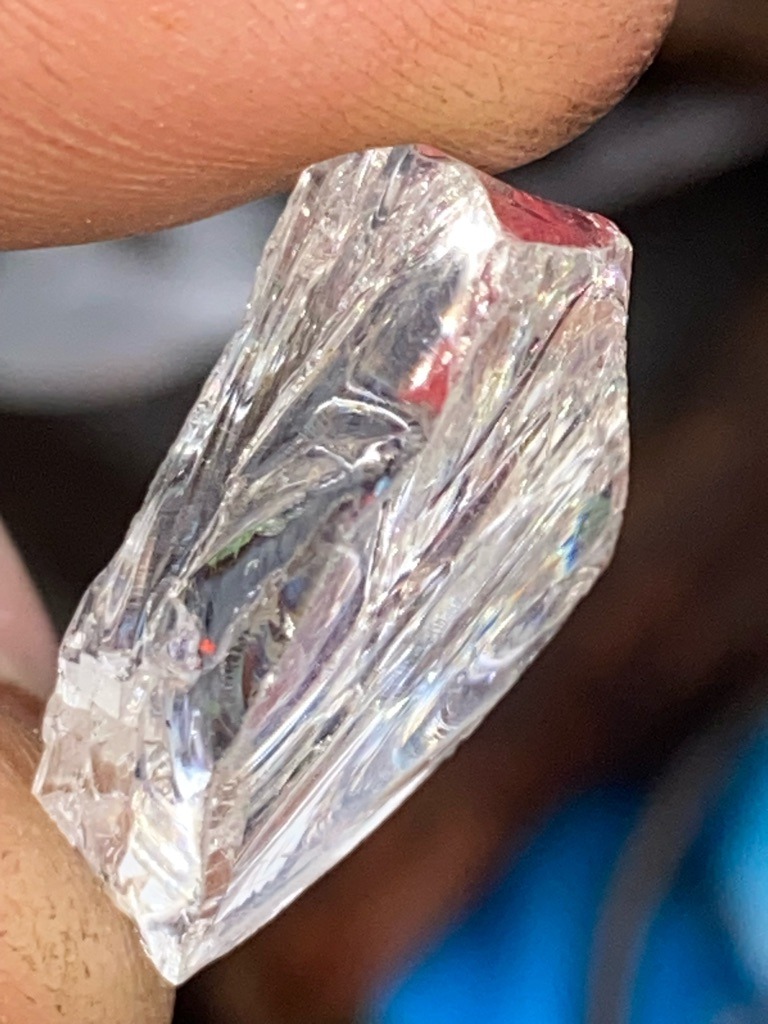
Estimated 3.0 to 5.0 carats based on finger scale
Color
Visual Near-Colorless (Estimated F-H range if genuine)
Clarity
Translucent to Transparent (Visible fractures and internal texture)
Shape
None (Rough/Uncut Crystal Appearance)
Overall Assessment
This specimen does not exhibit the typical geometric crystal structure of a diamond. The surface texture and internal flow lines strongly suggest it is a piece of glass or a common mineral simulant rather than a gemstone-quality diamond.
Cut Quality
N/A (Uncut/Rough)
Brilliance
Low (Surface reflections only, no faceted light return)
Fire
Low (Occasional spectral flashes from internal fractures)
Scintillation
None (Static light reflection)
Proportions
Unstructured rough stone
Symmetry
None (Irregular rough morphology)
Polish
N/A (Natural crystal faces or fractured surfaces)
Fluorescence
Indeterminate without UV light
Inclusions
Prominent internal flow lines, potential gas bubbles, or heavy conchoidal fracturing
Blemishes
Surface pitting and jagged edges consistent with raw state or broken glass
Origin
Alluvial source or Synthetic Glass manufacturing
Treatment Detection
None apparent; texture suggests either raw natural state or industrial glass
Estimated Value
Low (Speculative; if glass, nominal; if diamond, price would depend on yield)
Certification Estimate
GIA Rough Diamond Report (if confirmed diamond)
Investment Potential
Very Low (High risk; appears to be industrial material or a common simulant)
Similar Diamonds
Uncut diamond macles or rough quartz crystals
Setting Suggestions
Wire wrap or custom cage setting for rough specimens
Care & Maintenance
Avoid ultrasonic cleaners until material integrity is confirmed
Interesting Facts
The specimen shows conchoidal fracturing patterns which are more characteristic of glass or quartz than the octahedral cleavage of diamond.