Likely Quartz (Rock Crystal) or Glass / Imitation based on the lack of octahedral crystal habits and the presence of conchoidal fracture patterns typical of amorphous or non-diamond minerals. Not a genuine diamond.
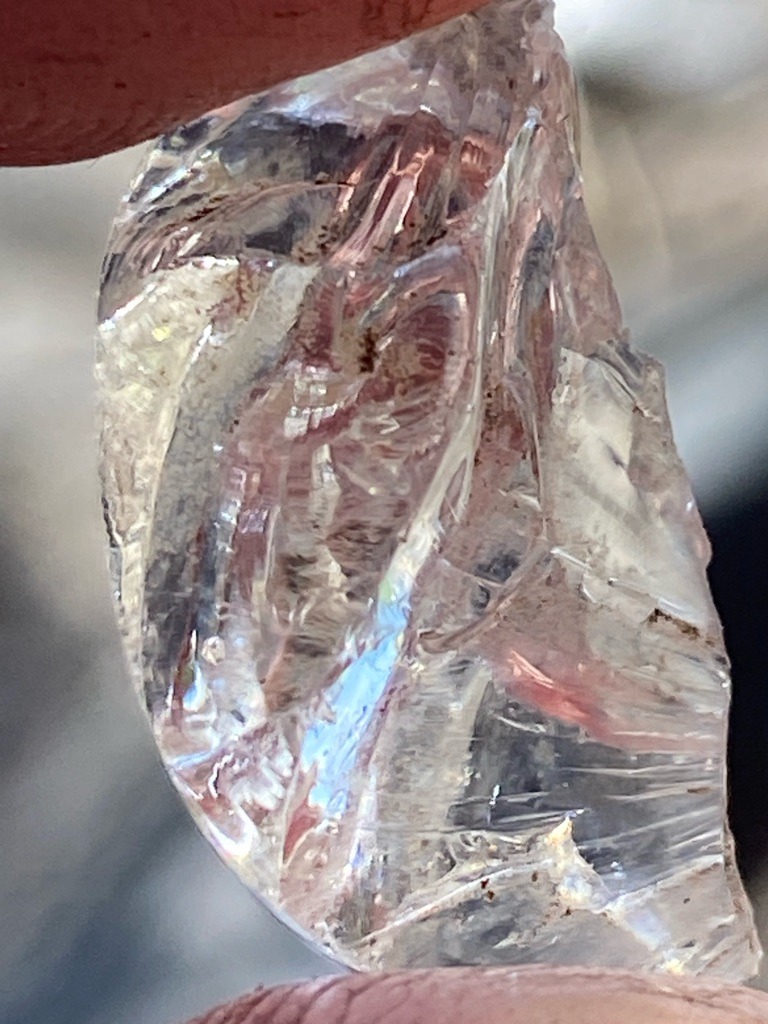
Likely Quartz (Rock Crystal) or Glass / Imitation based on the lack of octahedral crystal habits and the presence of conchoidal fracture patterns typical of amorphous or non-diamond minerals. Not a genuine diamond. · Raw, unpolished crystal fragment with irregular fracture surfaces
Not Applicable (Uncut rough specimen) Cut
Carat
Estimated around 15-20 carats if measured in dense mineral weight (approximate visual estimate)
Color
Colorless / Transparent
Clarity
Included (Contains visible internal fractures, fissures, and foreign mineral deposits)
Shape
Raw, unpolished crystal fragment with irregular fracture surfaces
Overall Assessment
Based on visual analysis of the fracture patterns (conchoidal breaks) and lack of crystal faces characteristic of diamond (octahedrons or dodecahedrons), this specimen is a raw mineral fragment—most likely quartz or glass—rather than a genuine diamond.
Cut Quality
Not Applicable (Uncut rough specimen)
Brilliance
Vitreous to sub-adamantine due to raw fracture planes
Fire
Low (typical of quartz or glass imitations rather than diamond dispersion)
Scintillation
Minimal to none due to lack of standard facet arrangement
Proportions
Not Applicable for raw crystal fragments
Symmetry
Asymmetrical (Natural, irregular breakage)
Polish
Unpolished, raw vitreous/glassy luster
Fluorescence
Unknown (Requires UV testing)
Inclusions
Feathers, fractures, internal stress lines, and minor trapped matrix debris
Blemishes
Natural surface fractures, chips, and uneven growth striations
Origin
Natural mineral occurrence (pegmatite or hydrothermal vein quartz)
Treatment Detection
No obvious treatments, appears to be a natural raw crystal piece or slag glass
Estimated Value
Nominal value (decorative mineral specimen or low-value lapidary rough, under $20 USD)
Certification Estimate
Standard gemological laboratories (GIA, IGI) would issue a report identifying this as non-diamond material (e.g., Quartz or Glass)
Investment Potential
None as an investment; purely decorative or educational
Similar Diamonds
None (This specimen does not share optical or physical properties with diamonds)
Setting Suggestions
Wire-wrapped pendant setting for a raw stone aesthetic, using sterling silver
Care & Maintenance
Standard cleaning with warm soapy water and a soft brush; avoid harsh impacts to prevent further fracturing along cleavage/fracture planes
Interesting Facts
Many untrained observers mistake raw quartz crystals or glass slag for rough diamonds due to their transparency and vitreous luster