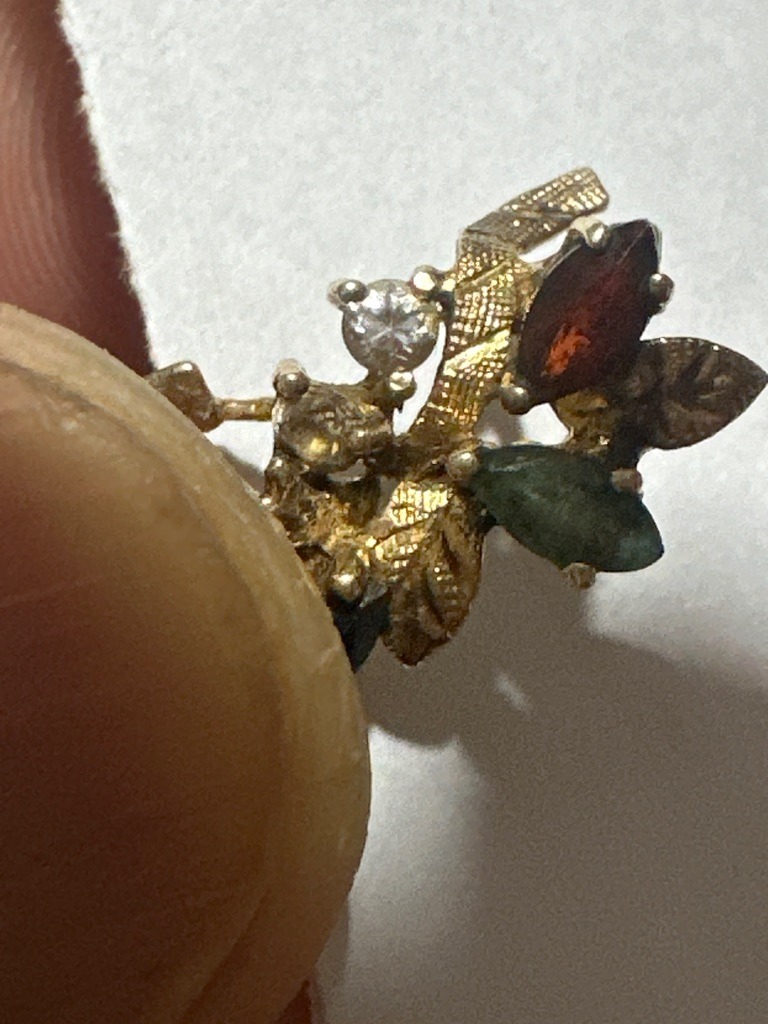
Natural (Likely a Accent Diamond or Substitute)
Natural (Likely a Accent Diamond or Substitute) · Round Brilliant
Good Cut
Carat
Estimated 0.05 to 0.10 carats
Color
Estimated G-H (Near Colorless)
Clarity
Estimated SI1-I1 (Visible inclusions near the edge)
Shape
Round Brilliant
Overall Assessment
This is a small, commercial-quality round brilliant accent stone. It serves as a decorative highlight in a vintage cluster ring rather than a primary specimen stone.
Cut Quality
Good
Brilliance
Moderate; the stone shows decent light return despite being set in a cluster
Fire
Low to Moderate; dispersion is muted by the surrounding colored gemstones
Scintillation
Fair; typical for a small melee-sized accent stone
Proportions
Standard commercial proportions; table appears slightly large for the stone size
Symmetry
Good
Polish
Good
Fluorescence
Indeterminable from photo
Inclusions
Small dark crystal or carbon spot visible near the 2 o'clock position under magnification
Blemishes
Minor surface scratches visible on the table facet due to age/wear
Origin
Geographic origin unknown; typical of 20th-century mass-market jewelry
Treatment Detection
None visible; appears to be natural untreated diamond based on luster
Estimated Value
$50 - $150 (as part of a secondary market jewelry piece)
Certification Estimate
Likely non-certified due to size; GIA or IGI would grade as melee
Investment Potential
Low; primary value is in the gold content and aesthetic of the vintage piece
Similar Diamonds
Standard commercial white melee diamonds used in multi-stone rings
Setting Suggestions
Current yellow gold floral cluster setting is appropriate; would also suit a pave band
Care & Maintenance
Clean with a soft brush and mild soap; check prongs regularly as they appear worn
Interesting Facts
The diamond is paired with a marquise garnet and a green gemstone (possibly emerald or dyed quartz), common in 'Mother's Rings' or 1970s-80s cocktail styles