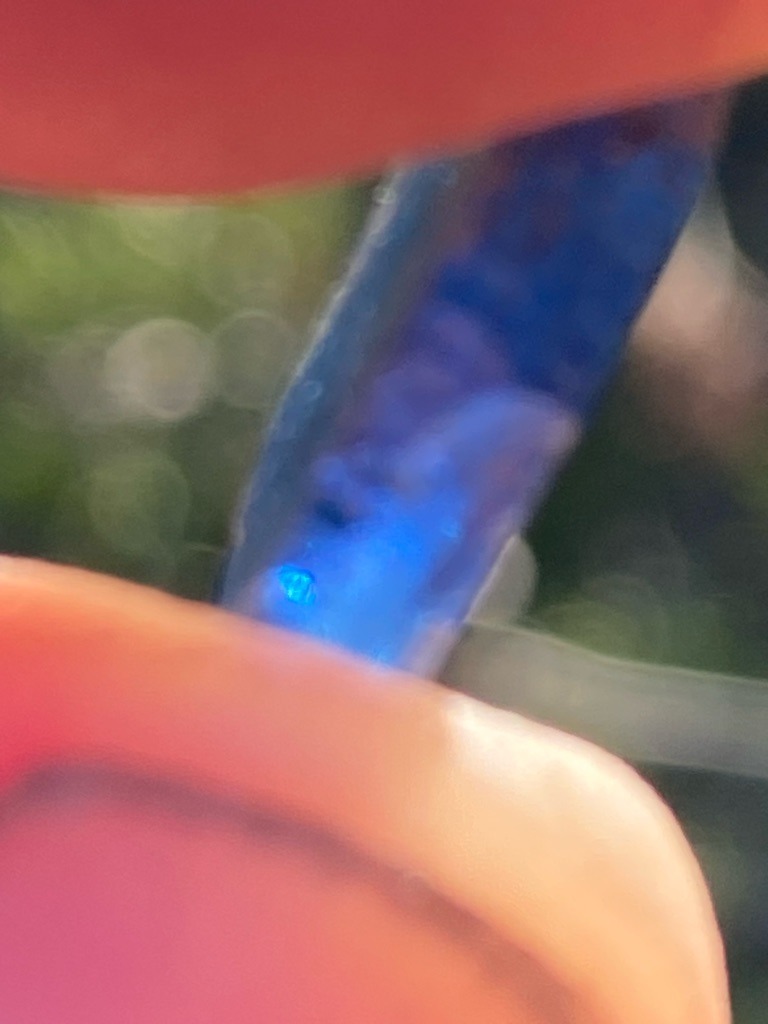
Natural Diamond (likely type IIa based on strong blue fluorescence under UV light, though visual assessment from a single blurry photo is limited)
Natural Diamond (likely type IIa based on strong blue fluorescence under UV light, though visual assessment from a single blurry photo is limited) · Indeterminate / Rough or Raw Crystal (elongated crystal habit visible)
Not applicable (Rough, unpolished crystal) Cut
Carat
Estimated 0.50 - 1.00 carat based on visual context
Color
Near colorless to faint blue / variable due to photographic lighting
Clarity
SI1 - SI2 (Estimated based on visible localized inclusions)
Shape
Indeterminate / Rough or Raw Crystal (elongated crystal habit visible)
Overall Assessment
An intriguing natural rough diamond crystal displaying prominent blue fluorescence under specific lighting conditions. While lacking the optical performance of a faceted stone, its raw and natural aesthetic holds unique charm for mineral collectors.
Cut Quality
Not applicable (Rough, unpolished crystal)
Brilliance
Low to moderate, typical of unpolished or rough crystalline surfaces
Fire
Limited dispersion due to lack of standard facet angles
Scintillation
Minimal standard scintillation; exhibits localized intense fluorescence glow
Proportions
Natural rough proportions, uncut crystal morphology
Symmetry
Natural crystal symmetry (octahedral tendencies)
Polish
Unpolished natural crystal faces (surfaces show natural striations or trigons)
Fluorescence
Strong Blue (strongly visible reacting to ambient or UV light sources in the photo)
Inclusions
Internal dark spots and cloud-like pinpoint inclusions visible near the illuminated tip
Blemishes
Natural surface features, etch channels, and possible trigons on rough faces
Origin
Natural rough diamond, potentially from African or Canadian primary deposits
Treatment Detection
No evidence of artificial treatments; appears completely untreated and natural
Estimated Value
Varies widely based on exact weight, purity, and market demand for rough specimens ($500 - $3,000 USD)
Certification Estimate
GIA or AGS if submitted for full analytical grading report
Investment Potential
Niche market appeal; high value for collectors of rough minerals and unique natural crystals
Similar Diamonds
Other unpolished octahedral or elongated rough diamond crystals with strong blue fluorescence
Setting Suggestions
Organic bezel setting or raw gemstone prong setting in yellow or white gold to preserve the natural crystal form
Care & Maintenance
Clean with warm soapy water and a soft brush; avoid harsh chemicals and ultrasonic cleaners if internal fractures are present
Interesting Facts
Strong blue fluorescence in natural diamonds is often caused by sub-microscopic aggregates of boron or nitrogen-vacancy centers within the crystal lattice