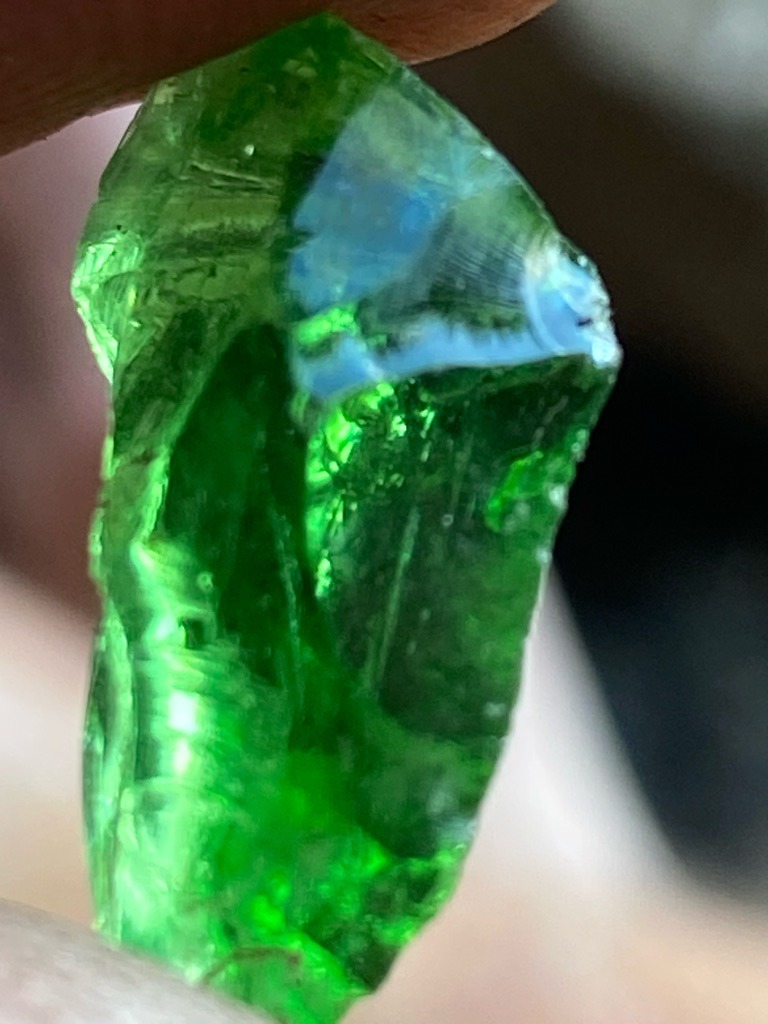
Not a diamond; this specimen exhibits characteristics typical of green glass, slag glass, or potentially a rough green crystal such as emerald or tourmaline, but visual inspection strongly suggests green glass or synthetic material.
Not a diamond; this specimen exhibits characteristics typical of green glass, slag glass, or potentially a rough green crystal such as emerald or tourmaline, but visual inspection strongly suggests green glass or synthetic material. · Raw, uncut, amorphous or irregular crystal/fragment shape with conchoidal fractures.
Not applicable (rough, uncut material with no standard faceting). Cut
Carat
Cannot be precisely determined visually, but estimated around 15-25 carats based on relative size.
Color
Vivid Fancy Green (saturated coloration typical of glass or stained gemstones).
Clarity
Included (contains internal bubbles and flow lines characteristic of glass).
Shape
Raw, uncut, amorphous or irregular crystal/fragment shape with conchoidal fractures.
Overall Assessment
Based on visual characteristics including rounded gas bubbles and vitreous fracture patterns, this specimen is identified as green glass rather than a genuine diamond or precious gemstone.
Cut Quality
Not applicable (rough, uncut material with no standard faceting).
Brilliance
Varies due to lack of standard cut; vitreous luster typical of glass.
Fire
Low to none, as dispersion is limited compared to diamond or high-index synthetics.
Scintillation
Poor, lacking faceted return of light.
Proportions
Not applicable for rough, uncut material.
Symmetry
Not applicable due to raw/irregular form.
Polish
Unpolished rough surface with natural or fracture textures.
Fluorescence
Unknown without UV testing, though typical green glass may show inert or moderate fluorescence.
Inclusions
Gas bubbles and internal swirl patterns visible, strongly indicating glass rather than a natural crystalline diamond.
Blemishes
Surface scratches, conchoidal fracture marks, and chippings along edges.
Origin
Man-made / Industrial / Decorative glass or synthetic rough.
Treatment Detection
Colored glass or treated material; lacks natural diamond growth features such as triangular etch channels or octahedral faces.
Estimated Value
Nominal value (decorative or collector's mineral specimen, typically under $20 USD if glass).
Certification Estimate
Not gradable by major diamond labs (GIA, AGS, IGI) as a diamond; requires gemological testing (refractive index, specific gravity) to confirm identity.
Investment Potential
None; lacks intrinsic gemstone or diamond investment value.
Similar Diamonds
None, as this specimen is not a diamond.
Setting Suggestions
Wire-wrapping or custom bezel setting if used for ornamental jewelry.
Care & Maintenance
Standard jewelry care; avoid harsh chemicals and impact as glass is brittle.
Interesting Facts
Green rough materials are frequently mistaken for precious gems like emeralds or green diamonds by untrained observers, though internal gas bubbles are a dead giveaway for glass.