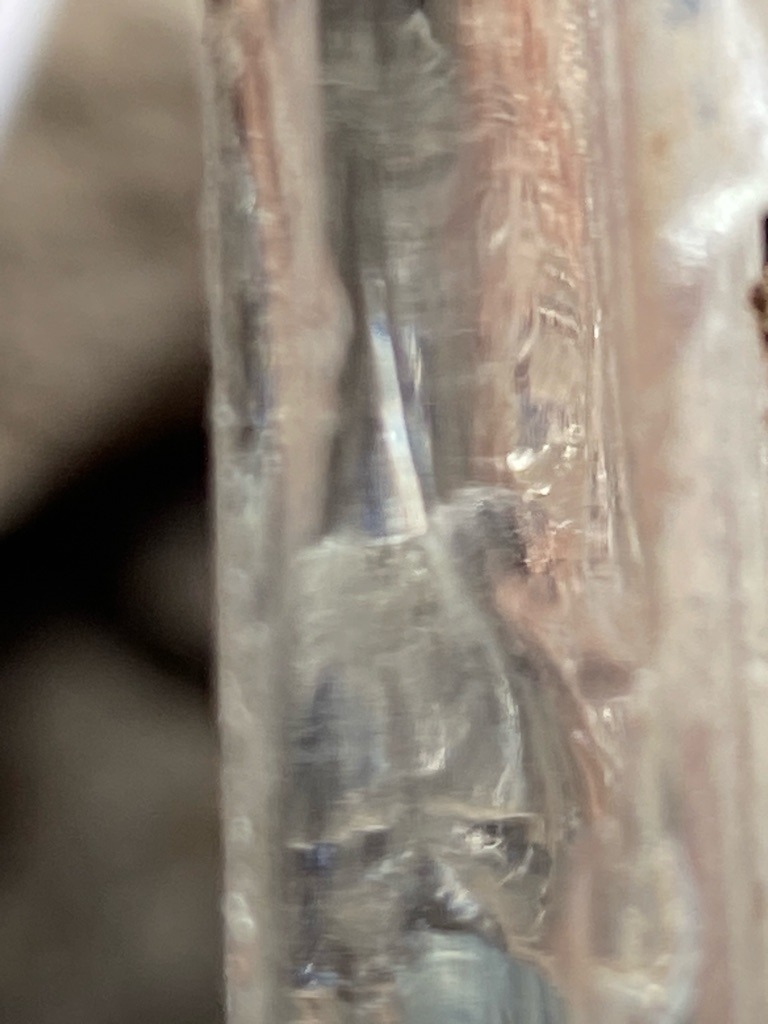
Natural rough crystal / mineral structure, potentially quartz or similar silicate rather than a traditional faceted gem-quality diamond based on the elongated crystal habit and striations.
Natural rough crystal / mineral structure, potentially quartz or similar silicate rather than a traditional faceted gem-quality diamond based on the elongated crystal habit and striations. · Uncut raw crystal (elongated prismatic / columnar formation)
Not Applicable (Uncut, raw crystal specimen) Cut
Carat
Estimated equivalent visual mass cannot be reliably determined without precise volume and specific gravity, but the visible crystal structure suggests a substantial specimen size.
Color
Colorless to slightly brownish-clear (Type Ia or IIa raw mineral appearance)
Clarity
Included (Contains prominent internal striations, growth features, and localized inclusions characteristic of raw, untreated mineral formations)
Shape
Uncut raw crystal (elongated prismatic / columnar formation)
Overall Assessment
An intriguing raw mineral crystal featuring distinct vertical growth striations and natural surface textures, highlighting the fascinating geology of natural mineral formation.
Cut Quality
Not Applicable (Uncut, raw crystal specimen)
Brilliance
Low to moderate due to rough surfaces and lack of precise optical facets
Fire
Minimal dispersion observed due to rough unpolished surfaces
Scintillation
Limited, primarily localized flashes reflecting off natural crystal faces and internal fracture planes
Proportions
Elongated prismatic crystal habit; standard faceted proportions do not apply
Symmetry
Natural crystal symmetry exhibiting typical prismatic growth lines and striations along the vertical axis
Polish
None (Natural unpolished crystal face with striations)
Fluorescence
Indeterminate from visual assessment alone (requires UV testing)
Inclusions
Visible internal growth channels, veils, and fibrous mineral inclusions typical of raw crystal growth
Blemishes
Natural surface etching, striations, and irregularities consistent with unpolished rough stones
Origin
Natural geological origin, likely formed in hydrothermal veins or pegmatite pockets
Treatment Detection
No signs of artificial treatments; appears entirely natural and untreated
Estimated Value
Specimen value varies widely based on mineral type, ranging from modest decorative mineral value to higher collector value if identified as a rare crystal form.
Certification Estimate
GIA or specialized mineralogical laboratories would issue a certificate of mineral identification rather than a diamond grading report.
Investment Potential
Valued primarily as a collector's mineral specimen or educational piece rather than a traditional liquid financial investment
Similar Diamonds
Comparable to other raw, uncut crystal specimens and mineral samples rather than standard jewelry-grade polished diamonds
Setting Suggestions
Best preserved as a raw mineral specimen in a custom wire-wrap or organic prong setting that celebrates its natural crystalline form.
Care & Maintenance
Handle with care to prevent chipping along natural cleavage or fracture planes; clean gently with mild soap, warm water, and a soft brush.
Interesting Facts
Raw crystal striations provide a direct window into the physical and chemical conditions present during the mineral's growth deep within the earth.