Natural Rough Diamond
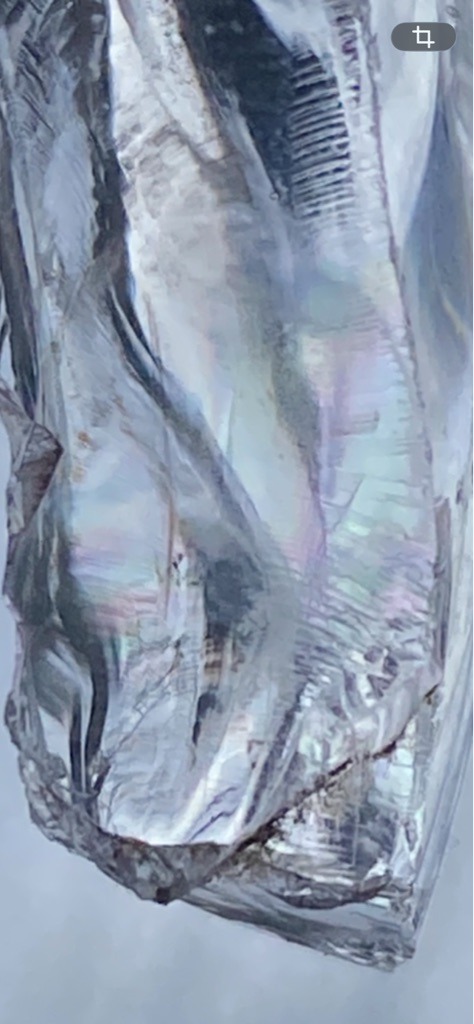
Natural Rough Diamond · Rough/Uncut (Macles or Irregular Octahedron fragment)
Not applicable (Rough state) Cut
Carat
Estimated 1.5 - 3.0 carats based on visible surface area and texture
Color
Near Colorless to Faint Gray/Brown tint (G-J range)
Clarity
Slightly Included to Included (SI-I range) based on visible internal fractures and surface graining
Shape
Rough/Uncut (Macles or Irregular Octahedron fragment)
Overall Assessment
A genuine natural rough diamond specimen with interesting surface morphology, suitable for architectural jewelry or professional cutting.
Cut Quality
Not applicable (Rough state)
Brilliance
Low (Surface reflections only)
Fire
Very low (Requires faceting for spectral dispersion)
Scintillation
Minimal (Limited to surface light play)
Proportions
Irregular; non-faceted
Symmetry
Poor (Natural crystalline growth)
Polish
Natural (Features trigons and growth striations)
Fluorescence
Cannot be determined without UV light source; appears inert
Inclusions
Visible internal twinning wisps, growth planes, and possible dark crystals or feathers
Blemishes
Natural surface etch pits (trigons), contact marks, and jagged cleavage planes
Origin
Likely alluvial source from Africa or Canada (Kimberlite origin)
Treatment Detection
No visible treatments; appears to be in its natural state
Estimated Value
$1,000 - $3,500 depending on final yield potential and clarity
Certification Estimate
GIA (Rough Diamond Report)
Investment Potential
Moderate; value depends on the skill of the cutter and the resulting polished grade
Similar Diamonds
Uncut industrial-grade to near-gem crystals
Setting Suggestions
Rough diamond specimen setting or a 'raw diamond' claw-style pendant/ring
Care & Maintenance
Avoid high-impact activities as rough diamonds can have internal stress and cleavage planes prone to cracking
Interesting Facts
The surface displays 'trigons,' which are triangular growth marks unique to natural diamonds, formed during crystallization in the earth's mantle