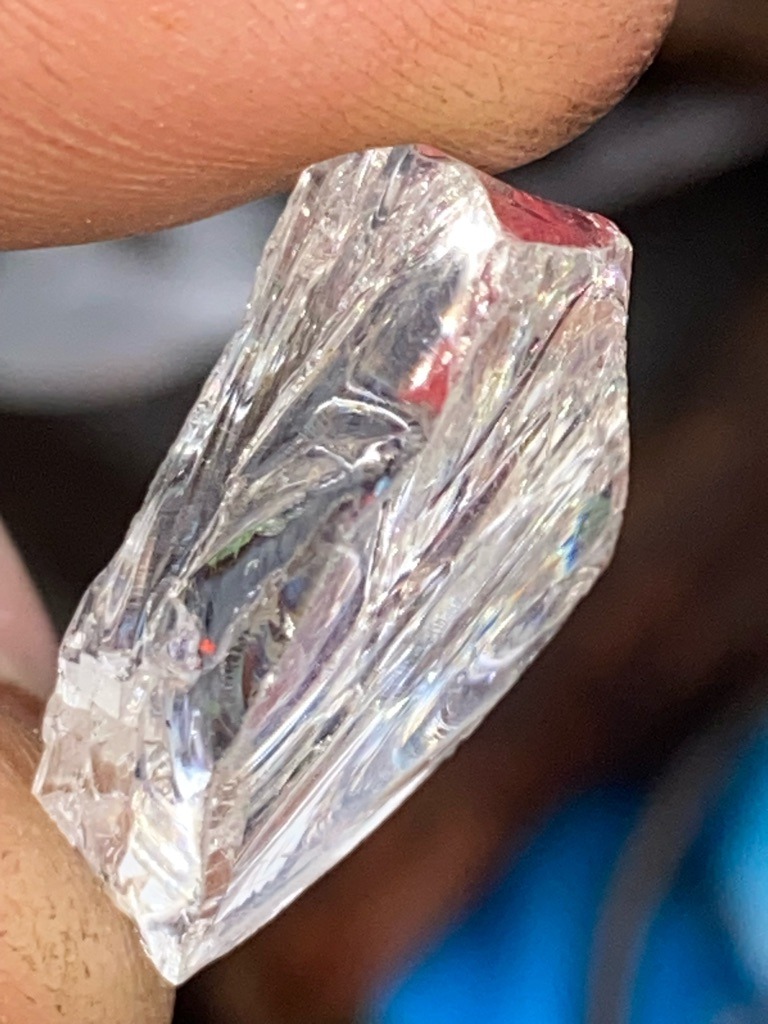
Rough Diamond (Likely Natural)
Rough Diamond (Likely Natural) · Rough / Uncut Macle or irregular crystal
N/A (Rough state) Cut
Carat
8.00 - 12.00 carats (estimated based on finger scale)
Color
Near Colorless (G-I range estimate for rough)
Clarity
SI1 - I1 (estimated due to visible internal cleavage and feathers)
Shape
Rough / Uncut Macle or irregular crystal
Overall Assessment
A significant piece of rough diamond crystal with notable internal fractures. While it has good color potential, the clarity is compromised by large internal planes.
Cut Quality
N/A (Rough state)
Brilliance
Low (due to lack of faceted surfaces)
Fire
Low (only visible in localized internal fractures)
Scintillation
Low (scattered surface reflections only)
Proportions
N/A (Elongated irregular form)
Symmetry
Poor (Natural rough state)
Polish
N/A (Natural skin texture)
Fluorescence
Indeterminable without UV light, but crystal clarity suggests None to Faint
Inclusions
Large internal cleavage planes, feathers, and potential carbon spots
Blemishes
Growth trigons and surface etching typical of kimberlite transport
Origin
Likely African (DRC, Sierra Leone, or Botswana based on crystal habit)
Treatment Detection
None visible; appearance consistent with raw alluvial or mined rough
Estimated Value
$2,000 - $6,000 (Highly dependent on yield after cutting)
Certification Estimate
Rough stones would require a Kimberley Process certificate; GIA Rough Analysis after intake
Investment Potential
Moderate to High if the yield results in a large D-Flawless faceted stone
Similar Diamonds
Rough industrial to near-gem quality macles
Setting Suggestions
Collector's specimen or custom rough diamond 'talisman' setting in 18k gold
Care & Maintenance
Avoid heavy impact as the visible cleavage planes indicate high structural fragility
Interesting Facts
Rough diamonds often lose 50-60% of their weight during the faceting process