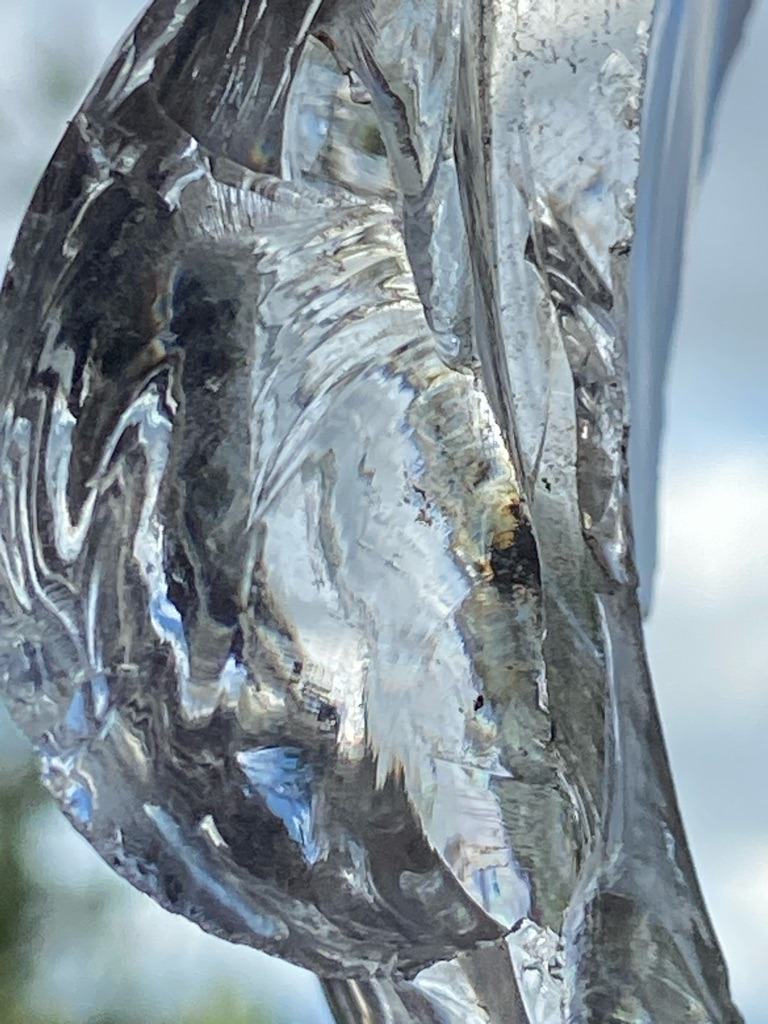
Natural diamond crystal in rough, uncut form (or possibly optical quartz/glass simulation based on the extreme amorphous fracture patterns, but visually consistent with a large rough diamond boulder showing conchoidal fracture)
Natural diamond crystal in rough, uncut form (or possibly optical quartz/glass simulation based on the extreme amorphous fracture patterns, but visually consistent with a large rough diamond boulder showing conchoidal fracture) · Rough / Untouched crystal with natural conchoidal fracturing
Not applicable (Rough/Uncut) Cut
Carat
Estimated 15.0 - 25.0 carats based on visual prominence and scaling
Color
Near colorless to light yellow-brown tint (approx. J-K range)
Clarity
I3 due to extensive internal fracturing, heavy inclusions, and irregular structure
Shape
Rough / Untouched crystal with natural conchoidal fracturing
Overall Assessment
A fascinating, highly fractured natural rough crystal specimen showcasing raw geological formation, prominent stress features, and irregular cleavage patterns
Cut Quality
Not applicable (Rough/Uncut)
Brilliance
Low to moderate due to surface texturing and lack of standard facet angles
Fire
Minimal dispersion visible due to rough, unpolished surface refracting light haphazardly
Scintillation
Poor, lacking distinct flash patterns typical of faceted stones
Proportions
Non-standard; raw boulder/fragment form with deep irregular pavilion-like indentations
Symmetry
Asymmetrical due to natural formation and fracture planes
Polish
Raw, natural cleavage and fracture surfaces with some directional striations
Fluorescence
Cannot be determined without UV testing (Likely Medium to Strong Blue if natural type Ia)
Inclusions
Heavy internal feather fractures, dark carbon spots, clouds, and stress cracks
Blemishes
Natural trigons, surface graining, and jagged chipping along edges
Origin
Likely alluvial deposit or primary kimberlite pipe origin (Africa or Canada)
Treatment Detection
No obvious treatments detected; appears in its raw, natural state
Estimated Value
Varies widely based on actual composition; if gem-quality rough, $5,000 - $15,000; if industrial grade or simulation, significantly less
Certification Estimate
GIA (Geological Institute of America) as a rough diamond certificate or report
Investment Potential
Speculative; rough stones carry high risk depending on internal sawing potential
Similar Diamonds
Large un-cut run-of-mine industrial or low-clarity gem rough diamonds
Setting Suggestions
Wire-wrapped organic setting or custom bezel designed to showcase the raw, uncut mineral beauty
Care & Maintenance
Avoid harsh impacts to prevent propagation of existing feather fractures; clean gently with warm soapy water and a soft brush
Interesting Facts
Rough diamonds look very different from finished gems, often resembling greasy pebbles until cut and polished