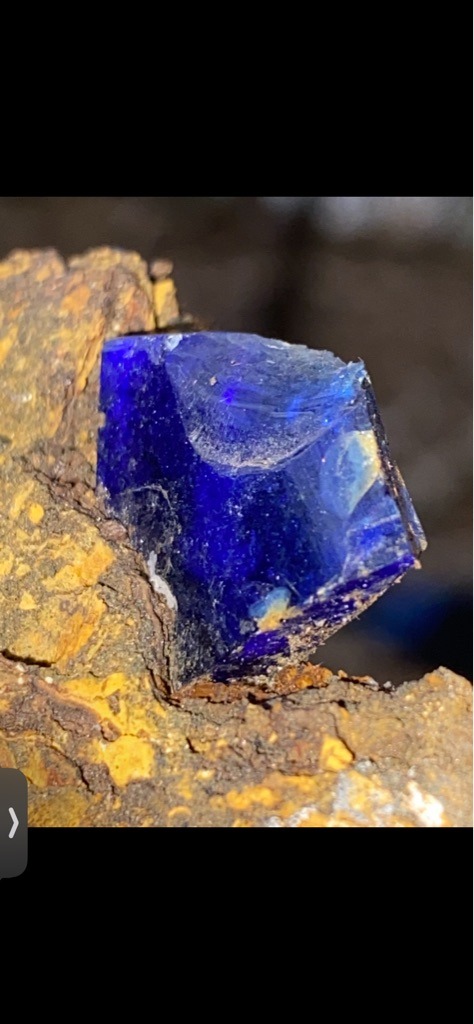
Non-diamond/Mineral Specimen (Likely Azurite or Lapis Lazuli in Matrix)
Non-diamond/Mineral Specimen (Likely Azurite or Lapis Lazuli in Matrix) · Rough/Uncut (Natural crystal form)
N/A (Uncut specimen) Cut
Carat
Estimated 10-20 carats (based on visible crystal dimensions relative to matrix)
Color
Fancy Vivid Deep Blue (Opaque/Translucent)
Clarity
Included (Opaque/Sub-translucent core)
Shape
Rough/Uncut (Natural crystal form)
Overall Assessment
This is not a diamond, but a striking blue mineral crystal embedded in its natural host matrix. While it possesses a beautiful deep blue hue, its physical structure and lack of brilliance/fire indicate it is a semi-precious mineral specimen.
Cut Quality
N/A (Uncut specimen)
Brilliance
Low (Matte to sub-vitreous luster)
Fire
None
Scintillation
None
Proportions
N/A (Geometric raw crystal faces)
Symmetry
Poor (Natural asymmetric growth)
Polish
N/A (Rough natural surface)
Fluorescence
None observed
Inclusions
Heavy veining and internal graining consistent with mineral aggregates
Blemishes
Surface abrasions, fractures, and matrix adhesion
Origin
Likely Arizona, USA or Namibia (common sources for blue copper minerals in limonite matrix)
Treatment Detection
None apparent; looks like a natural rough specimen in host rock
Estimated Value
$50 - $200 (as a mineral specimen)
Certification Estimate
GIA (Colored Stone Identification Report) - Likely Azurite or Sodalite
Investment Potential
Low; primarily of interest to mineral collectors rather than gemstone investors
Similar Diamonds
No direct diamond comparison; resembles rough blue sapphire or Benitoite specimens
Setting Suggestions
Best kept as a mineral specimen; if set, use a custom wire wrap or rough stone pendant mount
Care & Maintenance
Avoid ultrasonic cleaners and harsh chemicals; clean with a soft dry cloth and store away from harder stones to prevent scratching
Interesting Facts
Blue minerals in yellow-brown matrix are often copper-based secondary minerals like azurite, which are significantly softer than diamonds