Natural rough diamond / mineral specimen (or potentially a shaped crystalline glass/quartz structure given the atypical surface texture, but assuming diamond matrix context)
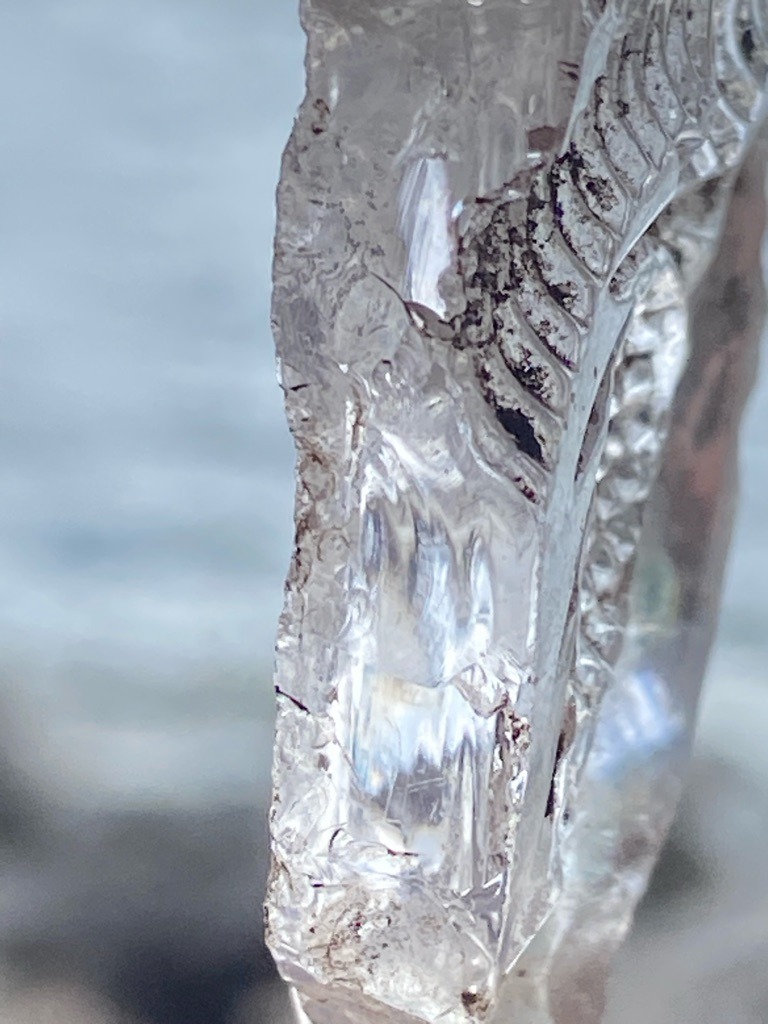
Natural rough diamond / mineral specimen (or potentially a shaped crystalline glass/quartz structure given the atypical surface texture, but assuming diamond matrix context) · Rough crystal / Uncut natural crystal form with heavy surface etching and resorption
Not applicable (Rough uncut specimen) Cut
Carat
Estimated 3.5 to 5.0 carats based on visual proportions
Color
Near colorless to faint yellow (approximate G-J range)
Clarity
I2 to I3 (Inincluded, with significant natural surface features, feathers, and dark inclusions)
Shape
Rough crystal / Uncut natural crystal form with heavy surface etching and resorption
Overall Assessment
An intriguing natural crystalline specimen displaying raw geological features, well-suited for bespoke jewelry or mineral collections rather than traditional faceted diamond use.
Cut Quality
Not applicable (Rough uncut specimen)
Brilliance
Low due to rough, unpolished surfaces and internal fracturing
Fire
Minimal dispersion observed through raw windowed areas
Scintillation
Poor due to lack of faceted geometry
Proportions
Uncut crystal; natural depth and angles determined by geological formation
Symmetry
Natural asymmetrical octahedral/dodecahedral distorted crystal form
Polish
Raw natural crystal faces (trigons and etch channels present)
Fluorescence
Indeterminate from visual assessment (typically Medium to Strong Blue in natural rough if nitrogen-bearing)
Inclusions
Heavy internal feather fractures, cloud clusters, and dark carbon spots visible
Blemishes
Natural surface etch marks, cavities, trigons, and natural rough skin
Origin
Likely alluvial deposit (riverbed origin) or primary kimberlite pipe extraction (Africa, Canada, or Russia)
Treatment Detection
No treatments detected; completely untreated natural rough state
Estimated Value
Varies widely depending on actual weight, gem-grade recovery potential, and collectibility as a mineral specimen ($500 - $2,000 USD)
Certification Estimate
GIA (Gemological Institute of America) as a rough natural diamond report or mineral identification
Investment Potential
Collector value rather than standard investment diamond value; high novelty appeal
Similar Diamonds
Uncut octahedral rough diamonds, raw diamond engagement ring center stones
Setting Suggestions
Custom organic bezel setting or prong mounting designed to showcase the raw, uncut aesthetic in yellow or white gold
Care & Maintenance
Avoid harsh impacts as natural cleavage planes and internal feathers make it vulnerable to fracture
Interesting Facts
Rough diamonds display natural growth marks called trigons on their crystal faces, which are triangular etch pits formed deep within the Earth