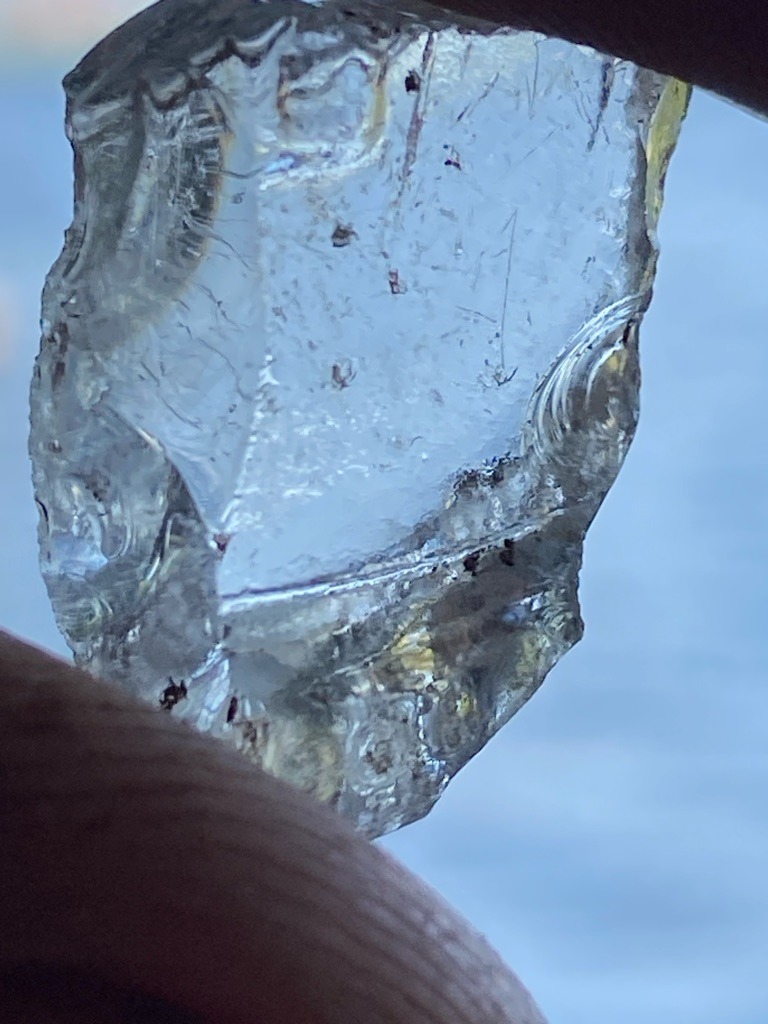
Rough Mineral Specimen (Likely Quartz or Glass, Not a Diamond)
Rough Mineral Specimen (Likely Quartz or Glass, Not a Diamond) · Rough / Uncut irregular crystal fragment
Uncut / Natural raw form (Not applicable) Cut
Carat
Estimated 15-20 carats (based on general crystal size appearance)
Color
Near colorless to very faint yellow tint
Clarity
I3 (Heavy inclusions, internal fractures, and surface features)
Shape
Rough / Uncut irregular crystal fragment
Overall Assessment
This specimen is visually identified as a rough mineral fragment (likely quartz or industrial glass) rather than a diamond. It displays conchoidal fracture patterns and internal characteristics inconsistent with crystallized carbon (diamond).
Cut Quality
Uncut / Natural raw form (Not applicable)
Brilliance
Poor due to lack of standard facet alignment and internal fracturing
Fire
Minimal dispersion visible in current state
Scintillation
Absent due to lack of cut facets
Proportions
Non-standard raw crystal proportions
Symmetry
Natural asymmetric crystal growth
Polish
Raw, unpolished surface showing conchoidal fractures
Fluorescence
Indeterminate from visual assessment
Inclusions
Numerous internal needles, particulate inclusions, and internal stress fractures
Blemishes
Visible conchoidal fracture marks, chips, and surface irregularities
Origin
Natural mineral or manufactured glass shard
Treatment Detection
No obvious enhancements, appears in its native or discarded state
Estimated Value
Nominal mineral specimen value (less than $10 USD)
Certification Estimate
Gemological laboratories would not issue a diamond certificate for this specimen; likely identified as quartz or glass if submitted.
Investment Potential
None as a gemstone investment; purely decorative or educational mineral specimen
Similar Diamonds
None, as this specimen lacks gemstone diamond characteristics entirely
Setting Suggestions
Not suitable for fine jewelry setting in its current rough/raw state
Care & Maintenance
Handle with care to avoid further chipping along fracture lines; clean gently with warm soapy water
Interesting Facts
The prominent conchoidal fracture visible on the right edge is a hallmark of amorphous materials like glass or quartz rather than the octahedral cleavage typical of diamond.