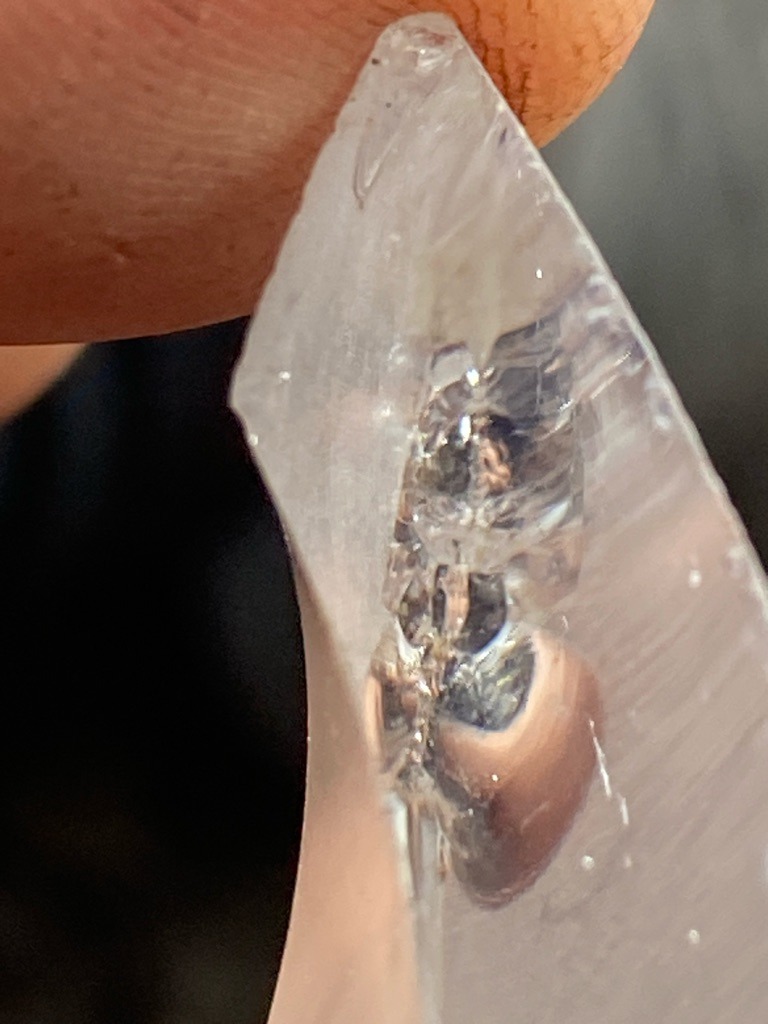
Natural rough diamond specimen
Natural rough diamond specimen · Uncut crystal / Irregular rough shape
Not applicable (rough, uncut crystal state) Cut
Carat
Estimated 2.0 - 3.5 carats
Color
Near-colorless to light yellow tint (G-J range equivalent)
Clarity
Included (I1-I3 range equivalent due to prominent internal fractures and inclusions)
Shape
Uncut crystal / Irregular rough shape
Overall Assessment
This is a raw, uncut natural diamond crystal displaying significant internal fracturing and natural surface characteristics, making it more suitable as a mineral specimen or raw jewelry piece than a candidate for traditional faceting
Cut Quality
Not applicable (rough, uncut crystal state)
Brilliance
Low due to lack of faceting and heavy internal fracturing
Fire
Minimal dispersion in its current rough state
Scintillation
Poor, lacks standard facet reflections
Proportions
Natural crystal habit, untended by cutting
Symmetry
Natural asymmetrical crystal growth
Polish
Natural crystalline faces and fracture surfaces
Fluorescence
Cannot be reliably determined without UV testing (likely Faint to Medium)
Inclusions
Heavy internal feather fractures, cloudiness, and crystal inclusions visible
Blemishes
Natural growth lines (trigons potentially), surface etchings, and rough handling fractures
Origin
Alluvial or primary kimberlite deposit origin
Treatment Detection
No signs of artificial treatment; completely natural untreated rough
Estimated Value
Minimal commercial value as a faceted gemstone; primarily valued as a mineral specimen or for industrial use
Certification Estimate
GIA or similar major lab would issue a diamond identification report (not a grading report due to rough state)
Investment Potential
Low investment potential for jewelry resale; collectible mineral value only
Similar Diamonds
Other unworked industrial or mineral specimen-grade rough diamonds
Setting Suggestions
Wire-wrapped raw crystal pendant or bespoke organic bezel setting to preserve its raw aesthetic
Care & Maintenance
Handle with care to prevent breakage along existing internal cleavage planes; clean with mild soapy water and a soft brush
Interesting Facts
Diamonds form deep within the Earth under high pressure and temperature conditions over billions of years before being brought to the surface via volcanic pipes