Natural
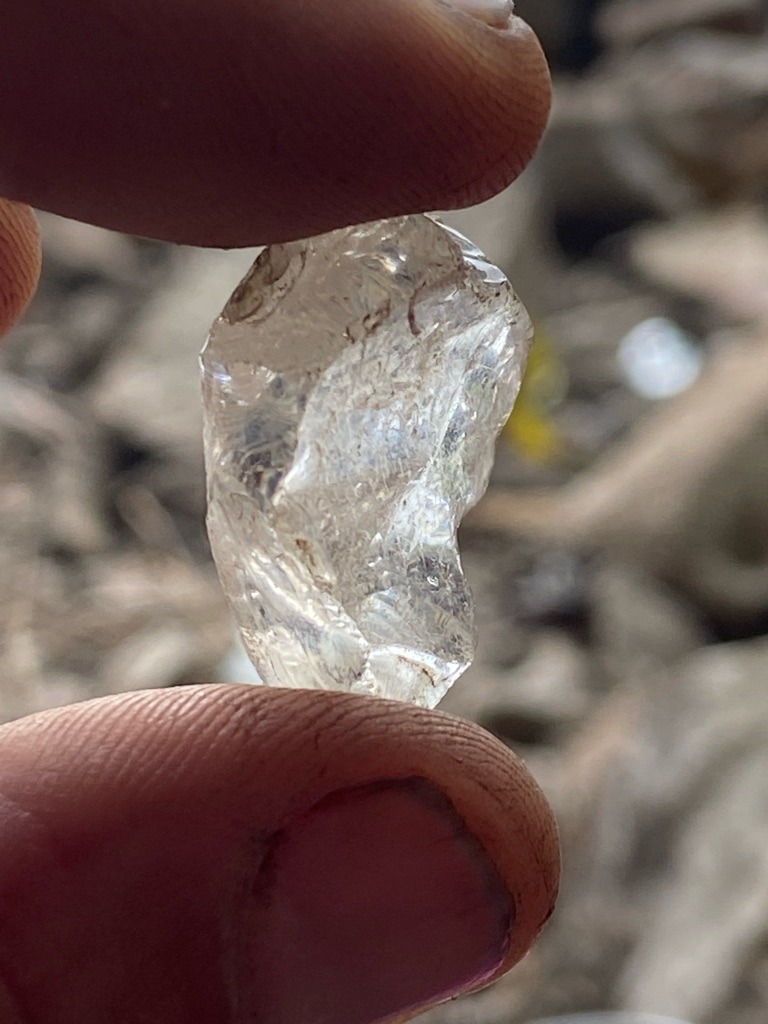
Natural · Rough crystal (un-cut, distorted octahedron/irregular form)
Not applicable (rough, uncut crystal state) Cut
Carat
Estimated 2.0 to 3.5 carats
Color
Near colorless (estimated G-I range with possible slight brownish/yellowish tint typical of alluvial rough)
Clarity
Included (rough stone with visible internal fractures, feathers, and cloudiness, likely falling in the SI2 to I1 range if cut)
Shape
Rough crystal (un-cut, distorted octahedron/irregular form)
Overall Assessment
An interesting, natural rough diamond crystal showing classic alluvial wear characteristics. It presents an opportunity for either a rustic raw-diamond jewelry design or professional cutting to maximize its potential value.
Cut Quality
Not applicable (rough, uncut crystal state)
Brilliance
Low to moderate in rough state due to unpolished surfaces and irregular geometry
Fire
Minimal dispersion visible in rough state; will improve significantly upon proper cutting and polishing
Scintillation
Poor in current state; limited flash due to lack of flat facets and internal light leakage
Proportions
Natural crystal formation; standard faceted proportions do not apply
Symmetry
Natural crystal asymmetry with curved faces and striations (trigons potentially present under magnification)
Polish
Natural rough surface luster, greasy to adamantine, unpolished
Fluorescence
Cannot be determined without UV light testing (typically Medium to Strong Blue in many rough stones, but requires testing)
Inclusions
Internal feathers, clouds, twinning planes, and small mineral crystals typical of natural rough
Blemishes
Natural surface etch channels, trigons, and irregular growth features
Origin
Likely alluvial deposit (riverbed or secondary source) given the rounded edges and surface wear
Treatment Detection
No obvious signs of artificial treatment; appears as a completely untreated natural rough diamond
Estimated Value
Variable based on rough weight and yield potential; rough stones of this quality generally valued at a lower tier per carat compared to polished diamonds
Certification Estimate
GIA or HRD for formal grading post-cut; currently raw material requiring lab analysis for origin and treatment status
Investment Potential
Speculative; value depends heavily on the cutting yield and final polished grade if faceted, or collector value if kept as raw mineral specimen
Similar Diamonds
Comparable alluvial rough diamond crystals of similar size and near-colorless grade
Setting Suggestions
Can be kept in an organic/raw state for a unique 'raw diamond' rustic jewelry setting (e.g., in yellow or rose gold bezel), or professionally cut into a cushion or oval shape
Care & Maintenance
Store separately to avoid scratching other jewelry; clean gently with warm soapy water and a soft brush
Interesting Facts
The curved faces and distorted shape are common in rough diamonds that have traveled down rivers in alluvial deposits, enduring natural tumbling