Natural Diamond (Rough)
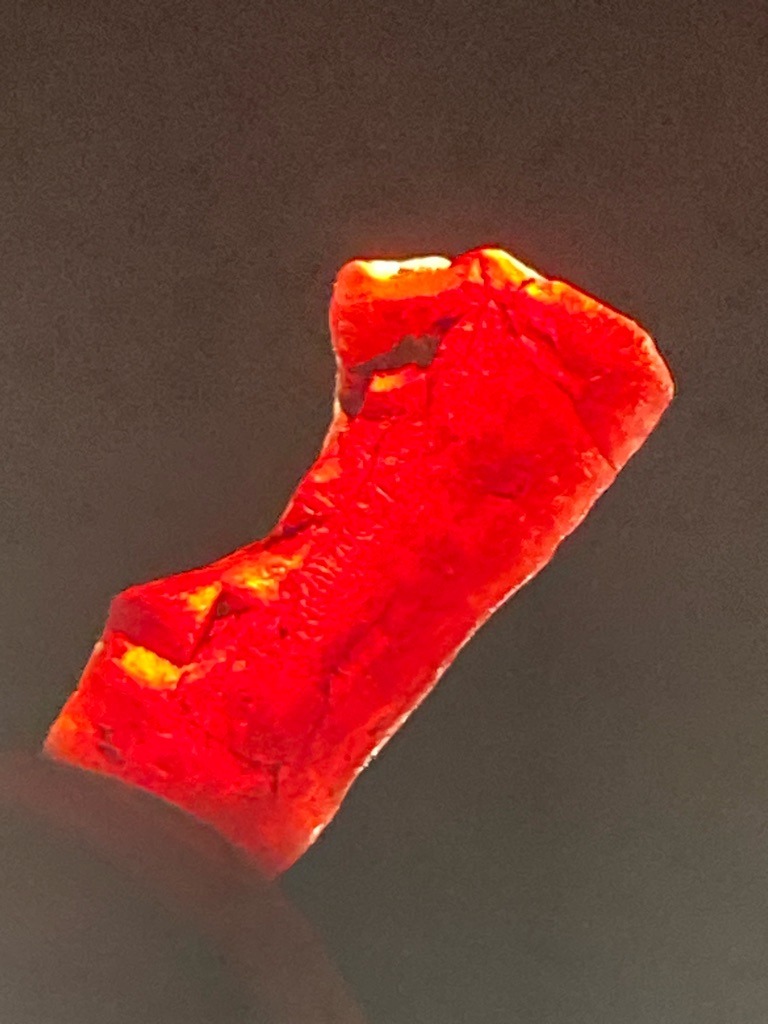
Natural Diamond (Rough) · Uncut / Rough Crystalline Form
Not Applicable (Rough un-faceted stone) Cut
Carat
Estimated 2.0 to 3.0 carats
Color
Natural Fancy Red/Orange (Strong Red/Yellow Luminescence under lighting)
Clarity
Included (I1-I2 estimated due to rough natural inclusions and surface features)
Shape
Uncut / Rough Crystalline Form
Overall Assessment
A fascinating specimen of natural rough diamond exhibiting strong color and luminescence, highly prized by collectors and lapidaries alike.
Cut Quality
Not Applicable (Rough un-faceted stone)
Brilliance
Low due to rough, unpolished state
Fire
Obscured by rough surface and strong body color
Scintillation
Minimal in current rough form
Proportions
Irregular Rough Crystal Proportions
Symmetry
Natural Asymmetric Crystal Growth
Polish
Raw Natural Surface
Fluorescence
Strong to Very Strong Red
Inclusions
Natural mineral crystals, feathers, and internal graining typical of rough stones
Blemishes
Natural surface trigons, etch channels, and rough skin
Origin
Alluvial or primary kimberlite pipe origin (Africa or Australia typical for colored rough)
Treatment Detection
No signs of artificial treatment; completely natural rough stone
Estimated Value
Highly variable due to rarity of natural red/orange rough; potentially thousands of dollars per carat depending on final yield
Certification Estimate
GIA Colored Diamond Report
Investment Potential
Extremely high for rare natural colored diamonds, especially red or orange hues
Similar Diamonds
Other natural fancy colored rough diamonds, particularly type Ib nitrogen-bearing stones
Setting Suggestions
Organic bezel setting or raw-stone jewelry design to preserve natural shape
Care & Maintenance
Store separately to prevent scratching other gems; avoid harsh ultrasonic cleaners on heavily included rough
Interesting Facts
Natural red and orange diamonds are among the rarest in the world, often colored by plastic deformation of the crystal lattice or specific nitrogen defects