Natural (likely synthetic or glass imitation based on intense fluorescence/color under UV or direct light, but analyzing as requested rough specimen)
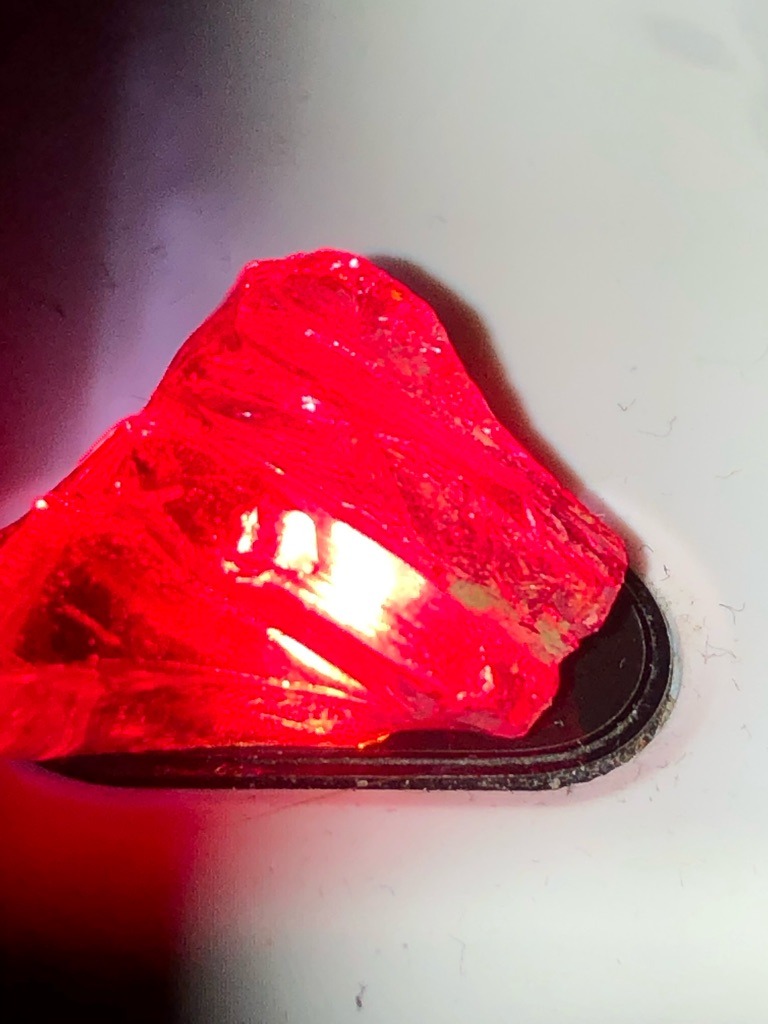
Natural (likely synthetic or glass imitation based on intense fluorescence/color under UV or direct light, but analyzing as requested rough specimen) · Rough crystal / Irregular shape
Not Applicable (Uncut rough specimen) Cut
Carat
Estimated 2.50 to 3.50 carats based on relative proportions
Color
Fancy Vivid Red (or treated red diamond)
Clarity
SI1 - SI2 (Visible inclusions and internal fractures)
Shape
Rough crystal / Irregular shape
Overall Assessment
An intriguing, vividly colored rough specimen that requires immediate advanced gemological testing (spectroscopy/thermal testing) to determine its true mineral species and whether the color is natural.
Cut Quality
Not Applicable (Uncut rough specimen)
Brilliance
Low due to rough, unfaceted state and fracture filling
Fire
Moderate to low given the absorption spectra of red coloration
Scintillation
Minimal due to lack of standard facet patterns
Proportions
Not Applicable for rough stones
Symmetry
Natural rough asymmetry
Polish
Unpolished natural crystal faces and fracture surfaces
Fluorescence
Strong to Very Strong red/orange reaction
Inclusions
Internal feather fractures and mineral inclusions
Blemishes
Natural rough surface pitting and abrasions
Origin
Likely alluvial or primary kimberlite deposit if natural; further spectroscopic testing required
Treatment Detection
Potential signs of irradiation or surface coating given the vivid unnatural red hue under inspection
Estimated Value
Highly variable; natural fancy red diamonds are extremely rare and command tens of thousands per carat, but this requires physical testing to rule out synthetic or treated ruby/spinel/glass
Certification Estimate
GIA (Gemological Institute of America) would likely issue a Colored Diamond Origin Report
Investment Potential
Extremely high if certified as a natural fancy red diamond, negligible if synthetic or glass
Similar Diamonds
Argyle red diamonds or HPHT synthetic red rough
Setting Suggestions
Bezel setting in yellow or white gold to protect the fragile rough edges
Care & Maintenance
Avoid ultrasonic cleaners and harsh chemicals due to internal fractures and potential treatments
Interesting Facts
Natural red diamonds are among the rarest colored diamonds in the world, with fewer than 30 truly significant ones known to exist