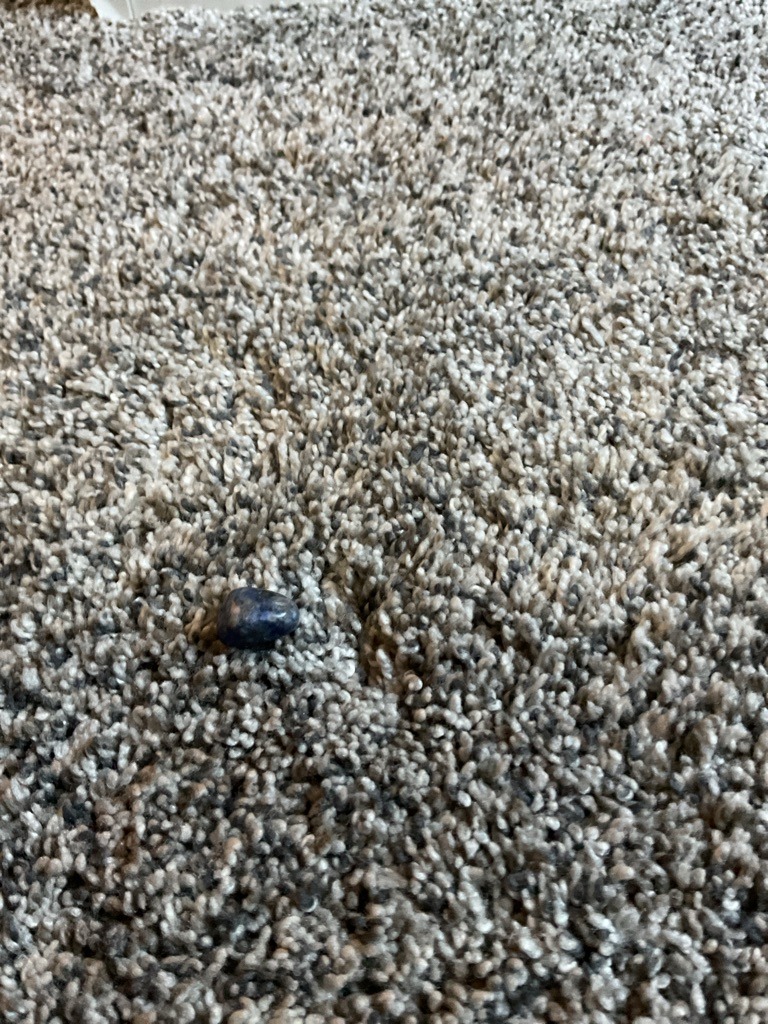
Non-diamond species (likely Sodalite or Lapis Lazuli)
Non-diamond species (likely Sodalite or Lapis Lazuli) · Tumbled/Freeform
N/A (Tumbled) Cut
Carat
Estimated 10-15 carats based on size relative to carpet fibers
Color
Opaque dark blue with mottled white and grey
Clarity
Opaque (N/A)
Shape
Tumbled/Freeform
Overall Assessment
This is not a diamond. It is an opaque, blue tumbled mineral specimen, most likely sodalite, commonly sold as a decorative pebble or 'healing' stone.
Cut Quality
N/A (Tumbled)
Brilliance
None (Opaque)
Fire
None
Scintillation
None
Proportions
Asymmetrical tumble
Symmetry
Poor
Polish
Good (waxy to vitreous luster)
Fluorescence
Usually inert, though white calcite inclusions may fluoresce
Inclusions
Heavy veining and mottling consistent with igneous/metamorphic rock
Blemishes
Surface surface scuffs and minor pits typical of tumbled stones
Origin
Likely Brazil, Canada, or Namibia (for Sodalite)
Treatment Detection
Possibly dyed, but appears to be a natural rough-tumble specimen
Estimated Value
$1 - $5 USD
Certification Estimate
Not suitable for diamond grading; identification as Sodalite by local gemologist
Investment Potential
Zero (decorative mineral specimen)
Similar Diamonds
None; visually resembles Dumortierite or Lapis Lazuli rather than any diamond
Setting Suggestions
Wire wrapping or inclusion in a decorative stone collection
Care & Maintenance
Clean with warm soapy water; avoid ultrasonic cleaners which may damage soft mineral structures
Interesting Facts
Sodalite is often confused with Lapis Lazuli but lacks the characteristic gold pyrite flecks.