Natural (Possible Rough/Uncut or Heavily Included Industrial Grade)
Natural (Possible Rough/Uncut or Heavily Included Industrial Grade) · Irregular / Rough Cut (Potentially a crude rose cut or natural crystal fragment)
Poor / Non-Standard Cut
Carat
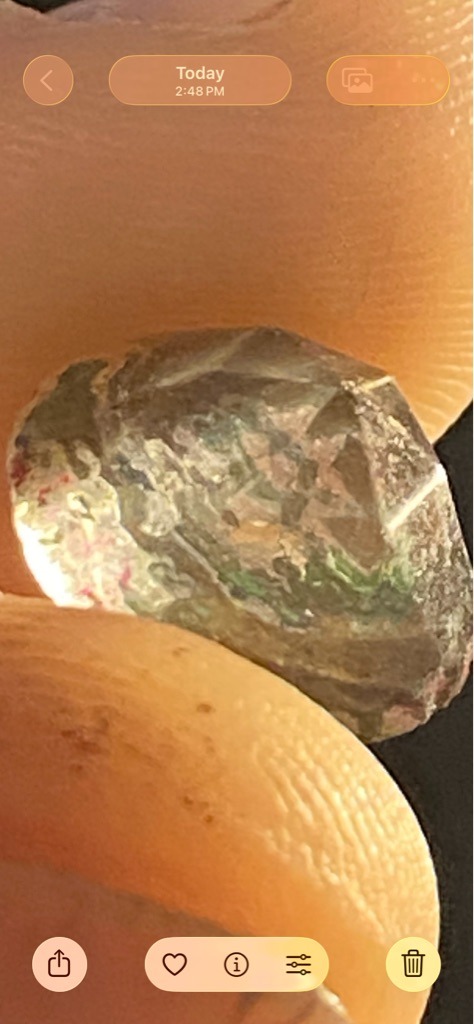
Estimated 1.5 - 3.0 carats based on finger scale
Color
Fancy Dark Brownish Grey / Opaque
Clarity
I3 (Included - Heavily Opaque)
Shape
Irregular / Rough Cut (Potentially a crude rose cut or natural crystal fragment)
Overall Assessment
A heavily included, non-gem quality natural diamond specimen with an irregular shape and low transparency, best suited for industrial use or raw-stone jewelry.
Cut Quality
Poor / Non-Standard
Brilliance
Very Low (Material is largely opaque with limited light return)
Fire
None visible under current lighting
Scintillation
Low; some dull metallic reflections
Proportions
Unconventional; lacks standard table or pavilion angles
Symmetry
Poor
Polish
Poor (Surface appears pitted and uneven)
Fluorescence
Undetermined due to opacity
Inclusions
Extensive internal twinning, clouds, and graphite-like carbon spots throughout
Blemishes
Significant surface reaching fractures, chips, and abrasion
Origin
Likely Earth-mined (Africa or Brazil origins common for this morphology)
Treatment Detection
No obvious signs of HPHT; appears to be in its natural states
Estimated Value
$50 - $200 USD (primarily specimen or industrial value)
Certification Estimate
GIA (as a Colored Diamond or Identification Report) - likely graded as 'Included'
Investment Potential
Very Low; primarily of interest as a collector's specimen rather than a gemstone
Similar Diamonds
Salt and Pepper diamonds or Macle crystals
Setting Suggestions
Bezel or tension setting in rustic/artisan jewelry styles
Care & Maintenance
Avoid ultrasonic cleaners due to surface-reaching fractures; clean with warm soapy water and a soft brush
Interesting Facts
This specimen resembles 'Bort' or industrial diamond material used for abrasive purposes because of its density and inclusions.