Lab-Grown Diamond / Simulant
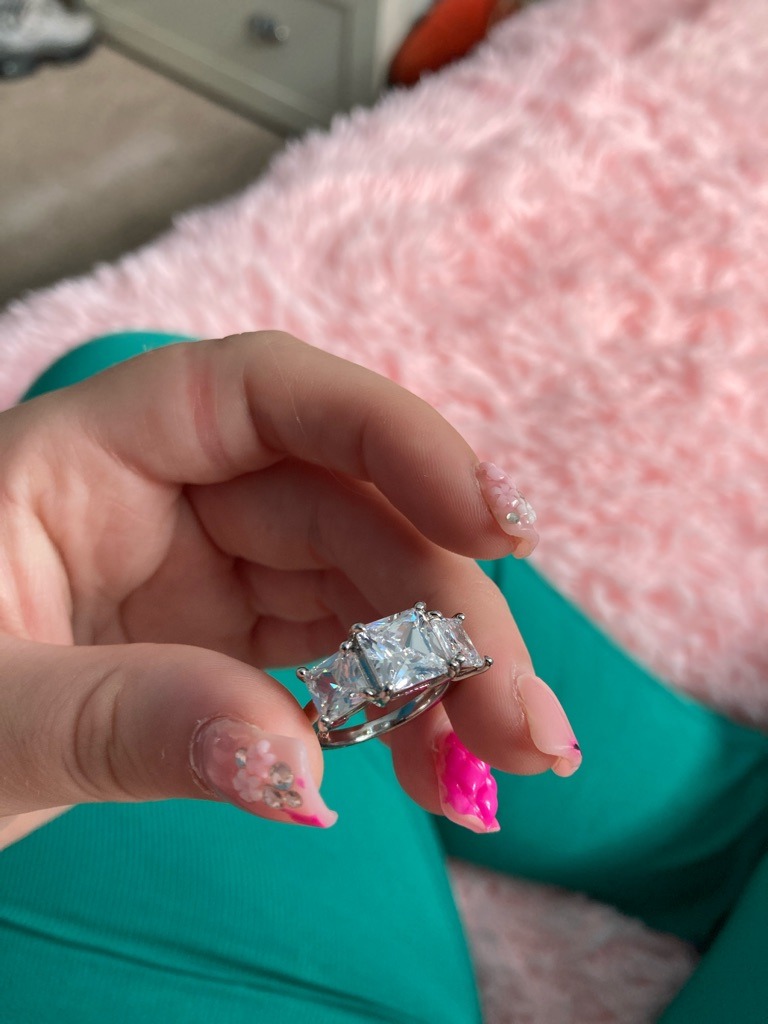
Lab-Grown Diamond / Simulant · Radiant Cut (Three-Stone Setting)
Very Good Cut
Carat
Approx. 2.50 to 3.00 carats (center stone)
Color
Estimated G-H (Near Colorless)
Clarity
Estimated VS1-VS2
Shape
Radiant Cut (Three-Stone Setting)
Overall Assessment
A stunning, bold three-stone ring featuring a prominent radiant-cut center stone flanked by matching side stones, offering incredible finger coverage and timeless elegance.
Cut Quality
Very Good
Brilliance
High brightness and white light return due to wide step-facets
Fire
Moderate spectral color dispersion characteristic of radiant cuts
Scintillation
Active sparkle with balanced areas of light and dark contrast
Proportions
Standard step-cut corners with modified brilliant facet pattern; medium to thick girdle
Symmetry
Good
Polish
Very Good
Fluorescence
None to Faint
Inclusions
No major inclusions visible to the naked eye
Blemishes
None readily apparent from visual inspection
Origin
Laboratory-grown (CVD or HPHT process)
Treatment Detection
No obvious post-growth treatments detected visually
Estimated Value
$2,500 - $4,500 (depending on lab-grown vs natural and actual metal purity)
Certification Estimate
IGI or GIA Lab-Grown Report
Investment Potential
Moderate for lab-grown stones due to decreasing market prices; excellent aesthetic value for the price
Similar Diamonds
Radiant-cut and cushion-cut lab-grown diamonds with side trapezoid or matching radiant accents
Setting Suggestions
Currently in a classic platinum or white gold three-stone prong setting; pairs well with matching chevron or straight diamond bands
Care & Maintenance
Clean regularly with warm soapy water and a soft brush; check prongs periodically to ensure stones remain secure
Interesting Facts
The radiant cut was invented in 1977 by Henry Grossbard, combining the brilliance of the round brilliant with the elegant shape of the emerald cut