Natural (Rough Crystal / Industrial or Specimen Grade)
Natural (Rough Crystal / Industrial or Specimen Grade) · Rough Uncut Octahedron / Irregular Fragment
Not Applicable (Uncut rough specimen) Cut
Carat
Estimated 2.0 to 3.5 carats
Color
Near-Colorless to Light Brown (I-K range)
Clarity
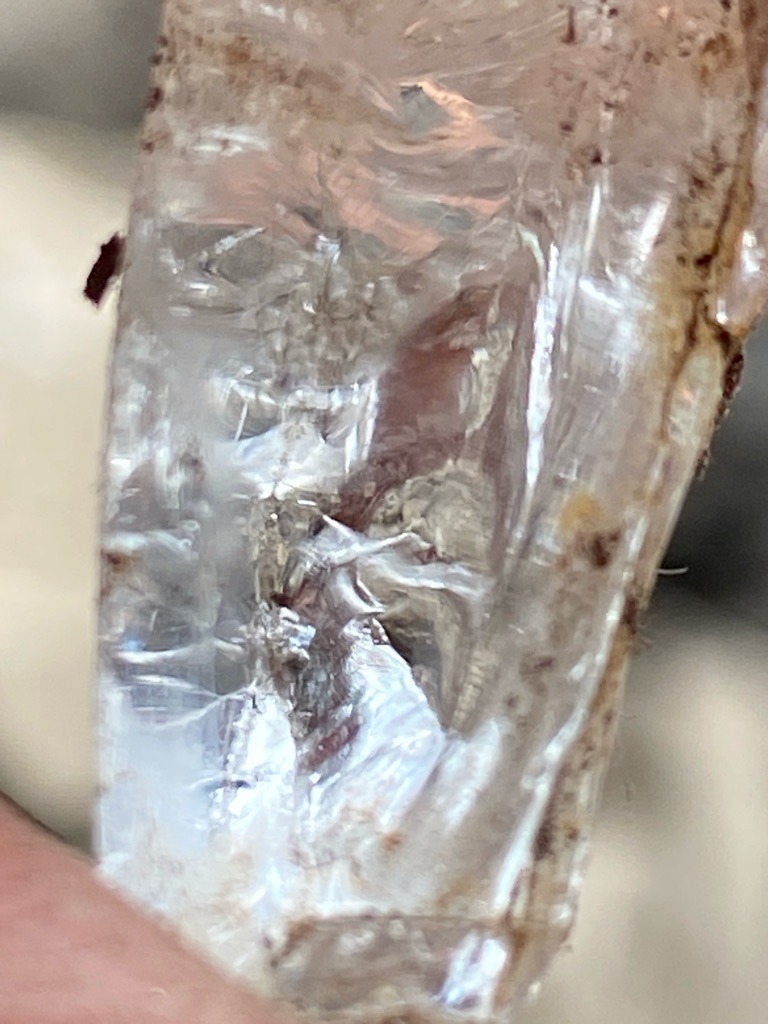
I3 (Heavy inclusions, fractures, and surface irregularities)
Shape
Rough Uncut Octahedron / Irregular Fragment
Overall Assessment
An interesting raw diamond crystal specimen showing natural geological features, heavy inclusions, and fractures, best suited for a mineral collection rather than jewelry manufacturing
Cut Quality
Not Applicable (Uncut rough specimen)
Brilliance
Low due to lack of standard faceting and heavy internal fracturing
Fire
Minimal dispersion visible through raw crystal windows
Scintillation
Poor due to lack of facet patterns
Proportions
Uncut natural morphology; deep and irregular
Symmetry
Natural crystalline symmetry (distorted octahedron)
Polish
Raw natural crystal faces (trigons and striations visible)
Fluorescence
Indeterminate from visual assessment
Inclusions
Heavy internal cloudiness, feather fractures, mineral inclusions
Blemishes
Natural surface etching, rough skin, cavities, and adhering matrix minerals
Origin
Likely alluvial or primary kimberlite pipe deposit (African, Russian, or Canadian source)
Treatment Detection
None detected; completely untreated natural rough stone
Estimated Value
Low commercial value; primarily of mineralogical, educational, or specimen interest ($50 - $200)
Certification Estimate
Not typically certified by GIA/AGS in rough form unless specific provenance requested
Investment Potential
Minimal as an investment; value lies entirely in aesthetic mineral collecting
Similar Diamonds
Other low-grade industrial or mineral specimen rough diamonds
Setting Suggestions
Wire-wrapped pendant or raw organic bezel setting to preserve natural crystal state
Care & Maintenance
Handle with care to prevent chipping along cleavage planes; clean gently with warm soapy water and a soft brush
Interesting Facts
Shows natural growth features such as striations and irregular surface textures formed deep within the Earth's mantle