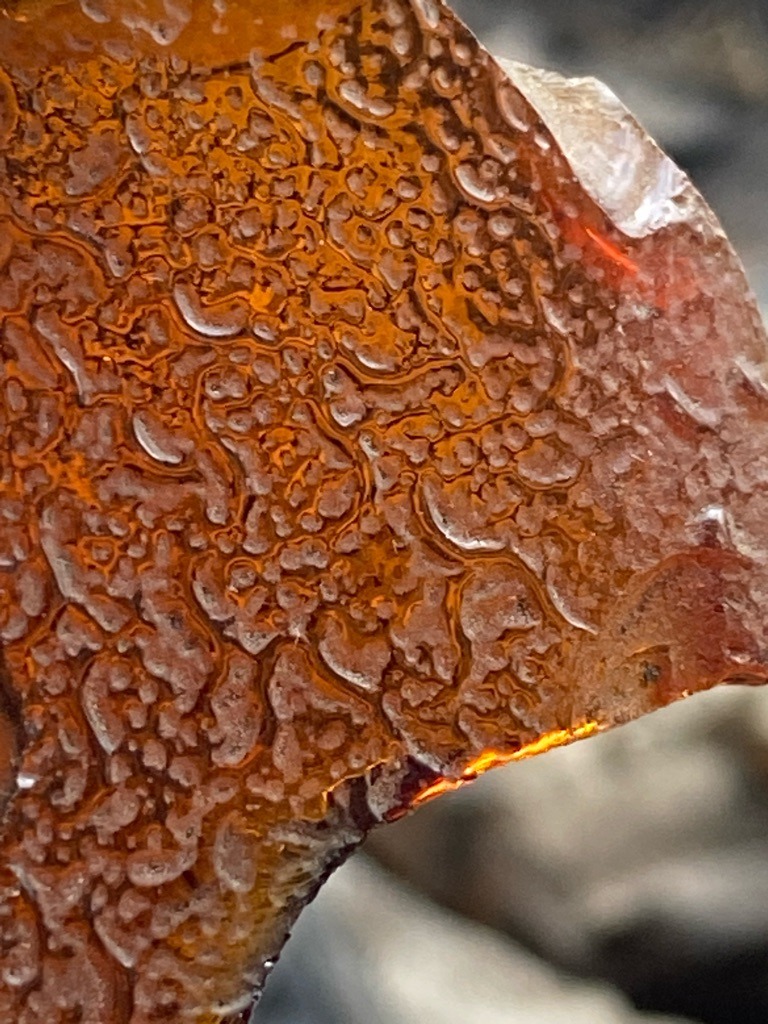
Not a diamond; this is a slag glass or agate specimen featuring a botryoidal or slag-flow surface texture.
Not a diamond; this is a slag glass or agate specimen featuring a botryoidal or slag-flow surface texture. · Rough/Uncut irregular piece
Not applicable (Rough material) Cut
Carat
Not applicable (Mineral/Glass specimen)
Color
Deep amber to reddish-orange
Clarity
Not applicable to gem-quality diamond grading
Shape
Rough/Uncut irregular piece
Overall Assessment
The specimen shown in the image is definitively not a diamond. It exhibits characteristics of colored slag glass or an iron-rich agate/jasper showing distinctive surface flow and cooling textures.
Cut Quality
Not applicable (Rough material)
Brilliance
Vitreous to resinous luster along fractured edges
Fire
Low dispersion typical of glass or chalcedony
Scintillation
Limited flash from vitreous surfaces
Proportions
Not applicable
Symmetry
Not applicable
Polish
Natural unpolished fracture and weathered crust
Fluorescence
Cannot be determined without UV testing
Inclusions
Internal bubbles and flow lines typical of slag or microcrystalline structures in agate
Blemishes
Surface pitting, weathering, and texturing
Origin
Industrial byproduct (slag) or natural cryptocrystalline quartz (agate/chalcedony)
Treatment Detection
Natural formation or industrial melting process
Estimated Value
Minimal monetary value as a decorative rock, mineral specimen, or industrial slag
Certification Estimate
Not eligible for GIA/AGS diamond grading; analyzed by mineralogical or gemological testing laboratories (e.g., GIA Identification Report as glass or agate)
Investment Potential
None; collectible or decorative value only
Similar Diamonds
None, as this is not a diamond or diamond simulant intended for fine jewelry
Setting Suggestions
Wire-wrapping or bespoke artisan bezel setting for mineral specimens
Care & Maintenance
Standard cleaning with mild soapy water; protect from hard impacts to prevent chipping
Interesting Facts
The surface texture mimics botryoidal mineral growth but often originates from high-temperature industrial smelting processes (slag glass)