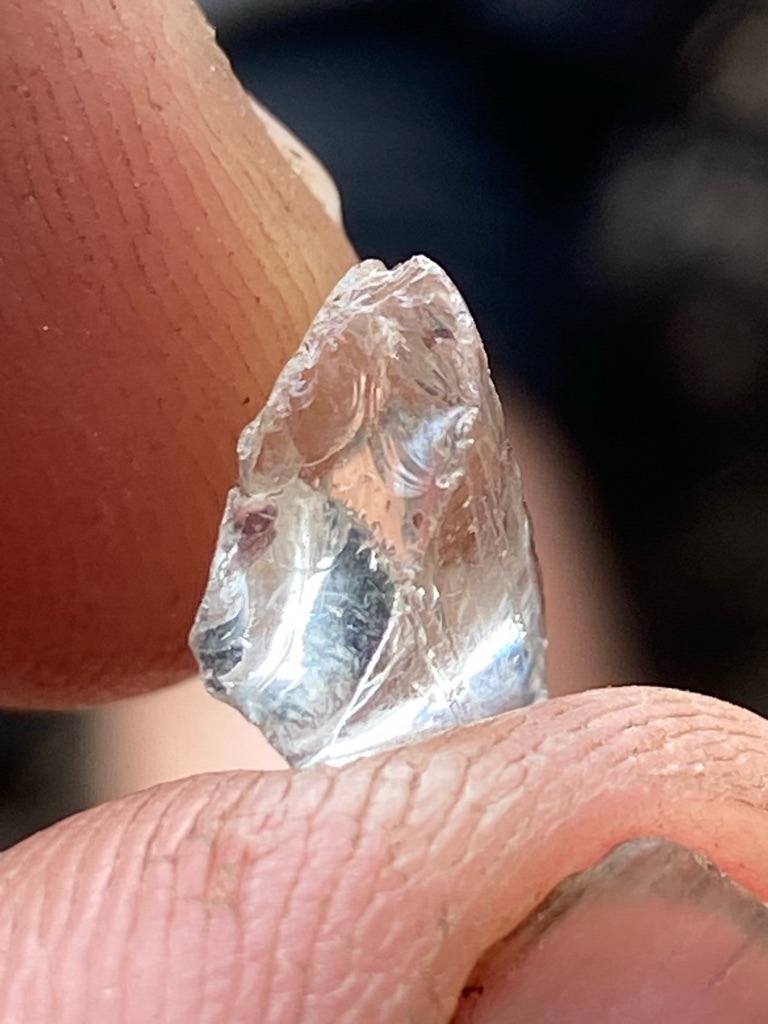
Natural (Rough Crystal / Fragment)
Natural (Rough Crystal / Fragment) · Uncut / Raw Irregular Fragment
Not Applicable (Uncut Rough Fragment) Cut
Carat
Estimated 0.85 ct (rough)
Color
Near Colorless (Estimated G-I)
Clarity
Included (Estimated SI2-I1 for rough state)
Shape
Uncut / Raw Irregular Fragment
Overall Assessment
This is a natural, unpolished diamond rough fragment showing native crystal textures and fracture planes, offering potential for future lapidary cutting or collector display.
Cut Quality
Not Applicable (Uncut Rough Fragment)
Brilliance
Low due to lack of faceting and natural rough surface
Fire
Minimal due to uncut, unpolished state
Scintillation
Absent due to lack of standard faceting
Proportions
Natural uncut crystal proportions
Symmetry
Natural Asymmetric Crystal Form
Polish
Natural Rough Surface (Unpolished)
Fluorescence
Indeterminate from visual assessment
Inclusions
Internal fractures, feather inclusions, and mineral inclusions visible
Blemishes
Natural surface striations, trigons, and rough fracture edges
Origin
Alluvial or primary kimberlite deposit origin
Treatment Detection
No signs of artificial treatment; appears completely untreated natural rough
Estimated Value
Varies widely based on raw carat weight and cutting yield potential (approx. $100 - $300 USD as rough specimen)
Certification Estimate
Requires GIA or local gemological lab identification report for rough stones
Investment Potential
Low as-is, higher potential if skillfully cut and polished into a finished gemstone
Similar Diamonds
Comparable natural rough diamond specimens and industrial-grade or lower-clarity jewelry rough
Setting Suggestions
Best suited for raw diamond jewelry settings, cage settings, or customized lapidary cutting
Care & Maintenance
Store separately to prevent scratching other items; handle with care due to natural cleavage planes
Interesting Facts
Rough diamonds straight from the earth often feature natural growth markings called trigons on their faces