Natural (Rough Crystal)
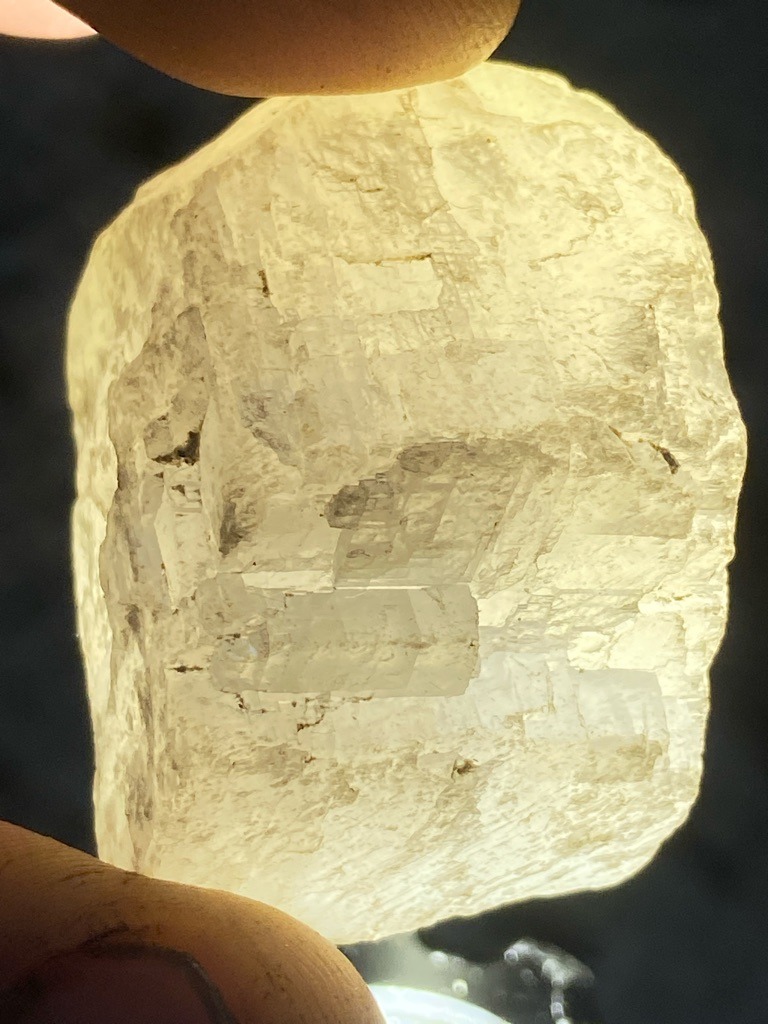
Natural (Rough Crystal) · Uncut / Rough Octahedral or Dodecahedral Crystal form
Not Applicable (Rough, uncut stone) Cut
Carat
Estimated 15 - 25 carats
Color
Light Yellow / Off-white (K-M equivalent range)
Clarity
Included (I1-I2 equivalent due to internal crystal planes and fractures)
Shape
Uncut / Rough Octahedral or Dodecahedral Crystal form
Overall Assessment
An interesting and substantial natural rough diamond crystal displaying classic crystal growth features, suitable for a mineral collection or specialized cutting
Cut Quality
Not Applicable (Rough, uncut stone)
Brilliance
Low due to lack of faceting and rough translucent nature
Fire
Minimal dispersion visible through the translucent rough body
Scintillation
Absent due to uncut surface
Proportions
Natural crystal habit with irregular dimensions, not faceted
Symmetry
Natural crystal symmetry showing cubic/octahedral growth step structures
Polish
Natural rough surface textures, trigons, and etching features
Fluorescence
Indeterminate from visual assessment (typically Medium to Strong Blue in natural rough if tested under UV)
Inclusions
Internal cloudiness, feather fractures, and dark mineral inclusions visible
Blemishes
Natural surface pitting, triangular growth markings (trigons), and rough skin
Origin
Alluvial or primary kimberlite pipe deposit (African or Russian origin likely)
Treatment Detection
No evidence of artificial treatment; completely natural rough crystal state
Estimated Value
Varies widely depending on industrial vs. gem-quality cutting yield, roughly $500 - $1,500 for specimen/industrial-gem use
Certification Estimate
GIA or similar major laboratory (report would classify as Rough Natural Diamond)
Investment Potential
Mainly valued as a mineral specimen or collector's rough rather than a liquid investment diamond
Similar Diamonds
Other unpolished natural diamond crystal specimens of industrial or lower gem grade
Setting Suggestions
Best kept as a raw mineral specimen in a custom wire-wrap or bezel setting to preserve natural crystal form
Care & Maintenance
Store separately to prevent scratching other stones; clean gently with warm soapy water and a soft brush
Interesting Facts
The stepped growth patterns visible on the surface are typical growth layers (lamination lines) formed deep within the Earth's mantle